
Thy-1 Nephritis Modeling & Pharmacodynamics Service
Creative Biolabs offers a variety of well-established models, including the Thy-1 nephritis model, for evaluating the therapeutic efficacy of potential drugs targeting kidney diseases. We provide customized services to meet your specific research needs, ensuring comprehensive and reliable results for your projects.
Introduction
Thy-1 nephritis is an experimental autoimmune disease that primarily affects the kidneys, characterized by glomerulonephritis and immune complex deposition in the glomeruli. This model is induced by the injection of monoclonal antibodies targeting the Thy-1 antigen, which is expressed on the surface of podocytes in the glomerular basement membrane. The resulting immune response leads to inflammation, proteinuria, and glomerular damage, making this model an important tool for studying glomerulonephritis, focal segmental glomerulosclerosis (FSGS), and nephritic syndrome. The model closely resembles the pathophysiology of human autoimmune kidney diseases and is widely used for evaluating the effects of potential therapeutic agents, including immunosuppressive drugs, anti-inflammatory treatments, and novel renal-targeted therapies. Key features of the Thy-1 nephritis model include immune cell infiltration in the kidneys, proteinuria, and glomerular fibrosis. Additionally, histopathological changes, such as glomerular swelling and capillary loop thickening, are common in affected animals. Despite its strengths in mimicking kidney injury, variability in disease severity may arise depending on the dose of the monoclonal antibody and the specific rodent strain used.
Thy-1 Nephritis Model
The Thy-1 Nephritis Model is typically established in rodents by injecting a monoclonal antibody that targets the Thy-1 antigen expressed on the surface of podocytes in the glomeruli. This induces a robust immune response, leading to glomerular inflammation and damage, resembling human glomerulonephritis. The model is characterized by immune cell infiltration, proteinuria, and histopathological changes, making it an excellent tool for studying renal pathophysiology and evaluating novel therapeutics. Key advantages include the model's reproducibility and ability to mimic various aspects of kidney diseases, such as focal segmental glomerulosclerosis. However, limitations include the potential for variability in the severity of the disease, depending on the dose of the antibody used and the strain of rodents. Overall, this model serves as a valuable tool for drug screening and mechanistic studies in kidney disease.
- Simulates: Autoimmune-induced glomerulonephritis, focal segmental glomerulosclerosis (FSGS), nephritic syndrome.
- Evaluates Drugs: Immunosuppressive agents, anti-inflammatory drugs, angiotensin inhibitors, and novel renal-targeted therapies.
Evaluation Platform
- Animals: Mouse, Rat, Hamster.
-
Measurements
We offer a comprehensive range of measurements for evaluating drug efficacy in Thy-1 nephritis models, employing advanced techniques including:- General Observations: Body weight, urine protein levels, renal function (creatinine, BUN), and survival rate.
- Histological Analysis: Hematoxylin and eosin (H&E) staining for kidney damage, immune cell infiltration, and glomerular sclerosis.
- Immunohistochemistry: Detection of specific immune cell markers (e.g., CD4, CD8, macrophages) in kidney tissue.
- Cytokine Profiling (ELISA): Measurement of inflammatory mediators such as TNF-α, IL-6, and IL-1β.
- Gene/Protein Expression Analysis: Quantitative PCR and Western blot to analyze renal fibrosis markers (e.g., collagen type I, fibronectin).
- Serum Biomarkers: Levels of renal injury markers such as creatinine, BUN, and albuminuria.
In addition to the established model, we can assist in the design of custom models tailored to specific research requirements.
Related Services
While the Thy-1 nephritis model is a valuable tool for studying autoimmune kidney diseases, we also offer a variety of other models for different types of renal and systemic diseases, ensuring a comprehensive approach to your research.
- Anti-Glomerular Basement Membrane (GBM) Nephritis Model
- Fx1A Nephritis Model
- IgA Nephropathy Model
- Spontaneous Systemic Lupus Erythematosus (SLE) Model
- Systemic Lupus Erythematosus Induced Model
Our advantages
- Customizable Services: We offer flexible, customizable services that align with your unique research goals, including personalized experimental designs.
- Comprehensive Support: Our scientific team is available to assist with every stage of your project, from model selection to data analysis, ensuring effective and efficient research execution.
- Accelerated Research: Our expertise and tailored solutions help streamline your research process, supporting faster and more impactful drug development.
- Robust Data: We provide consistent and accurate data that you can rely on for your studies and decision-making.
- Wide Range of Models: In addition to Thy-1 nephritis, we offer various models for kidney diseases, autoimmune conditions, and other therapeutic areas, providing a comprehensive solution for your research needs.
Work with Us
- Summarize the project requirements and fill in the information collection form.
- Sign a CDA from both parties to further communicate information, such as targets.
- Select an animal model, discuss experimental design, and determine assay parameters.
- Project costing and project schedule forecasting.
- We provide a detailed project plan, including the required sample quantities, methods, and protocols.
- Both parties confirm the project details and start the project.
- Confirm the timeline of the project.
- We provide periodic results and information on the animal's condition.
- We will work together to make project adjustments as necessary.
- We provide a comprehensive project report promptly.
- We arrange transportation for the produced samples.
- We provide a discussion of the project results and help to arrange the next steps.
- Data storage and archiving.
FAQs
-
1. What is the Thy-1 nephritis model used for?
The Thy-1 nephritis model is used to study autoimmune-induced kidney diseases, particularly glomerulonephritis, focal segmental glomerulosclerosis (FSGS), and nephritic syndrome. It is ideal for evaluating the therapeutic efficacy of immunosuppressive agents, anti-inflammatory drugs, and renal-targeted therapies.
-
2. How is the Thy-1 nephritis model induced?
The model is induced by injecting rodents with a monoclonal antibody targeting the Thy-1 antigen, which is expressed on podocytes in the glomeruli. This triggers an immune response, leading to inflammation and kidney damage.
-
3. What are the key advantages of using this model?
This model mimics the pathophysiology of human autoimmune kidney diseases and provides reproducible results for drug testing and mechanistic studies. It offers valuable insights into the inflammatory processes and glomerular damage seen in kidney diseases.
-
4. Can I customize the Thy-1 nephritis model for my research?
Yes, we offer flexible, customizable options for the Thy-1 nephritis model, allowing you to adjust parameters such as antibody dosage, rodent strain, and experimental protocols to meet your specific research objectives.
Published Data
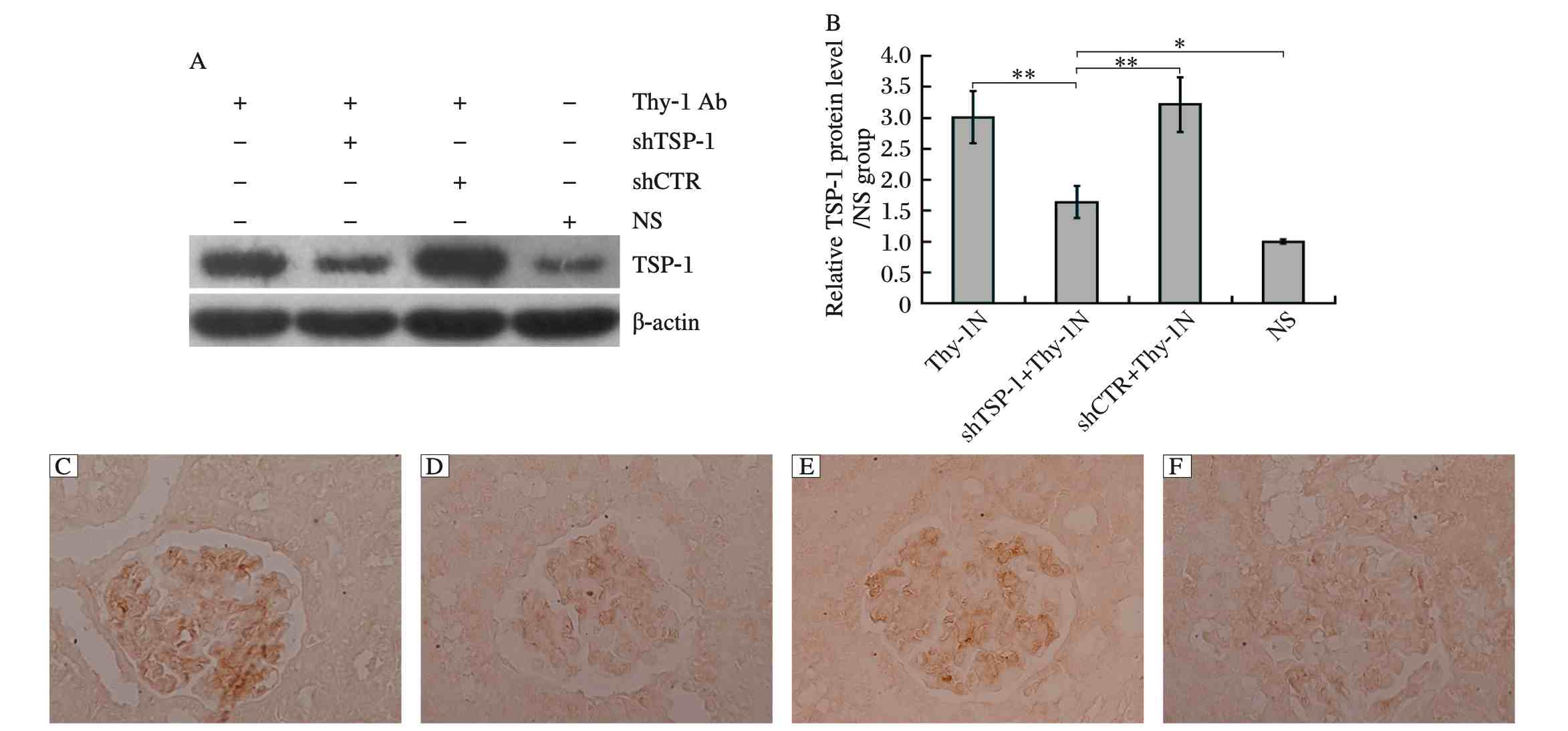 Fig. 1 The effects of shTSP-1 on renal TSP-1 expression in Thy-1 nephritis rats.1
To explore the roles of TSP-1 gene activation in the pathological changes of Thy-1 nephritis in rats, we transfected the plasmids of shTSP-1 and shCTR, respectively, into rat kidneys, followed by Thy-1 nephritis induction. The rats were divided into the following 4 groups: 1) the Thy-1 nephritis group; 2) the shTSP-1 + Thy-1 nephritis group; 3) the shCTR + Thy-1 nephritis group; 4) the NS group. The renal expression of TSP-1 protein in different groups of rats was examined on d 7 after Thy-1 nephritis induction, and the results showed that the expression of the TSP-1 gene was obviously increased in the renal tissues of Thy-1 nephritis rats, and that shTSP-1 could effectively reduce the expression of TSP-1 in the renal tissues of Thy-1 nephritis rats, while shCTR had no significant effect on renal TSP-1 expression (Fig. 1).
Reference
- Qiu, Wen et al. "TSP-1 promotes glomerular mesangial cell proliferation and extracellular matrix secretion in Thy-1 nephritis rats." Journal of Biomedical Research vol. 25,6 (2011): 402-10. Distributed under an Open Access license CC BY 4.0, without modification. https://doi.org/10.1016/S1674-8301(11)60053-5
For Research Use Only.