
Renal Artery Constriction induced Hypertensive Heart Failure Modeling & Pharmacodynamics Service
At Creative Biolabs, we are dedicated to advancing cardiovascular research by providing a variety of meticulously established rodent HF models, enabling robust evaluation of novel therapeutic strategies.
Introduction
Heart failure (HF) represents a complex and debilitating condition where the heart struggles to pump enough blood to meet the body's metabolic demands. It often progresses silently, leading to severe symptoms and significantly impacting quality of life. Understanding its underlying mechanisms and developing effective treatments are critical global health priorities.
Renal Artery Constriction-Induced Hypertensive HF Model
The renal artery constriction (RAC) model is a widely recognized and clinically relevant preclinical model for studying hypertensive HF (HHF). This model faithfully recapitulates key pathophysiological features observed in human atherosclerotic renovascular disease (ARVD), which is a significant cause of secondary hypertension and subsequent cardiac dysfunction.
The construction of the RAC model involves a precise surgical procedure to induce renal artery stenosis (RAS), leading to chronic hypertension and subsequent cardiac remodeling.
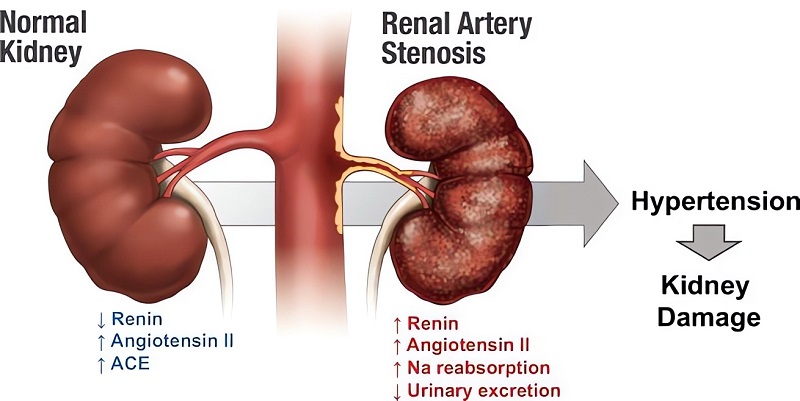 Fig.1 Schematic representation of RAS-induced renovascular hypertension.1
Model Construction Steps
The model is typically established by inducing a unilateral or bilateral constriction of the renal artery using a micro-clip or ligature. This reduces blood flow to the kidney, activating the renin-angiotensin-aldosterone system (RAAS) and leading to sustained systemic hypertension.
01Anesthesia and Preparation
Animals are anesthetized using appropriate agents and prepared for sterile surgery, including shaving and antiseptic application.
02Incision and Exposure
A flank incision is made to expose the kidney and its associated renal artery. Careful dissection is performed to isolate the renal artery without damaging surrounding tissues.
03Clip/Ligature Application
A precisely sized silver micro-clip (e.g., 0.2 mm internal diameter for rats) or a non-absorbable ligature is carefully placed around the renal artery. For unilateral models, the contralateral kidney may be left intact or removed (uninephrectomy) to exacerbate hypertension.
04Wound Closure
The muscle layers and skin are sutured, and the animal is allowed to recover.
05Post-Operative Care
Animals receive analgesia and are closely monitored for recovery, weight, and general well-being. Hypertension development is typically confirmed within days to weeks post-surgery.
Animals:
Rat, Rabbit, DogStrengths and Limitations
Strengths:
- Physiological Relevance: Closely mimics human ARVD and its progression to HHF, including RAAS activation, sustained hypertension, and maladaptive cardiac remodeling.
- Clinical Translatability: Directly reflects clinical observations where RAS leads to HF, and revascularization can reverse symptoms.
- Reproducibility: Standardized surgical techniques ensure consistent and reliable model induction.
- Disease Progression: Allows for the study of HHF across various stages, from compensated hypertrophy to decompensated HF.
- Chronic Drug Testing: Ideal for evaluating long-term efficacy and safety of therapeutic compounds.
- Versatility: Applicable across various rodent species (e.g., rats, mice) and amenable to genetic modifications.
Limitations:
- Surgical Invasiveness: Requires skilled surgical expertise and can be associated with perioperative risks.
- Variability: While standardized, minor variations in clip placement or animal response can occur, necessitating careful monitoring.
- Ethical Considerations: Requires adherence to strict animal welfare guidelines due to the chronic nature of the disease.
Evaluation Platform
Creative Biolabs offers a comprehensive evaluation platform to thoroughly characterize the RAC-induced HHF model and assess therapeutic interventions. Our state-of-the-art facilities enable detailed biochemical, molecular, cellular, histopathological, behavioral, and advanced imaging analyses.
Key Test Indicators:
- Hemodynamic: Blood pressure (tail-cuff, telemetry), cardiac catheterization (LV pressures, dP/dt).
- Cardiac Function/Structure: Echocardiography (ejection fraction, fractional shortening, LV dimensions, wall thickness, diastolic function), gravimetric analysis (heart/lung weight ratios).
- Histopathology: Cardiac fibrosis (Picrosirius Red, Masson's Trichrome), cardiomyocyte size, inflammation (immunostaining).
- Molecular/Biochemical: Gene expression (ANP, BNP, β-MHC, collagen I/III, TGF-β), protein expression (MAPK, Akt, oxidative stress markers), circulating biomarkers (BNP, troponins).
- Renal Function: Serum creatinine, BUN, urinary protein excretion.
Applications
- Disease Modeling: This model effectively simulates various cardiovascular and renal conditions, including HHF, ARVD, resistant hypertension, cardiac hypertrophy and fibrosis, and ischemic nephropathy, providing a robust platform for understanding disease progression.
- Therapeutic Evaluation: It is ideally suited for evaluating a wide range of drug classes, such as antihypertensive, anti-fibrotic, cardioprotective, RAAS inhibitors, and anti-inflammatory agents, as well as novel therapeutic strategies like gene therapies and stem cell interventions.
- Treatment Strategy Optimization: The model facilitates the investigation of optimal intervention timelines, efficacy of single or combination therapies, and the discovery of novel biomarkers for diagnosis, prognosis, and monitoring treatment response.
Related Heart Failure Models
PA Constriction induced Right HF Model
Ascending Aortic Arch Constriction induced Post-Pressure Overload Heart Failure Model
Abdominal Aortic Stenosis induced Left HF Model
DOCA & Salt induced Left HF Model
Our Advantages
- Years of Experience: Deep expertise in establishing and characterizing complex disease models, ensuring robust and reliable data.
- Customized Study Designs: Flexible and tailored experimental protocols to precisely address your unique research objectives.
- State-of-the-Art Facilities: Advanced vivarium and analytical laboratories equipped with cutting-edge technology for precise measurements.
- Comprehensive Data Analysis: Detailed reports, including rigorous statistical analysis and expert scientific interpretation.
- Quality and Compliance: Adherence to the highest ethical standards and regulatory guidelines (e.g., GLP-like practices) for data integrity.
Work with Us
- Summarize the project requirements and fill in the information collection form.
- Sign a CDA from both parties to further communicate information, such as targets.
- Select an animal model, discuss experimental design, and determine assay parameters.
- Project costing and project schedule forecasting.
- We provide a detailed project plan, including the required sample quantities, methods, and protocols.
- Both parties confirm the project details and start the project.
- Confirm the timeline of the project.
- We provide periodic results and information on the animal's condition.
- We will work together to make project adjustments as necessary.
- We provide a comprehensive project report promptly.
- We arrange transportation for the produced samples.
- We provide a discussion of the project results and help to arrange the next steps.
- Data storage and archiving.
Contact Us
Creative Biolabs provides comprehensive preclinical services utilizing the RAC-induced HHF model, designed to accelerate your drug discovery pipeline. We invite you to contact us today to discuss how our expertise can support your research and help bring innovative therapies to patients.
FAQs
-
Q1: What are the key indicators used to confirm successful induction of the RAC model?
A: Successful model induction is primarily confirmed by a significant and sustained increase in systemic blood pressure, typically measured via tail-cuff plethysmography or telemetry. Additionally, echocardiographic evidence of left ventricular hypertrophy and early signs of diastolic dysfunction are crucial indicators of cardiac remodeling.
-
Q2: Can the RAC model be adapted to study specific aspects of HF, such as diastolic dysfunction?
A: Absolutely. The RAC model is highly adaptable. By varying the duration of hypertension and the severity of RAC, researchers can focus on specific stages of HHF, including isolated diastolic dysfunction, before the onset of significant systolic impairment. This allows for targeted investigation of therapies.
-
Q3: What are the primary challenges in maintaining the RAC model for long-term studies?
A: Long-term maintenance of the RAC model requires careful monitoring of animal health, consistent environmental conditions, and management of potential complications such as severe hypertension-induced organ damage or weight loss. Ensuring proper clip placement and minimizing surgical stress are also crucial for model stability over extended periods.
-
Q4: How does the RAC model compare to other common HF models, such as transverse aortic constriction (TAC)?
A: While both RAC and TAC induce pressure overload, the RAC model specifically mimics renovascular hypertension, activating the RAAS system as a primary driver of disease. TAC, on the other hand, creates a direct mechanical overload on the left ventricle. The choice depends on the specific pathophysiological pathway being investigated.
-
Q5: Is it possible to evaluate the effects of combination therapies using the RAC model?
A: Yes, the RAC model is well-suited for evaluating combination therapies. Its robust and reproducible nature allows for the assessment of synergistic or additive effects of multiple compounds targeting different pathways involved in HHF pathogenesis, providing valuable insights for drug development.
-
Q6: Can Creative Biolabs assist with custom modifications to the RAC model, such as combining it with genetic manipulations?
A: Definitely. Creative Biolabs specializes in customized study designs. We can readily integrate genetic modifications (e.g., knockout or transgenic animals) with the RAC model to investigate the role of specific genes or pathways in HHF development, offering a highly tailored approach to your research questions.
Published Data
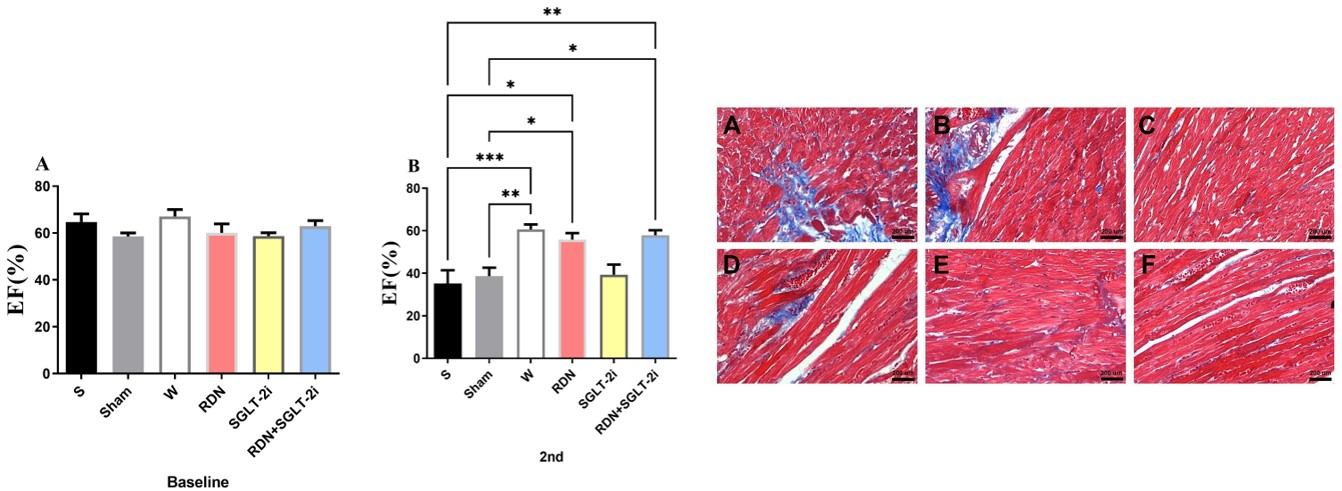 Fig.2 Ejection fraction alteration in the echocardiogram and the degree of myocardial fibrosis under RDN+SGLT-2i combination therapy.2
This article investigated the hypotensive effects of combining a sodium-dependent glucose transporter-2 inhibitor (SGLT-2i) with renal denervation (RDN) in spontaneously hypertensive rats (SHRs). Their project results demonstrated that this combination significantly reduced systolic blood pressure, improved sympathetic inhibition in the brain, and notably decreased the fibrotic area within myocardial cells. These findings underscore the potential of novel therapeutic strategies to mitigate cardiac remodeling and hypertension, directly aligning with the research applications of the RAC-induced HHF model in evaluating multi-faceted interventions.
References
- Gomez, Jose A. "Renin Angiotensin Aldosterone System Functions in Renovascular." Renin-Angiotensin Aldosterone System (2021): 79. Distributed under Open Access license CC BY 3.0, without modification. DOI: 10.5772/intechopen.97491
- Li, J., Liu, B., Li, X., et al. (2025). Sodium-Dependent Glucose Transporter-2 Inhibitor Enhances the Hypotensive Effect of Renal Denervation by Inhibiting Sympathetic Activity and Inflammatory Reaction. Frontiers in Bioscience-Landmark, 30(6). Distributed under Open Access license CC BY 4.0, without modification. The image was modified by extracting and using only part of the original image. https://doi.org/10.31083/FBL31309
For Research Use Only.