
Chronic Pancreatitis Modeling & Pharmacodynamics Services
Introduction
Chronic pancreatitis (CP) is a progressive and long-lasting inflammatory condition of the pancreas that leads to fibrosis, ductal changes, and a decline in both exocrine and endocrine functions. It is often the result of repeated episodes of acute pancreatitis, with alcohol abuse, genetic mutations, and other factors contributing to its development. The disease is commonly classified into types such as alcoholic chronic pancreatitis, hereditary chronic pancreatitis, and idiopathic chronic pancreatitis. Symptoms include persistent abdominal pain, malabsorption due to pancreatic insufficiency, and diabetes resulting from impaired insulin secretion. For the evaluation of therapeutic candidates targeting chronic pancreatitis, various rodent models are used to replicate the disease's pathology. These models mimic the inflammatory and fibrotic changes seen in human CP, providing a reliable platform for assessing potential drugs aimed at reducing inflammation, promoting tissue repair, and improving pancreatic function. Our extensive expertise includes providing well-established chronic pancreatitis models that can be tailored to specific research needs. From model selection to data interpretation, Creative Biolabs' team ensures high-quality, reliable results, facilitating the evaluation of new drugs in preclinical studies.
Disease Models and Applications
Creative Biolabs offers a variety of well-established rodent models for chronic pancreatitis, designed to simulate the pathophysiology of this progressive inflammatory disease. These models replicate the key features of chronic pancreatitis, including pancreatic fibrosis, acinar atrophy, and ductal changes, which are commonly observed in human cases. Our models are carefully constructed to facilitate the evaluation of therapeutic candidates aimed at alleviating inflammation, promoting tissue regeneration, and improving pancreatic function. The comprehensive assessments of various disease parameters allow for a precise evaluation of drug efficacy during the preclinical phase. Our team of experienced scientists will collaborate with you at every stage of your project, from model selection to data analysis, ensuring accurate and reliable results. To learn more about the chronic pancreatitis models available for preclinical research, please explore the links below:
-
Partial ligation of the pancreatic duct induced a pancreatitis mouse model
- Simulates: This model mimics chronic pancreatitis, a condition characterized by persistent inflammation and fibrosis of the pancreas, often resulting from long-term injury or duct obstruction. The partial ligation of the pancreatic duct causes an increase in pressure within the pancreatic duct, leading to damage and inflammation of the pancreas over time.
- Drug Evaluation: This model is used to evaluate anti-inflammatory agents, fibrosis inhibitors, pancreatic enzyme modulators, and therapeutics aimed at reducing pancreatic fibrosis. Drugs that can modulate inflammatory pathways, oxidative stress, and fibrotic tissue formation are frequently tested. It also serves as a platform for pancreatic regeneration and pain management.
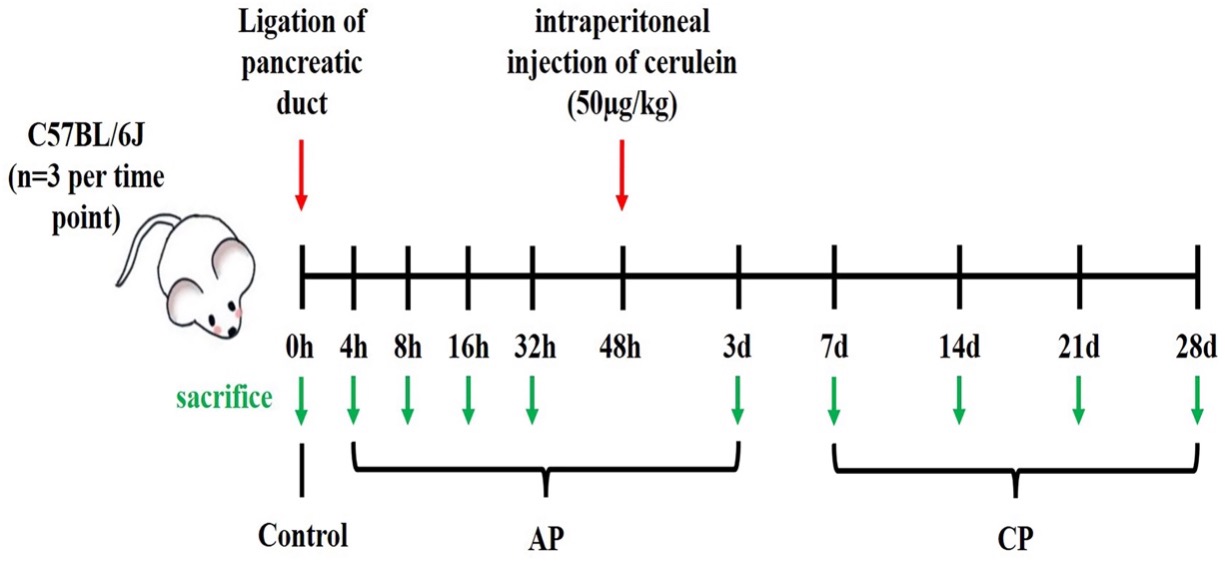 Fig.1 Schematic diagram for constructing a mouse model of pancreatitis induced by partial ligation of the pancreatic duct.1
-
Cerulein induced Chronic Pancreatitis Model
- Simulates: This model replicates acute-on-chronic pancreatitis, where repeated cerulein injections cause cyclical episodes of acute pancreatic inflammation, eventually leading to chronic pancreatitis. The cerulein-induced model is often used to study the pathophysiology of inflammation and fibrosis in the pancreas.
- Drug Evaluation: This model is particularly suitable for testing anti-inflammatory drugs, antioxidants, pancreatic enzyme inhibitors, immunomodulatory drugs, and fibrosis-regulating agents. It is commonly used to assess drugs that target acute pancreatitis exacerbations, chronic pancreatic inflammation, and fibrosis progression.
Measurements
We offer a range of comprehensive measurements for evaluating drug efficacy in rodent chronic pancreatitis models, utilizing a variety of advanced technologies, including but not limited to:
- General observations: body weight, mortality rate, food intake, and abdominal distension.
- Cytokine profiling (e.g., ELISA): quantification of pro-inflammatory cytokines such as TNF-α, IL-1β, IL-6, and MCP-1.
- Hematology analysis and serum biomarkers: assessment of serum amylase, lipase, liver enzymes, bilirubin, and other pancreatic damage markers.
- Gene/protein expression profiling: RT-qPCR and Western blot for assessing the expression of fibrotic markers (e.g., collagen I, TGF-β) and inflammatory mediators.
- Fibrosis quantification: assessment of collagen deposition using Masson’s trichrome or Sirius red staining.
- Immunofluorescence: detection of specific markers of pancreatic cell death and inflammation (e.g., caspase-3, NF-κB).
- Histological analysis: examination of pancreatic tissue for inflammation, acinar cell injury, fibrosis, and pancreatic ductal changes.
- Immunohistochemistry: infiltration of immune cells (e.g., T-cells, macrophages, neutrophils) in pancreatic tissues.
In addition to established chronic pancreatitis models, our expertise extends to developing novel models tailored to specific research needs. Our experienced scientific team is ready to assist in experimental design, model selection, and data interpretation, ensuring an effective and customized approach for your project.
Related Services
For a broader range of preclinical research, we also offer various models to study other related diseases and therapeutic approaches.
Advantages
- Expertise: Our team has extensive experience in chronic pancreatitis research, ensuring high-quality, accurate results.
- Tailored Solutions: We offer customized models and experimental designs to fit your specific research needs.
- Advanced Techniques: Utilizing cutting-edge technologies, we provide comprehensive assessments and robust methodologies.
- Reliable Models: Our well-established rodent models for chronic pancreatitis are scientifically validated for drug testing.
- Collaborative Approach: We work closely with you, providing continuous support throughout your project to achieve your research goals.
Work with Us
- Summarize the project requirements and fill in the information collection form.
- Sign a CDA from both parties to further communicate information, such as targets.
- Select an animal model, discuss experimental design, and determine assay parameters.
- Project costing and project schedule forecasting.
- We provide a detailed project plan, including the required sample quantities, methods, and protocols.
- Both parties confirm the project details and start the project.
- Confirm the timeline of the project.
- We provide periodic results and information on the animal's condition.
- We will work together to make project adjustments as necessary.
- We provide a comprehensive project report promptly.
- We arrange transportation for the produced samples.
- We provide a discussion of the project results and help to arrange the next steps.
- Data storage and archiving.
FAQs
-
Q1: What types of chronic pancreatitis models do you offer?
A1: We offer well-established models such as the partial ligation of the pancreatic duct-induced model and the cerulein-induced chronic pancreatitis model.
-
Q2: How can these models help with drug evaluation?
A2: Our models simulate chronic pancreatitis conditions, allowing the assessment of various drugs targeting inflammation, fibrosis, and pancreatic injury.
-
Q3: What technologies are used to evaluate drug efficacy?
A3: We use a variety of techniques, including histology, cytokine profiling, gene/protein expression analysis, and serum biomarker measurement, to evaluate drug effects.
-
Q4: Can you develop custom models for specific needs?
A4: Yes, we can tailor animal models and experimental designs based on your research requirements.
-
Q5: Do you provide support throughout the research process?
A5: Absolutely! Our team offers full support, from experimental design to data analysis, ensuring high-quality and reliable results.
Published Data
The aim of this study was to investigate the macrophage profile and the associated regulatory mechanisms in a mouse model of pancreatitis, and to explore the correlation with human chronic pancreatitis (CP). In this experiment, pancreatitis was induced in mice by partial ligation of the pancreatic duct. Significant lesions were observed in the pancreas after duct ligation. Serum amylase levels began to rise at 4 hours, peaked at 16 hours, and then gradually decreased. The scores for pancreatic edema, inflammation, hemorrhage, and necrosis, along with the total pathological score, all increased over time, reaching their peak at 72 hours. The expression of pro-inflammatory cytokines TNF-α and IL-6 also showed a marked increase. Histological analysis using HE staining and immunohistochemical staining revealed the elevated presence of TNF-α and IL-6 in the pancreas. Various parameters were measured, including: (A) HE staining and immunohistochemical staining of TNF-α and IL-6 in the pancreas, (B) serum amylase levels, (C) pancreatic edema score, (D) pancreatic hemorrhage score, (E) pancreatic necrosis score, (F) total pathological score, (G) mean IOD (integrated optical density) of pancreatic TNF-α, and (H) mean IOD of pancreatic IL-6. These results provide valuable insights into the inflammatory processes and cytokine involvement in pancreatitis.
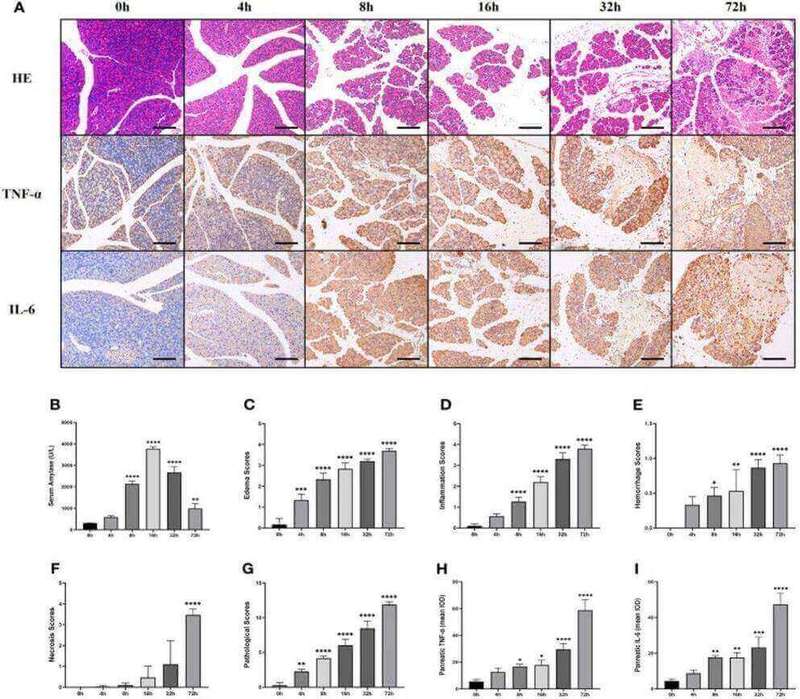 Fig.2 Pathological images of mice induced by partial ligation of the pancreatic duct and the results of each scoring index.1
Reference
- Peng, Cheng et al. "Murine Chronic Pancreatitis Model Induced by Partial Ligation of the Pancreatic Duct Encapsulates the Profile of Macrophage in Human Chronic Pancreatitis." Frontiers in Immunology vol. 13 840887. 1 Apr. 2022, doi:10.3389/fimmu.2022.840887. Distributed under an Open Access license CC BY 4.0, without modification.
For Research Use Only.