
Lipopolysaccharide (LPS) induced Acute Kidney Injury Modeling & Pharmacodynamics Service
Creative Biolabs offers a variety of well-established models for evaluating Acute Kidney Injury, including models induced by lipopolysaccharide (LPS), cisplatin, glycerol, and other nephrotoxic agents. These models are invaluable for assessing the efficacy of therapeutic drugs, understanding the pathophysiology of AKI, and developing new treatments aimed at preventing or mitigating kidney damage.
Introduction
Acute Kidney Injury (AKI) refers to the sudden decline in renal function, characterized by an abrupt decrease in glomerular filtration rate (GFR), resulting in the accumulation of waste products like urea and creatinine in the blood. AKI can be classified into prerenal, intrinsic, or postrenal types, depending on the underlying cause. Prerenal AKI is due to inadequate blood flow to the kidneys, while intrinsic AKI results from damage to the kidney parenchyma, often caused by toxins or ischemia. Postrenal AKI occurs when there is obstruction in the urinary tract. The condition is associated with high mortality and morbidity, especially in critically ill patients, and often progresses to chronic kidney disease if not managed promptly. AKI can be caused by various factors such as sepsis, trauma, nephrotoxic drugs, and systemic diseases, making it a complex condition to study.
Lipopolysaccharide (LPS)-induced Acute Kidney Injury Model
The Lipopolysaccharide (LPS)-induced Acute Kidney Injury Model is an experimental system used to simulate sepsis-related kidney damage. LPS, a major component of Gram-negative bacterial cell walls, is administered to rodents, inducing a systemic inflammatory response that mimics the pathophysiological processes of sepsis. The LPS-induced AKI model is advantageous for studying inflammatory pathways, oxidative stress, and kidney dysfunction. It provides valuable insights into the effects of various therapeutic agents aimed at reducing renal injury and inflammation. However, it also has limitations, such as not perfectly replicating all features of human sepsis-induced kidney injury. Despite this, the model is widely recognized for its relevance to understanding renal inflammation and injury mechanisms, making it an essential tool for drug evaluation in nephrotoxicity research.
Simulates: This model simulates acute kidney injury induced by septic conditions. It is useful for mimicking kidney damage caused by infections, toxins, and sepsis.
Evaluates Drugs: The LPS-induced AKI model is ideal for evaluating drugs aimed at preventing or mitigating inflammation and kidney damage.
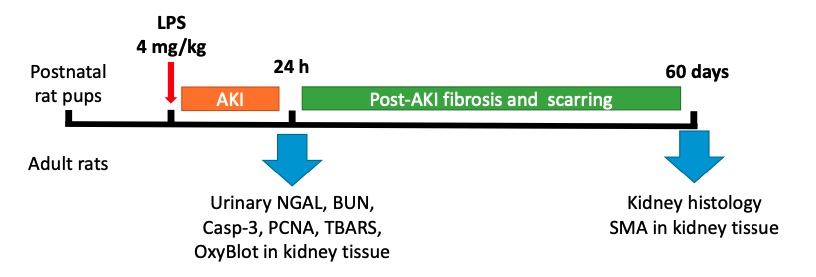 Fig. 1 Design of experiments with lipopolysaccharide (LPS)-mediated acute kidney injury (AKI) in adult and newborn rats.1,3
Evaluation Platform
- Animals: Mouse, Rat.
-
Measurements
We offer a comprehensive range of measurements to evaluate drug efficacy in the Lipopolysaccharide (LPS)-induced Acute Kidney Injury Model, using advanced technologies, including but not limited to:- General observations: body weight, mortality rate, urine output, and behavior changes.
- Histological analysis: renal tissue damage, tubular injury, and inflammatory cell infiltration using hematoxylin and eosin staining.
- Immunohistochemistry: detection of kidney-specific markers, such as renal injury markers (e.g., NGAL, KIM-1), inflammatory cytokines (e.g., IL-1β, IL-6, TNF-α) using ELISA or multiplex assays.
- Cytokine profiling: quantifying serum and kidney levels of pro-inflammatory cytokines (e.g., IL-1β, IL-6, TNF-α) using ELISA or multiplex assays.
- Serum biomarkers: assessing kidney function through blood urea nitrogen (BUN), creatinine levels, and other renal-specific biomarkers.
- Oxidative stress markers: measuring the levels of malondialdehyde (MDA) and glutathione (GSH) as indicators of oxidative stress.
- Gene/protein expression: using RT-qPCR and Western blot to analyze the expression of key proteins involved in inflammation, apoptosis, and kidney repair processes.
Additionally, we tailor our approach to meet specific research needs, offering customized experimental design and expert data analysis support.
Related Services
In addition to the LPS-Induced Acute Kidney Injury Model, we also offer services for other models of acute kidney injury. These models complement our folic acid model and provide a broad range of options to explore kidney damage and therapeutic interventions.
Our advantages
- Expertise: Our team consists of seasoned scientists with deep knowledge of nephrology and drug development.
- Customized Services: We offer personalized experimental design and model selection based on your specific research requirements.
- High-Quality Models: Our well-established LPS-induced AKI model is validated and reproducible, providing reliable results.
- Comprehensive Support: We provide full support, from model development to data analysis, ensuring the highest standard of service.
- Cutting-Edge Technologies: Our advanced measurement techniques and modern assays ensure accurate, sensitive, and comprehensive data.
Work with Us
- Summarize the project requirements and fill in the information collection form.
- Sign a CDA from both parties to further communicate information, such as targets.
- Select an animal model, discuss experimental design, and determine assay parameters.
- Project costing and project schedule forecasting.
- We provide a detailed project plan, including the required sample quantities, methods, and protocols.
- Both parties confirm the project details and start the project.
- Confirm the timeline of the project.
- We provide periodic results and information on the animal's condition.
- We will work together to make project adjustments as necessary.
- We provide a comprehensive project report promptly.
- We arrange transportation for the produced samples.
- We provide a discussion of the project results and help to arrange the next steps.
- Data storage and archiving.
FAQs
-
1. What is the advantage of using the LPS-induced AKI model?
This model effectively mimics sepsis-related kidney injury, making it invaluable for studying the inflammatory mechanisms underlying AKI and for evaluating therapeutic agents targeting sepsis-induced renal damage.
-
2. Can this model simulate chronic kidney disease?
No, the LPS-induced model primarily focuses on acute kidney injury. However, it offers valuable insights into the inflammatory and oxidative stress pathways, which can be relevant for chronic kidney disease research.
-
3. How long does the LPS treatment last in this model?
The LPS injection is typically administered over a short duration, with observations made 24–72 hours post-treatment to assess kidney function and injury severity.
-
4. Are there alternative models for studying kidney injury?
Yes, in addition to LPS, we also offer models induced by cisplatin, gentamicin, glycerol, and other agents, each providing different insights into renal injury mechanisms.
Published Data
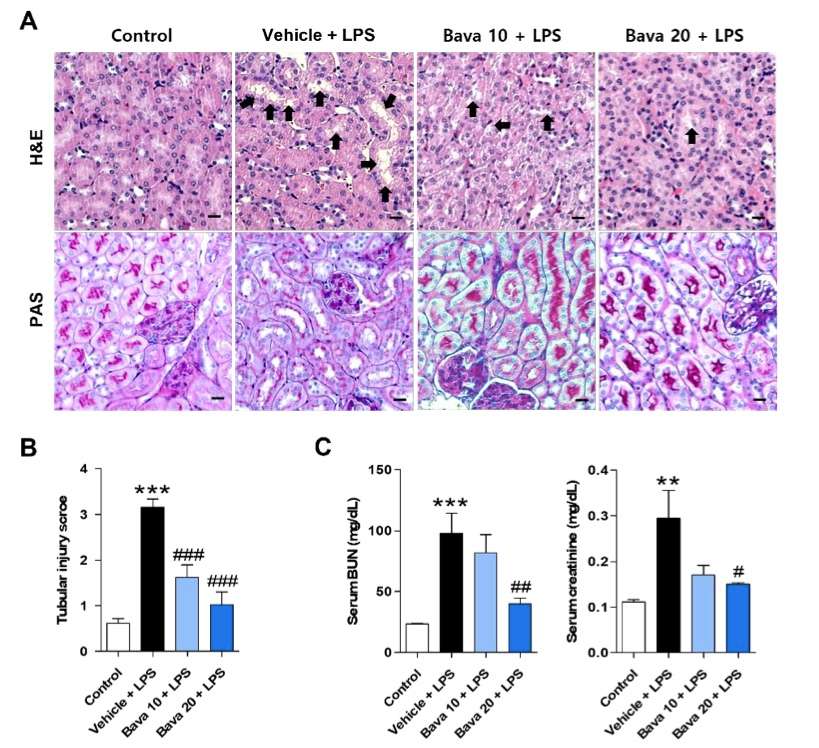 Fig 2. Bavachin restores histological changes and kidney function in LPS-induced AKI mice.2,3
To evaluate the histological changes in LPS-induced AKI mice treated with bavachin, kidney tissues from each group were stained with H&E and PAS. Histological examination revealed renal tubular vacuolation and tubular cell necrosis in the LPS-injected mice. However, Bavachin administration alleviated these structural injuries (Figure 2A). Additionally, the glycocalyx of the proximal tubule brush border was assessed using PAS staining to investigate brush border loss. PAS-positive cells (indicated by a strong pink color) were markedly reduced in LPS-injected mice, while bavachin treatment notably restored the number of PAS-positive cells (Figure 2B). Furthermore, the levels of blood urea nitrogen (BUN) and serum creatinine, key biomarkers of renal function, were significantly elevated in LPS-injected mice. Bavachin treatment at 10 mg/kg resulted in a slight reduction in these levels, though not significantly, whereas the administration of 20 mg/kg bavachin led to a significant decrease in BUN and serum creatinine levels (Figure 2C). These findings suggest that bavachin effectively ameliorates both structural damage and kidney dysfunction in LPS-induced AKI mice.
References
- Plotnikov, Egor Y et al. "Mechanisms of LPS-Induced Acute Kidney Injury in Neonatal and Adult Rats." Antioxidants (Basel, Switzerland) vol. 7,8 105. 8 Aug. 2018. https://doi.org/10.3390/antiox7080105
- Ban, Ka-Yun et al. "Prevention of LPS-Induced Acute Kidney Injury in Mice by Bavachin and Its Potential Mechanisms." Antioxidants (Basel, Switzerland) vol. 11,11 2096. 24 Oct. 2022. https://doi.org/10.3390/antiox11112096
- Distributed under Open Access license CC BY 4.0, without modification.
For Research Use Only.