
Cystitis Modeling & Pharmacodynamics Services
Creative Biolabs offers flexible services for customized models, and our experienced team ensures high-quality support throughout the research process, from experimental design to data interpretation. Our cystitis models provide an ideal tool for preclinical testing and therapeutic evaluation.
Introduction
Cystitis is an inflammation of the bladder, often caused by infection, but can also result from chemical irritants, radiation therapy, or autoimmune disorders. The most common form is bacterial cystitis, typically caused by Escherichia coli (E. coli), which enters the urinary tract and infects the bladder. This form is generally treatable with antibiotics. Another type, interstitial cystitis (IC), also known as painful bladder syndrome, is a chronic condition that causes bladder pain and frequent urination without an infection. The exact cause of IC remains unclear, but it is believed to involve a defect in the bladder lining, leading to irritation and inflammation. Radiation cystitis occurs as a complication of radiation therapy used to treat pelvic cancers, where radiation damages the bladder wall, leading to inflammation and bleeding. Chemical cystitis is caused by exposure to irritants, such as certain medications or hygiene products. Hemorrhagic cystitis, characterized by bladder bleeding, can be caused by viral infections or chemotherapy. Treatment varies depending on the cause, with bacterial cystitis responding to antibiotics, while chronic conditions like IC may require long-term symptom management, including medications and lifestyle modifications. Understanding the different types of cystitis is essential for effective diagnosis and treatment.
Cystitis Models
Creative Biolabs offers a wide range of well-established rodent models for cystitis and bladder inflammation, including models for acute and chronic cystitis, interstitial cystitis, and bladder infection. These models are meticulously designed to replicate the underlying mechanisms of human bladder disorders, providing a comprehensive platform for evaluating therapeutic candidates. Our models incorporate detailed assessments of inflammatory responses, urinary parameters, and bladder tissue changes, enabling a precise understanding of drug efficacy in preclinical research. Our experienced scientists work collaboratively with you at every stage of the project, from experimental design to data interpretation, ensuring that high-quality, reliable results are delivered. To explore more about our cystitis models and how they can support your research, please follow the links below:
| Cystitis Model | Simulates | Evaluates Drugs | Animal species |
| Cyclophosphamide (CYP) Induced Cystitis Model | Bladder inflammation and tissue damage due to cyclophosphamide | Anti-inflammatory agents, pain relief drugs, bladder protective therapies, and agents for cystitis treatment | Rat |
| Lipopolysaccharide (LPS) Induced Cystitis Model | Acute urinary tract infection (UTI) and bladder inflammation caused by LPS exposure | Antibiotics, anti-inflammatory drugs, immunomodulatory agents, and treatments targeting infection-related cystitis | Mouse, Rat |
Evaluation Platform
- Animals: Mouse, Rat.
-
Measurements
We offer a variety of measurements for evaluating drug efficacy in rodent cystitis models, utilizing advanced techniques, including but not limited to:- General observations: Urine frequency, bladder capacity, body weight, and mortality rate.
- Histopathology: Bladder tissue inflammation, edema, epithelial cell injury, and fibrosis.
- Immunohistochemistry: Infiltration of immune cells (e.g., neutrophils, macrophages) in bladder tissues.
- Cytokine profiling (e.g., ELISA): Expression levels of inflammatory cytokines such as TNF-α, IL-6, IL-1β, and chemokines.
- Urinary biomarkers: Measurement of urinary levels of inflammatory mediators (e.g., NGAL, IL-18), and bacterial load (for infection models).
- Behavioral analysis: Pain and discomfort assessments via paw licking and vocalization scores.
- Gene/protein expression profiling via RT-qPCR and Western blot techniques: Analysis of bladder tissue markers for inflammation, fibrosis, and tissue repair.
In addition to these established cystitis models, our team can develop customized animal models tailored to specific research needs, using literature and prior studies as a guide. We assist in experimental design, model selection, and data analysis to ensure the most effective approach to your project.
Related Services
In addition to the cystitis models, we also offer a range of other animal models for urinary system diseases, including those for bladder cancer, urinary tract infections, and kidney stones. These models are crucial for evaluating various therapeutic strategies for these conditions. Here are some of the related models:
- Autoimmune Nephropathy Models
- Acute Kidney Injury (AKI) Models
- Chronic Kidney Disease (CKD) Models
- Metabolic Nephropathy Models
- Hyperuricemia Models
- Kidney Transplantation Models
Our advantages
- Customization and Flexibility: Our models can be customized to fit your specific research goals. Whether you need modifications in the induction process, treatment regimens, or evaluation methods, we work closely with you to ensure that the model meets your study's unique requirements.
- Advanced Technology and Comprehensive Evaluations: We utilize state-of-the-art techniques like immunohistochemistry, cytokine profiling, behavioral analysis, and biomarker measurement to provide detailed insights into your research. Our models are designed to give you an in-depth understanding of drug efficacy and underlying disease mechanisms.
- Full Support from Start to Finish: From experimental design to data interpretation, our team is with you every step of the way. We provide personalized support, ensuring that you get the best results in a timely and efficient manner.
- Quality and Reliability: We are committed to delivering high-quality models that meet the highest standards of scientific integrity. Our rigorous quality control processes ensure reproducibility and accuracy, giving you confidence in the results of your research.
- Proven Success: Our models have been successfully used in a wide range of preclinical studies, helping researchers advance drug development and therapeutic discovery. With our expertise and commitment to excellence, we are a trusted partner for your cystitis research needs.
Work with Us
- Summarize the project requirements and fill in the information collection form.
- Sign a CDA from both parties to further communicate information, such as targets.
- Select an animal model, discuss experimental design, and determine assay parameters.
- Project costing and project schedule forecasting.
- We provide a detailed project plan, including the required sample quantities, methods, and protocols.
- Both parties confirm the project details and start the project.
- Confirm the timeline of the project.
- We provide periodic results and information on the animal's condition.
- We will work together to make project adjustments as necessary.
- We provide a comprehensive project report promptly.
- We arrange transportation for the produced samples.
- We provide a discussion of the project results and help to arrange the next steps.
- Data storage and archiving.
FAQs
-
1. What types of cystitis models are available?
We offer acute cystitis models induced by cyclophosphamide and chronic cystitis models, including those induced by bacterial infection or chemical agents.
-
2. How can these models help in my research?
Our cystitis models simulate the inflammation, pain, and infection seen in human bladder disorders, allowing you to assess potential therapeutics for conditions such as UTIs and interstitial cystitis.
-
3. Can you customize cystitis models based on specific research needs?
Yes, our team can design specialized models that cater to your specific research requirements, using literature-based approaches and your input.
-
4. What measurements do you offer for evaluating cystitis models?
We provide comprehensive measurements, including bladder histopathology, urinary biomarkers, cytokine profiling, behavioral analyses, and more.
-
5. How long does it take to get results from the cystitis models?
Depending on the model and the experimental design, results typically take 4–8 weeks to process and analyze.
Published Data
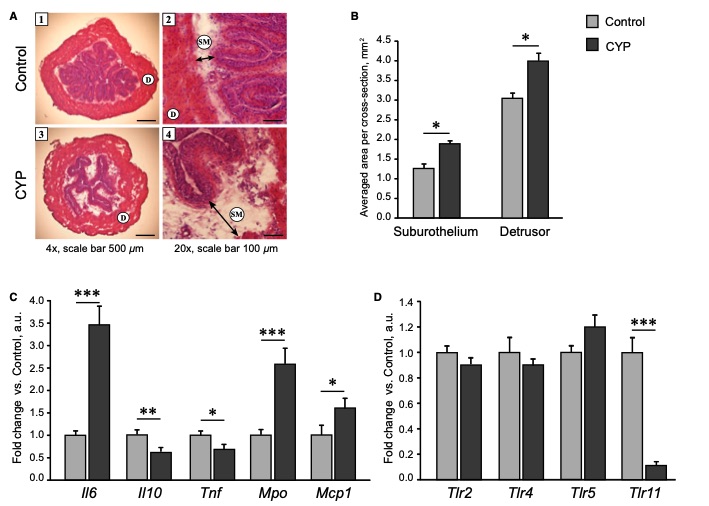 Fig.1 Inflammatory response in the mouse bladder under chronic CYP administration.1
The presence of inflammation was initially assessed by visual inspection of bladder gross morphology in H&E-stained cross-sections. Chronic administration of cyclophosphamide (CYP) at 80 mg/kg induced significant edema in the suburothelial layer, indicating an inflammatory response (Fig. 1A). Swelling of the submucosa, which connects the urothelium to the detrusor smooth muscle layer, resulted in the detachment of urothelial cells from the detrusor, a feature clearly observed under low magnification. Quantitative analysis revealed a 50% increase in the area occupied by suburothelial connective tissues (submucosa and lamina propria) following CYP treatment (Fig. 1B). Additionally, moderate edema was observed in the muscle layer, with the thickness of the detrusor increasing by 30%. The separation of smooth muscle cell bundles by a transparent substance, indicative of liquid infiltration, was also evident (compare images (1) and (3) in Fig. 1A). To characterize the inflammatory response, gene expression analysis was performed on whole bladders using RT-PCR (Fig. 1C and D). Chronic CYP treatment led to a marked increase in Il6 expression, while Il10 and tumor necrosis factor (Tnf) levels showed a small but significant decrease. The expression of myeloperoxidase (Mpo) and monocyte chemotactic protein-1 (Mcp1 or Ccl2) was significantly elevated, indicating infiltration of neutrophils and monocytes into the bladder tissue. Although the expression of toll-like receptors (Tlr) 2, 4, and 5 remained unaffected, Tlr11 expression was nearly abolished following CYP treatment.
Reference
- Golubeva, Anna V et al. "The mouse cyclophosphamide model of bladder pain syndrome: tissue characterization, immune profiling, and relationship to metabotropic glutamate receptors." Physiological Reports vol. 2,3 e00260. 27 Mar. 2014. https://doi.org/10.1002/phy2.260 Distributed under Open Access license CC BY 4.0, without modification.
For Research Use Only.