
Zymosan A (ZIA) induced Pericarditis Modeling & Pharmacodynamics Service
Introduction
Pericarditis, an inflammatory condition affecting the heart's protective sac, the pericardium, can lead to significant pain, discomfort, and potentially severe cardiac complications. Understanding its complex mechanisms is crucial for developing effective treatments.
At Creative Biolabs, we leverage our extensive expertise to offer a variety of well-established preclinical models, including the Zymosan A (ZIA)-induced pericarditis model, designed to rigorously evaluate the efficacy of novel therapeutic compounds for this challenging disease.
Zymosan A-Induced Pericarditis Model
The ZIA-induced pericarditis model is a highly regarded experimental system for investigating acute and chronic pericardial inflammation. ZIA, a β-glucan derived from yeast, acts as a potent pathogen-associated molecular pattern (PAMP), activating innate immune responses, notably through Toll-like receptor 2 (TLR2) and Dectin-1. This activation triggers a cascade of pro-inflammatory events, including cytokine release and immune cell recruitment, closely mimicking the sterile inflammatory processes seen in human pericarditis.
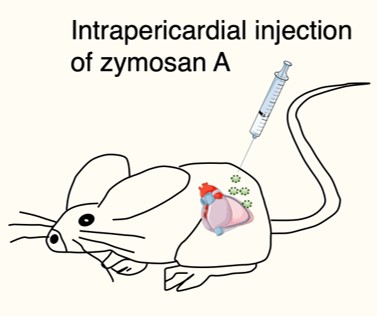 Fig.1 Schematic of ZIA-induced acute pericarditis model.1
Model Construction Steps
The construction of the ZIA-induced pericarditis model typically involves the direct administration of ZIA into the pericardial sac. This targeted approach ensures a localized and reproducible inflammatory response.
01Animal Preparation
Rodents are anesthetized and prepared for aseptic surgical procedures.
02ZIA Solution Preparation
A precisely measured dose of ZIA is prepared in a sterile vehicle (e.g., saline solution).
03Surgical Exposure
A small incision is made to expose the thoracic cavity and visualize the pericardial sac.
04Direct Injection
Under direct visualization, the ZIA solution is carefully injected into the pericardial space using a fine-gauge needle.
05Post-Operative Care
Animals receive appropriate analgesia and are monitored for recovery and the development of inflammatory signs.
Strengths and Limitations
Strengths:
- High Reproducibility: Consistently induces robust and measurable pericardial inflammation.
- Acute and Chronic Phases: Allows for the study of both immediate inflammatory responses and long-term fibrotic changes.
- Translational Relevance: Mimics key pathological features of human pericarditis, including the central role of the NLRP3 inflammasome/IL-1β axis.
- Immune Cell Profiling: Facilitates detailed analysis of inflammatory cell populations in various compartments.
Limitations:
- Species-Specific Differences: As a rodent model, it may not fully replicate all human complexities, requiring careful interpretation of results for clinical translation.
- Invasive Procedure: The model's invasive surgical injection demands specialized skills and limits repeated interventions, potentially introducing variability.
Evaluation Platform
Creative Biolabs provides a comprehensive suite of advanced evaluation techniques to thoroughly characterize the inflammatory response and therapeutic efficacy in the ZIA-induced pericarditis model. Our platform integrates biochemical, molecular, cellular, histopathological, and imaging analyses to deliver robust and actionable data.
Test Indicators:
- Pericardial effusion volume and composition
- Pericardial thickening (measured by imaging and histology)
- Inflammatory cell infiltration (e.g., neutrophils, macrophages, lymphocytes)
- Levels of pro-inflammatory cytokines and chemokines (e.g., IL-1β, TNF-α, IL-6)
- Gene expression analysis of inflammatory markers (e.g., NLRP3 components)
- Protein analysis of inflammatory mediators
- Cardiac function assessment via echocardiography (e.g., ejection fraction, fractional shortening)
- Histopathological scoring for inflammation and fibrosis (e.g., tissue staining)
Applications
- Simulating Diseases: This model effectively mimics human pericarditis, including idiopathic (sterile inflammation), post-myocardial infarction (Dressler's Syndrome, autoimmune), and aspects of infectious pericarditis. Crucially, it allows investigation of disease recurrence mechanisms.
- Evaluating Drugs: It serves as a robust platform for assessing a broad spectrum of agents. This includes conventional NSAIDs and colchicine, alongside targeted IL-1 blockers and novel NLRP3 inflammasome inhibitors, representing cutting-edge anti-inflammatory development.
- Investigating Treatments: Beyond specific drugs, the ZIA model enables comprehensive investigation of diverse therapeutic strategies. This encompasses general anti-inflammatory, immunomodulatory, and anti-fibrotic approaches to prevent or reverse pericardial thickening and adhesions, which can lead to constrictive pericarditis.
- Biomarker Discovery: The model facilitates identifying and validating novel diagnostic and prognostic biomarkers. Analyzing gene/protein expression and cellular profiles in pericardial fluid/tissue helps uncover indicators correlating with disease activity, severity, and treatment response, ultimately aiding clinical diagnosis.
- Personalized Medicine: A crucial application is its contribution to personalized medicine. Detailed phenotyping of therapeutic responses helps identify molecular/cellular signatures predicting drug efficacy. This guides patient-specific treatment, matching effective therapies to individual profiles.
Our Advantages
- Unparalleled Expertise: Deep scientific knowledge and high-end copywriting for impactful results.
- Customized Solutions: Tailored model development to precisely meet your research objectives.
- Comprehensive Analysis: State-of-the-art facilities for detailed endpoint analysis across multiple platforms.
- Actionable Insights: Rigorous data interpretation and clear reporting to accelerate your drug development.
- Integrated Approach: Seamless integration with other in vitro and in vivo models for holistic understanding.
Work with Us
- Summarize the project requirements and fill in the information collection form.
- Sign a CDA from both parties to further communicate information, such as targets.
- Select an animal model, discuss experimental design, and determine assay parameters.
- Project costing and project schedule forecasting.
- We provide a detailed project plan, including the required sample quantities, methods, and protocols.
- Both parties confirm the project details and start the project.
- Confirm the timeline of the project.
- We provide periodic results and information on the animal's condition.
- We will work together to make project adjustments as necessary.
- We provide a comprehensive project report promptly.
- We arrange transportation for the produced samples.
- We provide a discussion of the project results and help to arrange the next steps.
- Data storage and archiving.
Contact Us
Creative Biolabs is dedicated to advancing therapeutic solutions for inflammatory heart conditions. Our robust ZIA-Induced Pericarditis Model and comprehensive services are designed to guide your drug development pipeline. Contact us today to discuss your specific research needs.
FAQs
-
Q1: Why is the ZIA model considered relevant for human pericarditis?
A: The ZIA model is highly relevant because ZIA activates innate immune pathways, particularly the NLRP3 inflammasome and IL-1β axis, which are increasingly recognized as central drivers of inflammation in human acute and recurrent pericarditis. The model faithfully replicates key pathological features observed in patients, such as pericardial effusion, thickening, and specific inflammatory cell infiltration, making it a valuable tool for translational research.
-
Q2: Can this model differentiate between acute and chronic inflammation?
A: Absolutely. The ZIA-induced pericarditis model is versatile enough to study both the acute inflammatory phase, typically observed within hours to days post-injection, and the progression to chronic inflammation, which can manifest over weeks to months with features like fibrosis and adhesions. This adaptability allows researchers to investigate different stages of disease progression and the efficacy of interventions at various time points.
-
Q3: What specific inflammatory pathways can be studied using this model?
A: This model is particularly effective for dissecting the roles of the NLRP3 inflammasome, IL-1β signaling, and other downstream inflammatory cascades involving cytokines like TNF-α and IL-6. It also enables the study of immune cell recruitment and activation, including the dynamics of neutrophils, macrophages (such as GATA6+ resident macrophages), and lymphocytes within the pericardial space and associated immune reservoirs.
-
Q4: Can you customize the ZIA model for specific research needs?
A: Yes, customization is a cornerstone of our service. We can tailor the ZIA model to your precise research objectives, including adjusting the ZIA concentration, varying the duration of the study to focus on acute or chronic phases, and utilizing specific animal strains or genetically modified models to investigate particular pathways or cell types. Our team collaborates closely with clients to design optimal study protocols.
-
Q5: What are the key advantages of using ZIA over other inflammatory agents?
A: ZIA offers distinct advantages due to its potent and reproducible activation of the innate immune system via well-defined pattern recognition receptors. This leads to a robust and consistent inflammatory response that closely mimics aspects of sterile inflammation seen in human pericarditis, making it a highly reliable and translatable model compared to less specific inflammatory stimuli.
-
Q6: Is it possible to evaluate combination therapies in this model?
A: Absolutely. The ZIA-induced pericarditis model is an excellent platform for evaluating combination therapies. Researchers can assess the synergistic or additive effects of combining different anti-inflammatory agents, immunomodulators, or other therapeutic strategies. This capability is crucial for developing more effective and comprehensive treatment regimens for complex inflammatory diseases like pericarditis.
Published Data
A seminal study utilized the ZIA-induced pericarditis model in mice to demonstrate the critical role of the NLRP3 inflammasome in acute pericardial inflammation. Their research showed that intrapericardial injection of ZIA led to characteristic features of inflamed pericardium, including effusion and thickening, alongside increased NLRP3 inflammasome expression. Crucially, inhibition of the NLRP3 inflammasome or IL-1β significantly reduced these pathological alterations, validating the model's utility for evaluating targeted anti-inflammatory therapies. This work underscores the model's translational relevance for understanding and treating human pericarditis.
Reference
- Bonaventura, Aldo et al. "Novel Pathophysiological, Diagnostic and Therapeutic Concepts in Acute and Recurrent Pericarditis." Reviews in cardiovascular medicine vol. 24,3 77. 3 Mar. 2023. Distributed under Open Access license CC BY 4.0. The image was modified by extracting and using only part of the original image. https://doi.org/10.31083/j.rcm2403077
For Research Use Only.