
Streptozotocin (STZ) induced Type I Diabetic Cataract Modeling & Pharmacodynamics Service
Creative Biolabs provides a variety of well-established animal models for evaluating the efficacy of drugs targeting Type I diabetic cataracts. These models simulate the pathophysiology of diabetic cataracts and offer a reliable platform for therapeutic development and testing.
Introduction
Type I diabetes is a chronic condition caused by autoimmune destruction of insulin-producing cells in the pancreas, leading to lifelong insulin dependence. Over time, uncontrolled hyperglycemia in Type I diabetes can lead to several complications, including diabetic cataract. Cataracts in diabetic patients occur due to the accumulation of sorbitol and advanced glycation end-products (AGEs) in the lens, which disrupt the normal function and transparency of the eye. In Type I diabetic cataract, high blood glucose levels increase the flux of glucose into the lens, where it is converted to sorbitol by aldose reductase. This accumulation of sorbitol draws water into the lens, causing swelling, opacity, and eventually cataract formation. Diabetic cataract is a significant cause of vision impairment and blindness in diabetic patients, and it can worsen with poorly controlled blood sugar levels. Early detection and management are crucial to preventing irreversible damage to the lens.
Disease Models and Applications
The Streptozotocin (STZ) induced Type I Diabetic Cataract Model is commonly used for investigating the pathophysiology and potential treatments of diabetic cataracts. In this model, diabetes is induced in rodents through a single injection of streptozotocin (STZ), which leads to elevated blood glucose levels and mimics the chronic hyperglycemia seen in human Type I diabetes. The elevated glucose levels promote the accumulation of sorbitol and other metabolic byproducts in the lens, leading to cataract formation. This model is advantageous as it reliably induces cataracts similar to those observed in diabetic patients, making it a useful tool for testing potential therapeutic agents aimed at preventing or reversing cataract formation. However, the model's limitations include the variability of cataract onset and progression, which can depend on factors such as the rodent strain used and the severity of hyperglycemia.
- Simulates: The STZ induced Type I Diabetic Cataract Model simulates diabetic cataract formation, a common complication of Type I diabetes. It mimics the metabolic disturbances and lens opacity associated with chronic hyperglycemia, enabling the study of the molecular and cellular mechanisms behind cataract formation in diabetic conditions.
- Evaluates Drugs: This model is used to evaluate drugs aimed at preventing or reversing cataract formation in diabetic conditions. It is particularly useful for testing aldose reductase inhibitors, antioxidants, and other compounds that can reduce oxidative stress or prevent sorbitol accumulation in the lens. The model also allows the evaluation of drugs that can manage hyperglycemia and improve overall lens health.
Measurements
We offer a variety of measurements for evaluating drug efficacy in the Streptozotocin (STZ) induced Type I Diabetic Cataract Model, utilizing advanced technologies, including but not limited to:
- General Observations: Body weight, food intake, blood glucose levels, and mortality rate.
- Ophthalmic Examinations: Slit-lamp biomicroscopy to assess the onset and progression of cataract formation in the lens.
- Histopathology: Examination of lens morphology to assess opacity, cellular changes, and structural damage.
- Oxidative Stress Markers: Measurement of reactive oxygen species (ROS) levels in lens tissue to assess the extent of oxidative damage.
- Gene/Protein Expression Profiling via RT-qPCR and Western Blot: Analysis of key genes and proteins involved in the polyol pathway (e.g., aldose reductase) and lens cell integrity.
In addition to established models, our expertise extends to the development of novel animal models tailored to specific research needs. Our scientific team is available to assist in experimental design, model selection, and data analysis, ensuring a customized and effective approach to your project.
Related Services
In addition to the STZ induced diabetic cataract model, our company offers other diabetes complication models, such as those induced by high-fat diets, genetic modifications, and other chemical agents. These models allow for comprehensive evaluation of diabetic complications and potential therapies targeting various aspects of the disease.
- Streptozotocin (STZ) induced Type I Diabetic Skin Defect/Burn Model
- Streptozotocin (STZ) induced Type I Diabetic Foot Ulcer Model
- Streptozotocin (STZ) induced Type I Diabetic Peripheral Vascular Disease Model
- High-Fat Diet & Streptozotocin (STZ) induced Type II Diabetic Nephropathy Model
- db/db Type II Diabetic Nephropathy Model
Advantages
- Expert Support: Our experienced scientific team is available to assist with model selection, experimental design, and data analysis, providing personalized guidance throughout the research process.
- State-of-the-Art Technologies: We utilize advanced technologies and measurement techniques, such as Doppler ultrasound, immunohistochemistry, and cytokine profiling, to offer comprehensive data on drug efficacy and mechanisms of action.
- Reproducibility and Reliability: Our models are known for their reproducibility, providing consistent and reliable results across studies to support therapeutic development and regulatory submissions.
- Innovative Solutions: We continuously develop and refine our models to stay at the forefront of diabetes research, offering cutting-edge solutions to meet the evolving needs of the scientific community.
- Comprehensive Services: From model development to data analysis, we offer a full range of services, ensuring seamless support throughout your project and helping you achieve the best possible outcomes in diabetes research.
Work with Us
- Summarize the project requirements and fill in the information collection form.
- Sign a CDA from both parties to further communicate information, such as targets.
- Select an animal model, discuss experimental design, and determine assay parameters.
- Project costing and project schedule forecasting.
- We provide a detailed project plan, including the required sample quantities, methods, and protocols.
- Both parties confirm the project details and start the project.
- Confirm the timeline of the project.
- We provide periodic results and information on the animal's condition.
- We will work together to make project adjustments as necessary.
- We provide a comprehensive project report promptly.
- We arrange transportation for the produced samples.
- We provide a discussion of the project results and help to arrange the next steps.
- Data storage and archiving.
FAQs
-
Q: What is the STZ induced Type I Diabetic Cataract Model?
A: The STZ induced model is used to simulate diabetic cataract formation in rodents, induced by hyperglycemia through a single injection of streptozotocin, which mimics the metabolic disturbances seen in Type I diabetes.
-
Q: What drugs can be evaluated using this model?
A: This model is ideal for evaluating drugs such as aldose reductase inhibitors, antioxidants, and compounds that improve glucose control or reduce oxidative stress in the lens.
-
Q: How are cataracts measured in this model?
A: Cataracts are typically assessed using slit-lamp biomicroscopy, which allows for detailed observation of the lens opacity. Histopathological analysis is also performed to evaluate the structural damage.
-
Q: Can this model be customized?
A: Yes, we offer customization options, including varying the severity of hyperglycemia, adjusting treatment protocols, and selecting specific endpoints to suit your research needs.
-
Q: What other measurements are included in the evaluation process?
A: We provide a full range of measurements, including body weight, blood glucose levels, oxidative stress markers, and gene/protein expression profiling, to assess the molecular mechanisms of cataract formation.
Published Data
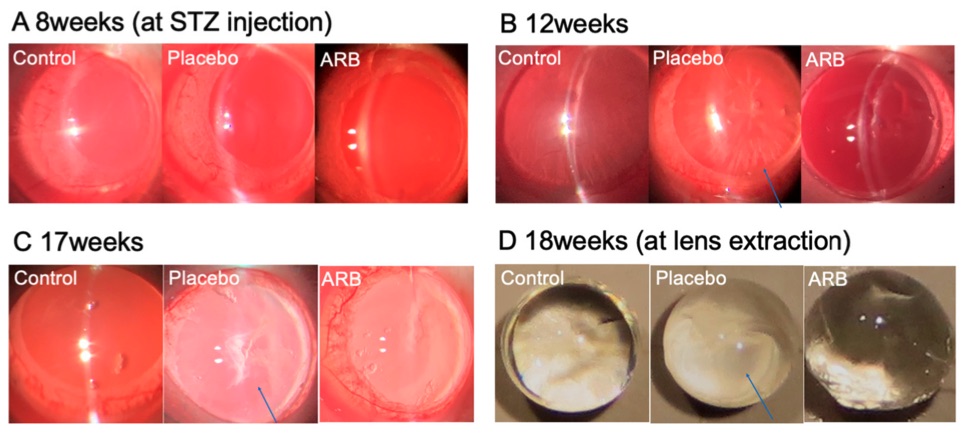 Fig. 1 Cataract Progression in STZ Rats and Its Suppression by angiotensin II receptor blocker (ARB).1
This study investigated the role of oxidative stress induced by the renin–angiotensin system (RAS) in cataract formation in streptozotocin induced diabetic rats (STZ), using angiotensin II receptor blockers (ARBs). The lenses of the rats were photographed during slit-lamp examination under inhalation anesthesia. (A) Following the Streptozotocin (STZ) injection, the lenses were clear in all groups. (B) At 12 weeks, lens opacity (indicated by arrows) was observed in the placebo groups. (C, D) The opacity worsened at 17 weeks and continued to progress during lens extraction, indicating the development of cataracts over time.
Reference
- Begum, Farmiza et al. "Dehydrozingerone promotes healing of diabetic foot ulcers: a molecular insight." Journal of Cell Communication and Signaling vol. 17,3 (2023): 673-688. DOI:10.1007/s12079-022-00703-0. Distributed under an Open Access license CC BY 4.0, without modification.
For Research Use Only.