
Bone Defect Modeling & Pharmacodynamics Services
Are you currently facing challenges such as inconsistent bone healing in preclinical trials, difficulty in maintaining stem cell viability in vivo, or high failure rates in critical-size defect repairs? Creative Biolabs helps you obtain definitive, regulatory-ready efficacy data and develop superior regenerative therapies through our advanced Bone Defect Modeling & Pharmacodynamics Services, utilizing verified critical-size defect (CSD) protocols and high-resolution multi-dimensional analysis platforms.
Overview of Bone Defect Modeling & Pharmacodynamics Services
The skeletal system is a dynamic tissue capable of remarkable self-repair; however, large-scale trauma, oncological resections, and congenital abnormalities often result in "Critical-Size Defects" (CSDs). These are osseous wounds that exceed the body's natural regenerative capacity, leading to non-union and permanent functional loss. Addressing these defects requires a sophisticated interplay between osteoconductive scaffolds, osteoinductive signals, and osteogenic cells. At Creative Biolabs, we understand that evaluating bone substitutes, whether they are based on silk fibroin, calcium phosphate ceramics, or bioactive glass, requires a deep understanding of the physiological "niche." Our pharmacodynamics services focus on how your therapeutic agent interacts with this microenvironment to promote mineralized nodule formation, vascular infiltration, and long-term tissue integration.
Bone Defect Models
Creative Biolabs provides a specialized suite of validated models in Rats and Rabbits to simulate diverse clinical scenarios. We focus on the establishment of true Critical-Size Defects (CSDs), ensuring that no spontaneous osseous regeneration occurs during the study period, thereby providing a clear window for evaluating your drug or material efficacy.
| Models | Related Disease | Drug Evaluation | Animal Species |
| Calvarial Defect Model | Craniofacial abnormalities, skull trauma, oncological resections of the cranium, and congenital defects (e.g., craniosynostosis). | Evaluation of osteoinductive growth factors, local delivery of small molecules, efficacy of barrier membranes, and 3D-printed scaffolds for non-weight-bearing flat bone regeneration. | Rat, Rabbit |
| Mandibular Defect Model | Periodontal disease, alveolar ridge atrophy, mandibular fractures, and reconstructive needs following oral maxillofacial tumor excision. | Assessment of guided bone regeneration (GBR) materials, dental implant osseointegration, bioactive glass fillers, and the impact of masticatory mechanical loading on periodontal regeneration. | Rat, Rabbit |
| Long Bone Defect Model | Non-union fractures, pseudoarthrosis, major limb trauma (segmental defects), osteomyelitis-associated bone loss, and osteoporosis-related fragility fractures. | Verification of load-bearing scaffolds, systemic anabolic agents, vascularization-promoting biologics (VEGF), and internal fixation device coatings to ensure biomechanical structural integrity. | Rat, Rabbit |
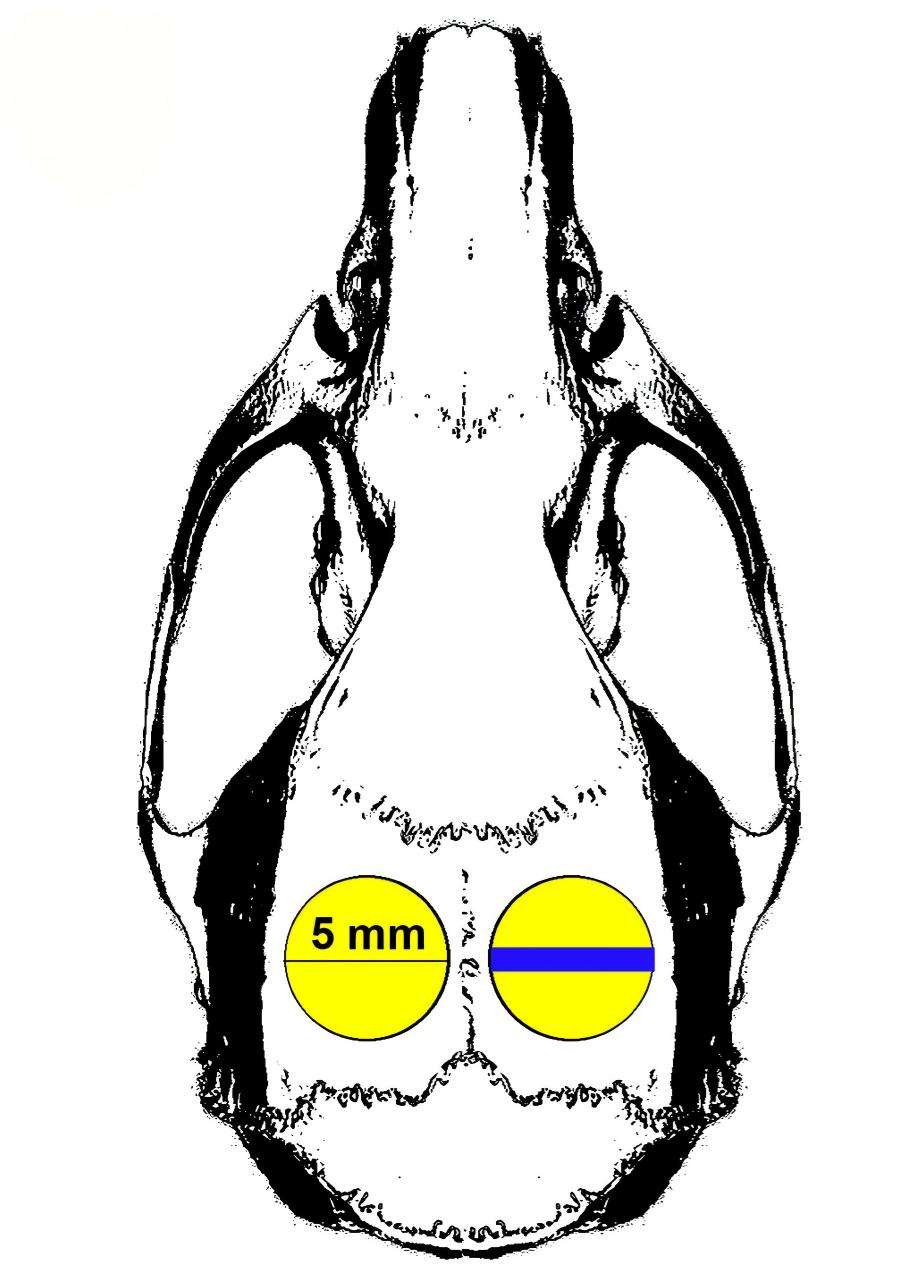 Fig.1 Schematic of rat cranial bone defects.1
Evaluation Platform of Our Service
Creative Biolabs' evaluation platform provides the depth of data required for high-impact publications and regulatory filings.
-
Biochemical & Molecular Analysis
- Osteogenic Marker Profiling: ALP, Osteocalcin, and Runx2 expression via qPCR.
- Cytokine Assays: Inflammatory profiling (TNF-α, IL-6) and pro-angiogenic markers (VEGF) via ELISA.
- Protein Expression: Western Blot analysis of BMP-signaling pathways.
-
Histopathological Examination
- Tissue Staining: H&E for morphology, Masson's Trichrome for collagen maturity, and Goldner's Trichrome for mineralized vs. unmineralized bone.
- Scoring Systems: ISO-standardized histomorphometric scoring for biocompatibility.
- Immunohistochemistry (IHC): Detection of GFP-labeled stem cells and vascular markers (CD31).
-
Behavioral & Functional Testing
- Gait Analysis: Quantitative assessment of limb usage and weight-bearing recovery in long-bone models.
- Motor Coordination: Testing functional recovery post-orthopedic intervention.
-
Advanced Imaging & Instrumentation
- Micro-CT (SkyScan): 3D reconstruction of bone volume (BV/TV), trabecular thickness, and porosity.
- Bone Mineral Density (BMD): Quantifying the quality of the newly formed regenerate.
- Mechanical Testing: Three-point bending and torsion tests to verify structural integrity.
Key Applications
Our models are designed to simulate clinical indications, including Non-union fractures, Osteoporosis-related defects, Bone tumors, and Craniofacial reconstruction. Creative Biolabs' platform is compatible with a wide range of therapeutic modalities:
- Small Molecules: Bone-targeting drugs and systemic metabolic modifiers.
- Biologics: Growth factors (BMPs, PDGF) and targeted antibody therapies.
- Gene & Cell Therapies: GFP-labeled BMSCs, gene-edited progenitor cells, and viral vector delivery.
- Advanced Biomaterials: Silk fibroin scaffolds, submicron-structured ceramics, and 3D-printed hydrogels.
Why Choose Us?
We offer highly characterized and validated strains of Rats and Rabbits, allowing for both high-throughput screening and larger-scale orthopedic simulation.
Our workflow offers a seamless transition from initial in vitro biocompatibility testing to definitive in vivo PD/PK studies, ensuring continuity in your data set.
Our team is led by PhD-level specialists with decades of experience in bone biology and biomaterial science, supported by a rigorous quality management system to ensure data integrity and animal welfare.
Work with Us
- Summarize the project requirements and fill in the information collection form.
- Sign a CDA from both parties to further communicate information, such as targets.
- Select an animal model, discuss experimental design, and determine assay parameters.
- Project costing and project schedule forecasting.
- We provide a detailed project plan, including the required sample quantities, methods, and protocols.
- Both parties confirm the project details and start the project.
- Confirm the timeline of the project.
- We provide periodic results and information on the animal's condition.
- We will work together to make project adjustments as necessary.
- We provide a comprehensive project report promptly.
- We arrange transportation for the produced samples.
- We provide a discussion of the project results and help to arrange the next steps.
- Data storage and archiving.
Frequently Asked Questions
-
Q: How do you ensure that the bone defect doesn't heal spontaneously?
A: We utilize verified Critical-Size Defect (CSD) dimensions, such as the 15mm ulnar defect in rabbits, which combined with surgical techniques like periosteum removal. This ensures that any observed healing is directly attributable to your treatment.
-
Q: Can we track the fate of transplanted stem cells within your scaffolds?
A: Yes. Creative Biolabs offers Lenti-GFP labeling and longitudinal tracking via IHC and fluorescence imaging to monitor cell survival, proliferation, and differentiation for up to 24 weeks.
-
Q: Do you offer mechanical testing of the regenerated bone?
A: Absolutely. We provide a full suite of biomechanical tests (3-point bending, compression) to ensure the regenerated tissue meets the structural requirements for clinical application.
-
Q: What is the typical duration of a bone regeneration study?
A: While early markers can be seen at 4-8 weeks, we recommend 12-24 week studies for definitive "union" assessment and scaffold resorption profiling.
Published Data
Objective: To evaluate the bone-regeneration potential of porous calcium phosphate ceramics with different surface topographies in a non-healing environment.
Model Used: Rabbit 15.0 mm Ulnar Segmental CSD Model.
Results: This standardized CSD model successfully differentiated the osteoinductive capacity of various architectures, demonstrating that submicron-structured BCP achieved a superior 80% union rate and 37.7% ± 8.5% bone area by week 24. Notably, the model's inherent inability to self-heal provides an uncompromising benchmark for validating material-driven osteogenesis. These results highlight the model as a robust, high-fidelity platform for preclinical screening of next-generation scaffolds, ensuring clear pharmacological differentiation between micron and submicron surface-modulated therapies.
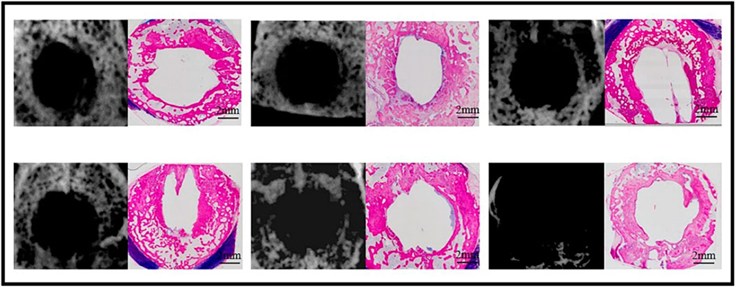 Fig.2 Bone development at week 12 in sham cranial defects (X-Ray and histological overviews).2
Creative Biolabs provides the expertise, the models, and the high-resolution data needed to move your bone-regeneration project from the lab to the clinic. Our comprehensive Bone Defect Modeling & Pharmacodynamics Services are designed to provide the rigorous evidence required for your next regulatory milestone. Contact Our Team for More Information and to Discuss Your Project.
References
- Zhang, Wenjie, et al. "Porous silk scaffolds for delivery of growth factors and stem cells to enhance bone regeneration." PloS one 9.7 (2014): e102371. Distributed under Open Access license CC BY 4.0. The image has been modified; only part of the original image. DOI: https://doi.org/10.1186/s13018-019-1386-4.
- Lei, Wei, et al. "Establishing rabbit critical-size bone defects to evaluate the bone-regeneration potential of porous calcium phosphate ceramics." Frontiers in Bioengineering and Biotechnology 12 (2025): 1524133. Distributed under Open Access license CC BY 4.0, without modification. DOI: https://doi.org/10.3389/fbioe.2024.1524133.
For Research Use Only.