
Non-Obese Type I Diabetes (T1D) Mouse Modeling & Pharmacodynamics Service
Creative Biolabs offers specialized services for Non-Obese Type I Diabetes, providing well-established animal models to simulate disease progression. These models can be used for drug evaluation, therapeutic development, and efficacy testing in preclinical research. Our team ensures high-quality support throughout your project, from experimental design to data interpretation.
Introduction
Diabetes is a chronic metabolic disorder characterized by high blood glucose levels due to defects in insulin secretion, action, or both. There are two main types of diabetes: Type 1 Diabetes (T1D) and Type 2 Diabetes (T2D). Type 1 Diabetes is an autoimmune condition where the body's immune system attacks and destroys insulin-producing beta cells in the pancreas. As a result, individuals with T1D must rely on external insulin sources to regulate their blood sugar. On the other hand, Type 2 Diabetes is primarily caused by insulin resistance, where the body's cells do not respond effectively to insulin. Both forms of diabetes lead to long-term complications, including cardiovascular disease, kidney failure, and neuropathy.
Disease Models and Applications
The Non-Obese Type 1 Diabetes Mouse Model (NOD mice) is one of the most widely used preclinical models for studying Type 1 Diabetes. The NOD mouse model develops autoimmune-mediated insulin-dependent diabetes that closely resembles the human disease, making it an invaluable tool for understanding the pathophysiology of T1D. This model is induced through the spontaneous development of insulitis, where immune cells infiltrate the pancreatic islets, ultimately leading to the destruction of insulin-producing beta cells. The NOD mouse model exhibits several features of human T1D, including hyperglycemia, insulin deficiency, and autoimmune activity. However, a limitation of the model is its relatively low incidence rate, which may require larger sample sizes for statistical significance. Additionally, while NOD mice provide valuable insights into autoimmune diabetes, they may not fully replicate all aspects of human T1D, such as the role of environmental triggers.
- Simulates: The Non-Obese Type 1 Diabetes Mouse Model simulates Type 1 Diabetes (T1D) in humans, focusing on autoimmune destruction of pancreatic beta cells. This model mirrors the immune-mediated pathogenesis and the development of insulin dependency in diabetic individuals.
- Evaluates Drugs: This model is widely used to evaluate drugs for autoimmune diabetes, including immune-modulating therapies, insulin analogs, and drugs targeting beta-cell regeneration. The NOD mouse model is essential for assessing the effectiveness of potential treatments in regulating blood glucose levels and reversing autoimmune-mediated beta-cell destruction.
Measurements
We offer a variety of measurements for evaluating drug efficacy in the Non-Obese Type 1 Diabetes Mouse Model, utilizing advanced technologies, including but not limited to:
- General observations: Body weight, blood glucose levels, insulin production, and mortality rate.
- Immunohistochemistry: Infiltration of immune cells (e.g., T-cells, macrophages) in pancreatic islets.
- Cytokine profiling (e.g., ELISA): Expression levels of inflammatory mediators such as TNF-α, IL-6, IL-1β, and interferon-gamma (IFN-γ).
- Hematology analysis and serum biomarkers: Blood glucose levels, insulin secretion, and pancreatic enzymes.
- Gene/protein expression profiling: RT-qPCR and Western blot techniques to assess beta-cell function, apoptosis markers, and immune-related pathways.
- Histopathological analysis: Examination of pancreatic tissue for signs of insulitis, beta-cell destruction, and fibrosis.
In addition to the established Non-Obese Type 1 Diabetes Mouse Model, we offer a variety of other rodent models to study metabolic diseases. Our scientific team is available to guide your project from model selection to experimental design and data analysis.
Related Services
In addition to the non-obese diabetic type I diabetes mouse model, we also offer a range of other diabetes models induced by different methods. Each model offers unique insights into the pathophysiology of diabetes and its complications, allowing for comprehensive drug testing and therapeutic evaluation.
- Streptozotocin (STZ) induced Type I Diabetes Model
- Alloxan induced Type I Diabetes Model
- db/db Type II Diabetes Mouse Model
- Intrauterine Growth Retardation (IUGR)-Diabetic Model
- STZ-NA induced Type II Diabetes Rat Model
- Zucker Diabetic Fatty (ZDF) Type II Diabetes Rat Model
- High-Fat Diet & Streptozotocin (STZ) induced Type II Diabetes Model
- Combined Spleen & Partial Pancreas Resection & Glucocorticoid induced Type II Diabetes Model
Advantages
- Tailored Solutions: We understand that every research project is unique. That's why we offer customized models and experimental designs to meet your specific research objectives.
- Cutting-Edge Technology: We utilize advanced techniques and technologies for accurate, reliable, and reproducible results, ensuring the highest level of precision in your studies.
- End-to-End Support: From experimental design to data analysis, we provide comprehensive support at every stage of your project, ensuring seamless execution and valuable insights.
- Proven Track Record: With years of experience in the field, our models have been successfully used in numerous high-impact studies, delivering consistent and scientifically valid results.
- Cost-Effective: We offer competitive pricing without compromising on quality, ensuring that you get the best value for your research investment.
Work with Us
- Summarize the project requirements and fill in the information collection form.
- Sign a CDA from both parties to further communicate information, such as targets.
- Select an animal model, discuss experimental design, and determine assay parameters.
- Project costing and project schedule forecasting.
- We provide a detailed project plan, including the required sample quantities, methods, and protocols.
- Both parties confirm the project details and start the project.
- Confirm the timeline of the project.
- We provide periodic results and information on the animal's condition.
- We will work together to make project adjustments as necessary.
- We provide a comprehensive project report promptly.
- We arrange transportation for the produced samples.
- We provide a discussion of the project results and help to arrange the next steps.
- Data storage and archiving.
FAQs
-
Q: What is the typical experimental duration for the NOD-T1D model?
A: NOD-T1D mice typically begin developing diabetes between 12 to 16 weeks of age. The experiment duration can range from 6 weeks to several months, depending on the research goals.
-
Q: How do you assess diabetes onset in the NOD-T1D model?
A: Diabetes progression is monitored through regular blood glucose measurements, pathological analysis of pancreatic tissues, and functional assessments of pancreatic islet cells.
-
Q: Do you offer data analysis services?
A: Yes, we provide data collection and analysis services, including immunological markers, blood glucose levels, and histopathological assessments, to help you quickly obtain and interpret your results.
-
Q: Can the NOD-T1D model be customized for specific research needs?
A: Absolutely! We can tailor the experimental design and protocols to meet your specific research objectives, ensuring your study is aligned with your goals.
-
Q: How can I get more information about your NOD-T1D services?
A: Feel free to contact our customer service team for detailed consultations, quotes, and customized service options.
Published Data
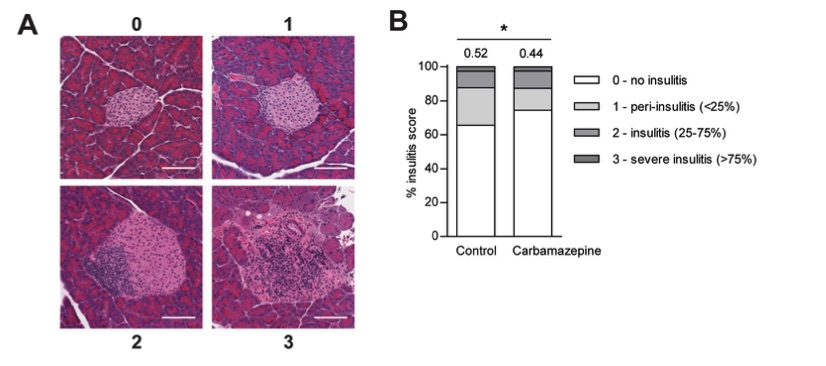 Fig. 1 Carbamazepine treatment reduces insulitis in NOD mice.1
Carbamazepine treatment reduces insulitis in NOD mice. To further investigate its immunosuppressive potential, we assessed additional immune function markers. Immune-islet infiltration (insulitis) in H\&E-stained pancreatic sections was quantified and scored based on established criteria (Fig. 1A). At 7 weeks of age, NOD mice treated with carbamazepine exhibited a significant reduction in insulitis compared to age-matched controls. Notably, the number of islets with no insulitis increased, while the number of islets with peri-insulitis decreased in the drug-treated group (Fig. 1B). These findings suggest that carbamazepine may modulate immune cell recruitment to the islets or prevent their infiltration, potentially by decreasing β-cell immunogenicity.
Reference
- Lee, Jason T C et al. "Carbamazepine, a beta-cell protecting drug, reduces type 1 diabetes incidence in NOD mice." Scientific Reports vol. 8,1 4588. 15 Mar. 2018, DOI:10.1038/s41598-018-23026-w. Distributed under an Open Access license CC BY 4.0, without modification.
For Research Use Only.