
DDC (3,5-Diethoxycarbonyl-1,4-Dihydrocollidine) induced Primary Biliary Cirrhosis Modeling & Pharmacodynamics Service
Creative Biolabs offers a variety of well-established models to evaluate the efficacy of drugs for Primary Biliary Fibrosis. These models are designed to simulate disease progression and support drug development efforts tailored to this condition.
Introduction
Primary Biliary Fibrosis (PBF), also known as Primary Biliary Cholangitis (PBC), is a chronic autoimmune liver disease characterized by progressive inflammation and destruction of the bile ducts within the liver. This leads to a reduction in bile flow and the accumulation of toxic bile acids, causing liver cell damage, inflammation, and fibrosis. Over time, the disease can result in cirrhosis and liver failure. PBF predominantly affects middle-aged women and is commonly associated with autoimmune diseases such as Sjögren’s syndrome, thyroid disorders, and rheumatoid arthritis. The exact cause remains unclear, but genetic predisposition and environmental triggers, such as infections, are thought to play a role in disease onset. Symptoms often include fatigue, pruritus (itching), and jaundice, but the disease may be asymptomatic for years before progressing to advanced liver damage. Early diagnosis and intervention are crucial in managing the disease and preventing complications like liver failure. Currently, ursodeoxycholic acid (UDCA) is the standard treatment, but there is a need for more effective therapies, especially for patients who do not respond to UDCA.
Disease Models and Applications
The 3,5-Diethoxycarbonyl-1,4-dihydrocollidine (DDC) induced Primary Biliary Fibrosis Model is one of the most widely used models for studying the disease. The model is established by administering DDC, a bile duct toxin, to rodents over a specified period, inducing features resembling human Primary Biliary Fibrosis. This method results in inflammation, bile duct loss, and fibrosis in the liver, mimicking the pathophysiology of the disease. The model is highly effective for testing the efficacy of anti-inflammatory and anti-fibrotic drugs, though it does have limitations, such as the potential for variable disease progression rates across subjects and the challenge of mimicking the human immune response fully. Despite these drawbacks, it remains a valuable tool for preclinical research on Primary Biliary Fibrosis.
- Simulates: This model simulates Primary Biliary Fibrosis by inducing bile duct damage and subsequent fibrosis in rodents, providing a platform to study the disease's progression and underlying mechanisms.
- Evaluates Drugs: It is widely used for evaluating potential therapeutics aimed at reducing inflammation, halting fibrosis progression, and promoting bile duct regeneration. Drugs such as anti-fibrotic agents, immunosuppressants, and bile acid modulators have been tested in this model.
Measurements
We offer a variety of measurements for evaluating drug efficacy in models of Primary Biliary Fibrosis, including:
- General observations: body weight, mortality rate, liver function signs, and changes in skin color.
- Histopathology: Liver tissue examination for fibrosis scoring (e.g., Masson's trichrome stain) and inflammation assessment.
- Cytokine profiling: Levels of key inflammatory markers such as TNF-α, IL-6, and IL-1β are measured using techniques like ELISA.
- Hematology analysis and serum biomarkers: Liver enzymes, bilirubin levels, and liver function tests.
- Gene/protein expression profiling: RT qPCR and Western blot analysis to assess the expression of fibrotic and inflammatory mediators.
Our scientific team offers expert consultation on experimental design, model selection, and data analysis, ensuring a customized approach to your research needs.
Related Services
In addition to the DDC induced model, our company offers other models, including genetically modified and chemical induced models. These methods provide flexibility to address a wide range of research questions and therapeutic evaluations.
- CCL4 induced Liver Fibrosis/Cirrhosis Model
- Thioacetamide (TAA) induced Liver Fibrosis/Cirrhosis Model
- Bile Duct Ligation (BDL) induced Primary Biliary Cirrhosis Model
- Alpha-Naphthylisothiocyanate (ANIT) induced Primary Biliary Cirrhosis Model
Advantages
- Expertise: Our team has extensive experience in developing and optimizing disease models tailored to specific research objectives.
- Advanced Technologies: We utilize cutting-edge technologies to ensure precise measurements and reliable results.
- Customized Solutions: We offer tailored model systems and experimental protocols based on your research needs.
- Comprehensive Support: From model selection to data interpretation, our scientists provide full support to ensure the success of your project.
- Timely Delivery: We ensure fast turnaround times for experimental results without compromising on quality.
Work with Us
- Summarize the project requirements and fill in the information collection form.
- Sign a CDA from both parties to further communicate information, such as targets.
- Select an animal model, discuss experimental design, and determine assay parameters.
- Project costing and project schedule forecasting.
- We provide a detailed project plan, including the required sample quantities, methods, and protocols.
- Both parties confirm the project details and start the project.
- Confirm the timeline of the project.
- We provide periodic results and information on the animal's condition.
- We will work together to make project adjustments as necessary.
- We provide a comprehensive project report promptly.
- We arrange transportation for the produced samples.
- We provide a discussion of the project results and help to arrange the next steps.
- Data storage and archiving.
FAQs
-
1. What is the difference between DDC induced and other models of Primary Biliary Fibrosis?
DDC induced models specifically simulate the toxic injury to bile ducts, which is distinct from models based on autoimmune mechanisms or genetic mutations.
-
2. How long does it take to establish the DDC induced model?
Typically, it takes about 4-6 weeks to observe significant changes in liver histology, such as fibrosis and bile duct loss.
-
3. Can this model be used to test both preventive and therapeutic treatments?
Yes, the DDC induced model can be used to evaluate both preventive strategies, such as early intervention, and therapeutic treatments during the fibrotic stage.
-
4. What are the common biomarkers used in this model for drug evaluation?
Common biomarkers include liver enzymes (ALT, AST), bilirubin levels, and fibrosis markers such as collagen deposition and α-SMA expression.
-
5. Are there any limitations in using this model for evaluating human-targeted therapies?
The model may not fully replicate the immune response seen in human diseases, but it remains valuable for testing the general efficacy of anti-inflammatory and anti-fibrotic drugs.
Published Data
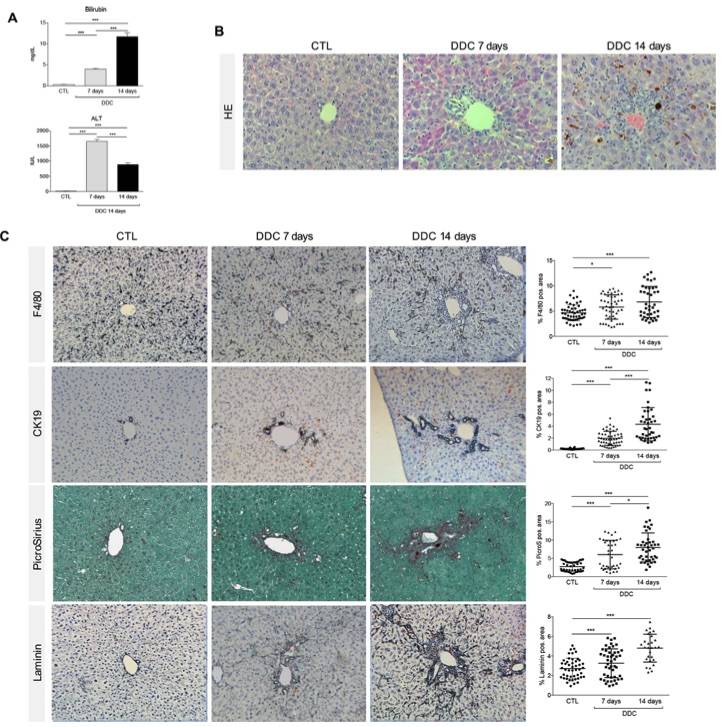 Fig. 1 DDC diet induces biliary damage in mice.1
Mice fed with a DDC diet for 14 days exhibited elevated serum bilirubin levels, a marker for biliary injury and cholestasis, mirroring the alterations observed in human cholestatic liver diseases (Fig. 1A and 1B). This treatment induced cholangitis, characterized by progressive periductular fibrosis (as evidenced by Sirius Red-positive collagen fibers), macrophage accumulation (marked by F4/80), and a pronounced ductular reaction (CK19+) over time (Fig. 1C). In healthy control mice, macrophages are dispersed randomly within the liver parenchyma. However, following DDC feeding, macrophages accumulate in periportal regions, triggering a localized inflammatory response. Control mice also showed few CK19-positive bile ducts per portal tract, whereas DDC-treated mice displayed a significant increase in both the size and number of these ducts (Fig. 1C). In the DDC-fed mice, the CK19-positive cells formed aggregates around the portal area, arranged in pseudoducts with a pseudo-lumen.
Reference
- Best, Jan et al. "Macrophage Depletion Attenuates Extracellular Matrix Deposition and Ductular Reaction in a Mouse Model of Chronic Cholangiopathies." PloS one vol. 11,9 e0162286. 12 Sep. 2016, DOI: 10.1371/journal.pone.0162286. Distributed under an Open Access license CC BY 4.0, without modification.
For Research Use Only.