
Choline-Deficient L-Amino Acid-Defined (CDAA) Diet induced Non-Alcoholic Steatohepatitis (NASH) Modeling & Pharmacodynamics Service
Creative Biolabs offers a range of well-established animal models to evaluate the efficacy of drugs targeting NASH, providing comprehensive preclinical testing platforms to facilitate the development of novel liver disease therapies.
Introduction
Non-alcoholic steatohepatitis (NASH) is a progressive liver disease characterized by liver inflammation, hepatocyte injury, and varying degrees of fibrosis, typically occurring in individuals who do not consume excessive alcohol. It is a more severe form of non-alcoholic fatty liver disease (NAFLD), often linked with metabolic conditions such as obesity, type 2 diabetes, and hyperlipidemia. The pathogenesis of NASH involves lipid accumulation in liver cells, oxidative stress, inflammatory responses, and fibrogenesis, contributing to liver damage. NASH can progress to cirrhosis, liver failure, and hepatocellular carcinoma if left untreated, which makes early diagnosis and intervention essential. The global rise in obesity and metabolic syndrome has made NASH a major public health concern. Currently, there are no FDA-approved treatments specifically targeting NASH, and ongoing research is focusing on identifying effective therapeutic options to halt or reverse the disease progression. The complexity of its pathophysiology has made NASH a focal point for drug discovery efforts, and a better understanding of its mechanisms is critical to developing new therapies.
Disease Models and Applications
The Choline-Deficient L-Amino Acid-Defined (CDAA) Diet induced NASH Model is an established method for inducing NASH in rodents. This model involves feeding rodents a diet deficient in choline and essential amino acids, leading to the development of hepatic steatosis, inflammation, and fibrosis, which are characteristic features of NASH. The CDAA diet induces a more severe form of liver damage compared to other models, making it suitable for testing therapies targeting both inflammation and fibrosis. The key advantages of this model include the ability to rapidly develop significant liver injury and fibrosis within a short timeframe, typically 6-8 weeks. It mimics many aspects of human NASH, including lipid accumulation, hepatocyte ballooning, and inflammatory infiltration. However, the CDAA diet does not replicate the metabolic risk factors such as obesity and insulin resistance often seen in human patients, limiting its full clinical relevance in some cases. Despite this, it remains a valuable tool for evaluating potential drug candidates in NASH-related liver diseases.
Simulates: The Choline-Deficient L-Amino Acid-Defined (CDAA) Diet induced NASH Model simulates non-alcoholic steatohepatitis in rodents, including the key features of hepatic steatosis, inflammation, and fibrosis, allowing researchers to study the pathogenesis and progression of the disease.
Evaluates Drugs: This model is particularly useful for evaluating drugs aimed at reducing liver fat accumulation, modulating inflammation, and inhibiting fibrosis. Therapeutic agents that target oxidative stress, pro-inflammatory cytokines, and fibrosis-promoting pathways are commonly tested in the CDAA induced NASH model.
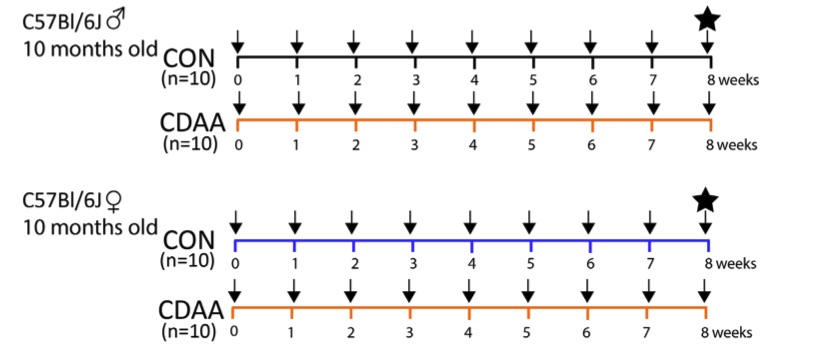 Fig. 1 Experimental protocol.1
Measurements
We offer a variety of measurements for evaluating drug efficacy in the Choline-Deficient L-Amino Acid-Defined (CDAA) Diet induced NASH Model, utilizing advanced technologies, including but not limited to:
- General observations: body weight, liver weight, and serum markers for liver function, such as ALT, AST, and bilirubin levels.
- Histopathology: Liver tissue examination using H&E and Masson's trichrome stains to assess steatosis, inflammation, and fibrosis.
- Immunohistochemistry: Detection of inflammatory markers (e.g., TNF-α, IL-6, NF-kB) and fibrosis markers (e.g., collagen I, α-SMA) in liver tissues.
- Cytokine profiling (e.g., ELISA): Quantification of pro-inflammatory cytokines such as TNF-α, IL-6, IL-1β, and MCP-1 to evaluate the level of inflammation.
- Gene/protein expression profiling: RT-qPCR and Western blot techniques to measure the expression of genes and proteins involved in lipid metabolism, inflammation, and fibrosis.
Additionally, we provide expert assistance with experimental design, model selection, and data analysis to ensure the successful implementation and analysis of your research.
Related Services
In addition to the Choline-Deficient L-Amino Acid-Defined (CDAA) Diet induced NASH Model. Each model offers unique insights into the disease process and is tailored to specific therapeutic investigations.
- Diet induced Obesity (DIO) Mouse NASH Model
- High-Fat Diet induced NASH Model
- Methionine Choline-Deficient (MCD) Diet induced NASH Model
- High-Fat & High-Carbohydrate Diet induced NASH Model
- High-Fat & High-Cholesterol Diet induced NASH Model
- High-Fat & High-Cholesterol Diet & Fructose induced NASH Model
- High-Fat & Fructose induced NASH Model
- Diethylnitrosamine (DEN) & High-Fat & High-Carbohydrate Diet induced NASH Model
- High-Fat & CCL4 induced NASH Model
- Streptozotocin (STZ) & High-Fat induced NASH Model
- MC4R KO Mouse Model
- LDLR KO Mouse Model
Advantages
- Expertise in Liver Disease Models: Our team specializes in the development and application of NASH models, ensuring the highest quality preclinical research support.
- Customizable Models: We offer flexible, customizable NASH models to suit your specific experimental needs, including modifications in diet, drug treatments, and protocol designs.
- Validated Models: Our models are rigorously validated based on the latest scientific literature, ensuring relevance and reliability for evaluating drug efficacy.
- Advanced Technologies: We use cutting-edge technologies such as histology, cytokine profiling, and gene expression analysis to provide comprehensive insights into drug efficacy.
- End-to-End Support: From model selection to data interpretation, our scientific team offers full support throughout your research project, ensuring optimal results.
- Global Reach: Our services are available to academic institutions, pharmaceutical companies, and biotech firms worldwide, accelerating the development of NASH therapeutics.
Work with Us
- Summarize the project requirements and fill in the information collection form.
- Sign a CDA from both parties to further communicate information, such as targets.
- Select an animal model, discuss experimental design, and determine assay parameters.
- Project costing and project schedule forecasting.
- We provide a detailed project plan, including the required sample quantities, methods, and protocols.
- Both parties confirm the project details and start the project.
- Confirm the timeline of the project.
- We provide periodic results and information on the animal's condition.
- We will work together to make project adjustments as necessary.
- We provide a comprehensive project report promptly.
- We arrange transportation for the produced samples.
- We provide a discussion of the project results and help to arrange the next steps.
- Data storage and archiving.
FAQs
-
Q: How long does it take to develop NASH in the CDAA diet model?
A: It typically takes 6-8 weeks of CDAA diet feeding to observe significant liver damage, including steatosis, inflammation, and fibrosis in rodents.
-
Q: Can the CDAA diet model be used to test antifibrotic therapies?
A: Yes, the CDAA diet induced NASH model is widely used to evaluate antifibrotic therapies, as it induces liver fibrosis similar to human NASH.
-
Q: What are the limitations of the CDAA diet model?
A: The CDAA model does not replicate the metabolic risk factors such as obesity and insulin resistance often seen in human NASH, which may limit its clinical relevance in certain contexts.
-
Q: Do you provide assistance with model design and data analysis?
A: Yes, our team offers comprehensive support, including experimental design, model selection, and data analysis, to ensure successful research outcomes.
Published Data
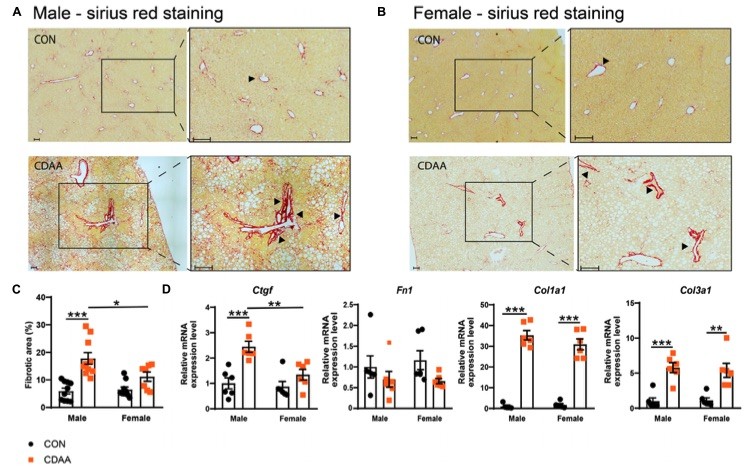 Fig. 2 Hepatic fibrosis in CDAA-induced NASH.1
An experiment was conducted to investigate fibrosis development in male and female CDAA diet-fed mice, focusing on the progression from steatohepatitis to cirrhosis, the end-stage of liver fibrosis. The results showed more pronounced fibrosis in male mice, as confirmed by quantitative analysis of picrosirius red staining (Figures 2A–C). This pattern was further supported by the expression of the connective tissue growth factor (Ctgf) gene (Figure 2D). Fibrotic changes were also detected in the collagen mRNA levels, including Col1a1 and Col3a1 (Figure 2D). However, no significant differences were observed in the fibronectin (Fn1) gene expression across the groups.
Reference
- Kucsera, Dániel et al. "Characterization of the CDAA Diet induced Non-alcoholic Steatohepatitis Model: Sex-Specific Differences in Inflammation, Fibrosis, and Cholesterol Metabolism in Middle-Aged Mice." Frontiers in Physiology vol. 12 609465. 22 Feb. 2021, DOI:10.3389/fphys.2021.609465. Distributed under an Open Access license CC BY 4.0, without modification.
For Research Use Only.