
Adenine induced Chronic Renal Failure Modeling & Pharmacodynamics Service
Creative Biolabs offers a comprehensive range of well-established models to evaluate drug efficacy in chronic renal failure, assisting researchers in the development of novel therapies and advancing our understanding of kidney disease treatment.
Introduction
Chronic Renal Failure (CRF), also referred to as Chronic Kidney Disease (CKD), is a progressive and often irreversible condition characterized by a gradual decline in kidney function over time. It is primarily caused by underlying conditions such as diabetes, hypertension, and glomerulonephritis, leading to kidney damage, inflammation, and fibrosis. As the kidneys lose their ability to filter waste products, patients experience symptoms such as fatigue, swelling, and difficulty in regulating fluid and electrolytes. In severe cases, kidney failure can lead to end-stage renal disease (ESRD), requiring dialysis or a kidney transplant for survival. The progression of CRF is typically classified into five stages, with Stage 5 being the most critical, often associated with life-threatening complications. Early detection and intervention are vital for slowing the disease's progression and improving patient outcomes. Therapeutic strategies may include controlling blood pressure, managing blood sugar levels, and using medications that target inflammation and fibrosis in the kidneys.
Adenine-Induced Chronic Renal Failure Model
The Adenine-Induced Chronic Renal Failure Model is constructed by administering adenine, a purine analogue, to rodents, which results in the accumulation of oxypurinol and subsequent renal tubular damage. This model mimics key aspects of chronic kidney failure, including fibrosis, inflammation, and glomerular damage. Its advantages lie in its simplicity and reproducibility, offering a reliable representation of progressive renal dysfunction over a period of weeks. Researchers can observe histopathological changes such as tubular dilation, interstitial fibrosis, and glomerulosclerosis, which are characteristic of CKD. However, the model has limitations, such as a lack of complete mimicry of the full spectrum of human CKD progression, particularly in terms of systemic hypertension and associated comorbidities.
- Simulates: This model simulates chronic renal failure associated with impaired kidney function, inflammation, fibrosis, and glomerulosclerosis, providing insights into the pathological features of CKD.
- Evaluates Drugs: Potential therapies, such as anti-inflammatory agents, anti-fibrotic compounds, and drugs targeting the renin-angiotensin system, can be tested for their effectiveness in preventing or reversing kidney damage.
Evaluation Platform
- Animals: Mouse, Rat.
-
Measurements
We offer a variety of measurements for evaluating drug efficacy in the Adenine-Induced Chronic Renal Failure Model, utilizing an array of advanced techniques, including but not limited to:- General observations: body weight, serum creatinine levels, blood urea nitrogen (BUN) levels, and urine output.
- Histological analysis: renal tissue staining for fibrosis (e.g., Masson's Trichrome), glomerular sclerosis, and tubular damage.
- Immunohistochemistry: Identification of immune cell infiltration (e.g., macrophages, T-cells) and fibrotic markers (e.g., α-SMA, collagen I).
- Cytokine profiling: Measurement of inflammatory mediators such as TNF-α, IL-6, and IL-1β.
- Gene/protein expression: Analysis of renal injury markers (e.g., KIM-1, NGAL) via RT-PCR and Western blot techniques.
These measurements provide a comprehensive assessment of renal dysfunction, fibrosis, and the therapeutic potential of investigational drugs.
Related Services
In addition to the adenine-induced chronic renal failure model, we offer various other models for inducing chronic kidney disease. These include models such as the 5/6 nephrectomy and the Unilateral Ureteral Obstruction (UUO) model, each providing unique insights into renal pathology and treatment evaluation.
- Unilateral Ureter Obstruction (UUO) Model
- Bilateral Ureteral Obstruction induced Renal Fibrosis Model
- 5/6 Nephrectomy Model
- Adriamycin induced Nephropathy (AN) Rodent Model
- Folic Acid (FA) induced Renal Fibrosis Model
Our advantages
- Comprehensive evaluation: We provide a full range of assays to monitor kidney function and pathology at different stages of disease.
- Tailored research support: Our team offers personalized guidance in experimental design and model selection.
- Reproducible results: The Adenine model is well-established, providing reliable data for preclinical studies.
- Advanced technology: We use state-of-the-art technology to ensure precise measurements of renal function and tissue morphology.
- Wide therapeutic applicability: The model supports drug testing for a variety of therapeutic targets in CKD, from anti-inflammatory agents to antifibrotic therapies.
Work with Us
- Summarize the project requirements and fill in the information collection form.
- Sign a CDA from both parties to further communicate information, such as targets.
- Select an animal model, discuss experimental design, and determine assay parameters.
- Project costing and project schedule forecasting.
- We provide a detailed project plan, including the required sample quantities, methods, and protocols.
- Both parties confirm the project details and start the project.
- Confirm the timeline of the project.
- We provide periodic results and information on the animal's condition.
- We will work together to make project adjustments as necessary.
- We provide a comprehensive project report promptly.
- We arrange transportation for the produced samples.
- We provide a discussion of the project results and help to arrange the next steps.
- Data storage and archiving.
FAQs
-
1. How long does the Adenine-Induced Chronic Renal Failure Model take to develop?
Typically, the model progresses over a 4-6 week period, allowing sufficient time for the development of fibrosis and glomerulosclerosis.
-
2. Can this model simulate systemic comorbidities associated with CKD?
While the model effectively simulates renal fibrosis and damage, it does not fully mimic systemic comorbidities such as hypertension and diabetes. However, it provides critical insights into renal pathophysiology.
-
3. What are the main advantages of using this model for drug testing?
This model allows for the evaluation of drug candidates targeting fibrosis, inflammation, and kidney function. It is widely used for preclinical trials due to its reproducibility and ability to simulate key aspects of chronic kidney disease.
Published Data
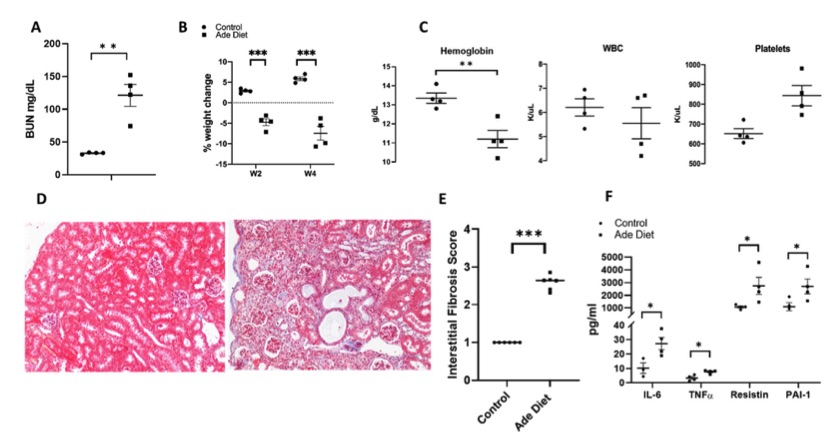 Fig. 1 Phenotypic characteristics of adenine diet induced chronic kidney disease mice.1
To investigate whether uremic serum-induced changes observed in human tissue and cell models could be replicated in vivo, an adenine-induced uremic mouse model was employed. Control mice had baseline weights of 27.7 g and 29.7 g, while the experimental group was subjected to adenine supplementation in their diet. Mice exposed to adenine developed advanced chronic kidney disease (CKD) characteristics, including elevated blood urea nitrogen (BUN), significant weight loss, anemia, and increased platelet levels (Fig. 1A–C). Histological analysis of the kidneys revealed interstitial fibrosis, tubular atrophy, and the presence of 2,8-dihydroxyadenine crystals (Fig. 1D, E). Additionally, plasma levels of inflammatory cytokines such as IL-6, TNFα, resistin, and plasminogen activator inhibitor-1 were significantly elevated in adenine-exposed mice (Fig. 1F).
Reference
- Martos-Rus, Cristina et al. "Macrophage and adipocyte interaction as a source of inflammation in kidney disease." Scientific reports vol. 11,1 2974. 3 Feb. 2021. Distributed under Open Access license CC BY 4.0, without modification. https://doi.org/10.1038/s41598-021-82685-4
For Research Use Only.