
Type I Diabetes (T1D) induced Sarcopenia Modeling & Pharmacodynamics Service
Creative Biolabs offers various well-established models to evaluate the efficacy of drugs targeting sarcopenia. These models provide a reliable platform for testing potential treatments, ranging from pharmacological agents to exercise regimens, ensuring that your research is both accurate and effective. Whether for academic research or pharmaceutical development, we provide tailored solutions to support your study needs.
Introduction
Sarcopenia is a syndrome characterized by the progressive loss of skeletal muscle mass, strength, and function, typically associated with aging but also observed in various chronic diseases such as cancer, diabetes, and cardiovascular diseases. The condition is marked by a decline in muscle fibers, particularly type II fibers, along with reduced muscle regeneration capacity. Sarcopenia not only diminishes physical performance and quality of life but also increases the risk of falls, fractures, and disability, thereby exacerbating the overall health burden in older adults. The pathophysiology of sarcopenia involves several factors, including hormonal changes, increased inflammation, oxidative stress, and alterations in muscle protein synthesis and breakdown. Additionally, mitochondrial dysfunction, impaired muscle stem cell function, and inadequate nutrition can further contribute to the progression of the disease. While the condition is primarily seen in the elderly, it is also prevalent in individuals suffering from chronic illnesses such as Type I diabetes, chronic kidney disease, and other debilitating conditions. Given the complex nature of sarcopenia, understanding its mechanisms and developing effective therapeutic strategies are of paramount importance.
Disease Models and Applications
The Type I Diabetes induced Sarcopenia Model is typically established by inducing diabetes in rodents via streptozotocin (STZ) administration. Following STZ injection, the animals develop hyperglycemia, which triggers muscle wasting, mimicking the sarcopenic changes seen in humans with Type I diabetes. This model is advantageous for studying the pathophysiology of muscle atrophy in the context of chronic hyperglycemia, highlighting both metabolic and inflammatory processes that contribute to muscle degeneration. However, one limitation is the lack of a direct correlation between rodent muscle mass changes and human clinical outcomes. The model is widely used to test the effectiveness of new pharmacological agents aimed at preserving or restoring muscle mass in diabetic patients.
- Simulates: This model simulates muscle atrophy and related complications seen in Type I diabetes, replicating the challenges faced by individuals with the condition, including muscle loss due to metabolic and inflammatory disruptions.
- Evaluates Drugs: It is used to assess the effectiveness of various pharmacological agents designed to enhance muscle mass, improve function, or reduce inflammation in diabetic sarcopenia, including insulin sensitizers, anti-inflammatory drugs, and myostatin inhibitors.
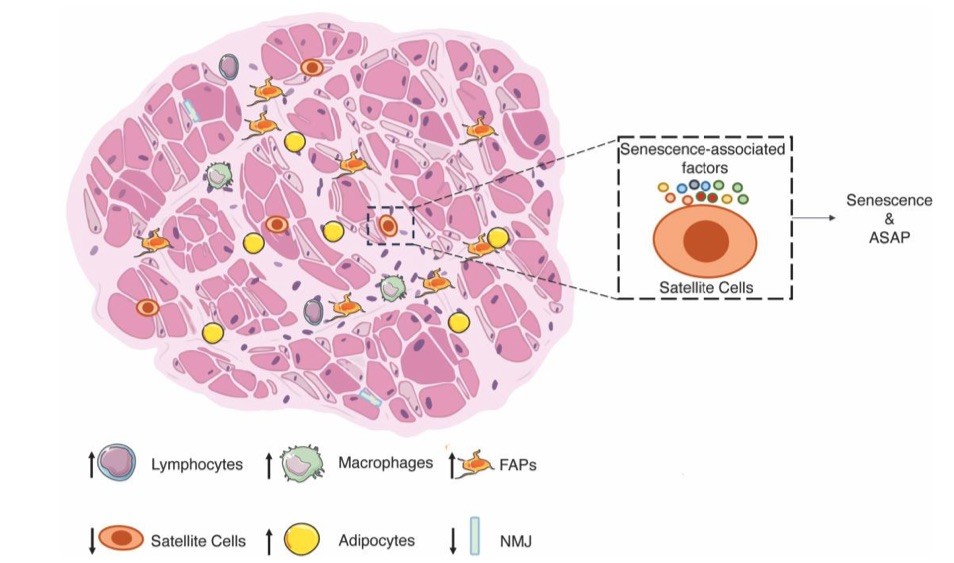 Fig. 1 Schematic representation of sarcopenia.1
Measurements
We offer a comprehensive range of measurements for assessing the effectiveness of treatments in Type I Diabetes induced Sarcopenia Models, using advanced methodologies including:
- General observations: body weight, muscle mass, grip strength, and fatigue levels.
- Histological analysis: Muscle fiber composition, cross-sectional area, and markers of muscle regeneration (e.g., Pax7, MyoD).
- Biochemical assays: Plasma glucose, insulin, and inflammatory markers such as TNF-α and IL-6.
- Muscle protein analysis: Western blotting and RT-PCR for key muscle-related proteins (e.g., MyoD, MHC) and signaling pathways related to muscle growth (e.g., mTOR).
- Cytokine profiling: Expression of inflammatory cytokines in muscle tissue and serum.
Our team also offers guidance in selecting the most suitable techniques and protocols to meet your specific research needs, ensuring a robust and targeted evaluation.
Related Services
Advantages
- Expertise in Disease Modeling: Our team has extensive experience in creating and refining animal models, ensuring the highest degree of accuracy in disease replication.
- Customized Research Designs: We work closely with clients to develop study designs that align with your specific research objectives, delivering targeted and actionable insights.
- Advanced Data Analysis: Our team offers in-depth analysis and interpretation of data, helping to guide decision-making in drug development.
- Cutting-Edge Facilities: Our state-of-the-art laboratories provide the tools necessary for high-quality, reproducible research outcomes.
- Efficient Timelines: We understand the importance of timely results and ensure that your studies are completed within optimal timeframes without compromising quality.
Work with Us
- Summarize the project requirements and fill in the information collection form.
- Sign a CDA from both parties to further communicate information, such as targets.
- Select an animal model, discuss experimental design, and determine assay parameters.
- Project costing and project schedule forecasting.
- We provide a detailed project plan, including the required sample quantities, methods, and protocols.
- Both parties confirm the project details and start the project.
- Confirm the timeline of the project.
- We provide periodic results and information on the animal's condition.
- We will work together to make project adjustments as necessary.
- We provide a comprehensive project report promptly.
- We arrange transportation for the produced samples.
- We provide a discussion of the project results and help to arrange the next steps.
- Data storage and archiving.
FAQs
-
1. How long does it take to establish this model?
The induction of diabetes in rodents typically takes 2–3 weeks, with muscle atrophy becoming evident within 4–6 weeks post-induction.
-
2. What are the advantages of using animal models for studying sarcopenia?
Animal models provide a controlled environment to study disease progression and evaluate potential treatments in ways that are not possible in human trials.
-
3. Can this model be adapted for other conditions?
Yes, we offer customizable models for a range of diseases, including other forms of muscle wasting such as those caused by neurodegenerative disorders.
-
4. What support do you provide during the research?
Our team assists throughout the study, from experimental design and model selection to data analysis and result interpretation.
-
5. Are the models reproducible?
Yes, we adhere to strict protocols to ensure that results are consistent and reproducible across studies.
Published Data
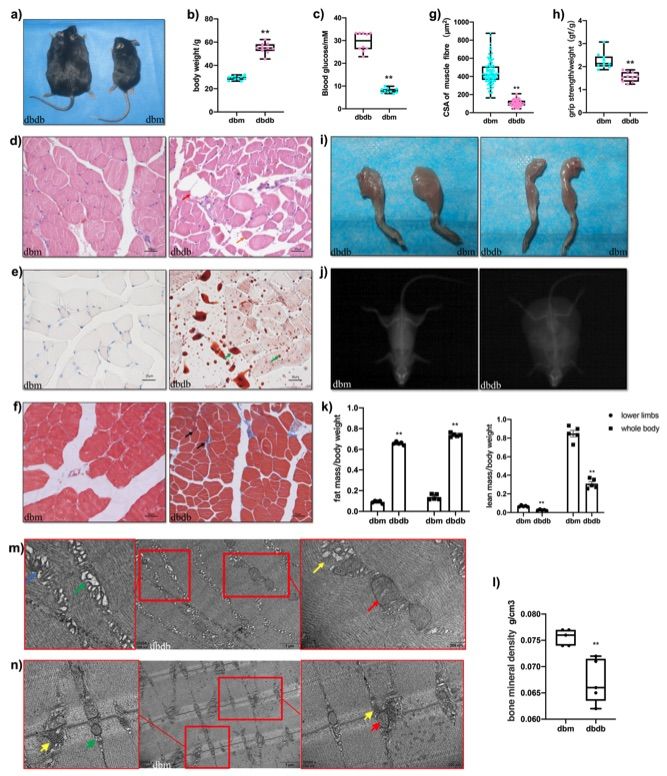 Fig. 2 A metabolic disorder, loss of muscle mass and strength, and structural abnormalities are evident in the diabetic muscle atrophy model of db/db mice.2
The 15-week-old db/db mice exhibited a severe obesity phenotype (Fig. 2a, b) accompanied by significant hyperglycemia (>25 mmol/L) (Fig. 2c) when compared to normal db/m controls. Histological analyses, including haematoxylin and eosin (H&E), Oil-Red O, and Masson's trichrome staining, revealed morphological changes in the gastrocnemius (GAS) muscles of db/db mice, such as lipid droplet infiltration and increased fibrosis, indicative of diabetes induced sarcopenia (Fig. 2d–f). The average cross-sectional area (CSA) of muscle fibers was significantly reduced (Fig. 2g), further emphasizing muscle degeneration. Grip strength testing revealed a notable decline in forelimb strength in db/db mice (Fig. 2h), and muscle mass and size of the lower limbs were also significantly reduced (Fig. 2i) compared to db/m controls. Dual-energy X-ray absorptiometry (DEXA) analysis demonstrated decreased bone mineral density (BMD), reduced lean mass, and increased fat mass in db/db mice (Fig. 2j–l). Biochemical analysis showed elevated levels of triglycerides, glucose, total cholesterol, low-density lipoprotein cholesterol, and high-density lipoprotein cholesterol in the db/db mice, confirming a systemic metabolic disorder. Transmission electron microscopy (TEM) revealed significant mitochondrial abnormalities, endoplasmic reticulum swelling, reduced muscular glycogen content, and sarcomere damage in the GAS of db/db mice compared to the db/m group (Fig. 2m, n). These findings collectively indicate that db/db mice exhibit significant muscle weakness and loss, accompanied by subcellular structural dysfunction.
References
- Careccia, Giorgia et al. "Regulation of Satellite Cells Functions during Skeletal Muscle Regeneration: A Critical Step in Physiological and Pathological Conditions." International Journal of Molecular Sciences vol. 25,1 512. 29 Dec. 2023, DOI:10.3390/ijms25010512. Distributed under an Open Access license CC BY 4.0, without modification.
- Yu, Jing et al. "The Whole-transcriptome Landscape of Diabetes-related Sarcopenia Reveals the Specific Function of Novel lncRNA Gm20743." Communications Biology vol. 5,1 774. 1 Aug. 2022, DOI:10.1038/s42003-022-03728-8. Distributed under an Open Access license CC BY 4.0, without modification.
For Research Use Only.