
Cafeteria Diet induced Obesity Modeling & Pharmacodynamics Service
Creative Biolabs offers a broad array of well-established obesity models, such as the cafeteria diet-induced obesity model, to assist in assessing the efficacy of anti-obesity drugs, providing comprehensive services for preclinical drug evaluation and research.
Introduction
Obesity is a chronic metabolic disorder characterized by excessive accumulation of body fat, which is linked to an increased risk of various diseases, including type 2 diabetes, cardiovascular diseases, hypertension, and certain cancers. It is often caused by an imbalance between energy intake and expenditure, along with genetic, environmental, and lifestyle factors. Obesity is classified into different types, including visceral and subcutaneous obesity, with the former being more strongly associated with metabolic dysfunctions. The global obesity epidemic has reached alarming proportions, becoming one of the most pressing public health challenges worldwide. To better understand the mechanisms underlying obesity and to develop effective therapeutic interventions, animal models are essential. Rodent models play a crucial role in replicating the pathological processes of human obesity and facilitating the evaluation of novel drugs aimed at combating the disorder.
Disease Models and Applications
The Cafeteria Diet-Induced Obesity Model (CDIO) is commonly used to simulate human obesity and related metabolic disorders. In this model, rodents are fed a "cafeteria" diet, which consists of a variety of high-calorie, palatable foods, such as high-fat snacks, sweets, and processed foods. This diet induces significant weight gain and mimics the dietary habits that contribute to human obesity. CDIO has the advantage of closely resembling human obesity in terms of food intake patterns, fat distribution, and metabolic disturbances. It allows researchers to study the progression of obesity and its associated comorbidities, such as insulin resistance, dyslipidemia, and liver steatosis. However, one limitation of the model is that it can be labor-intensive and may not fully replicate all aspects of human obesity, particularly the genetic and hormonal factors involved.
- Simulates: The Cafeteria Diet-Induced Obesity Model simulates human obesity, metabolic syndrome, and related disorders such as insulin resistance, type 2 diabetes, and non-alcoholic fatty liver disease (NAFLD). It helps researchers examine the onset of obesity, its progression over time, and its impact on various organs like the liver, adipose tissue, and pancreas.
- Evaluates Drugs: This model is particularly useful for evaluating the effectiveness of anti-obesity drugs, insulin sensitizers, anti-inflammatory agents, lipid-lowering drugs, and agents targeting metabolic syndrome. It helps assess the effects of these drugs on weight reduction, insulin resistance, lipid profiles, inflammation, and other metabolic parameters. Additionally, it is used to evaluate the impact of combination therapies and novel drug candidates in the prevention and treatment of obesity and its associated comorbidities.
Measurements
For the cafeteria diet-induced obesity model, we offer a comprehensive set of measurements to assess the efficacy of drugs, including:
- General observations: body weight, food intake, mortality rate, behavioral changes, activity levels, and stool consistency.
- Histological analysis: Assessment of fat depots (mesenteric, gonadal, perirenal) and liver tissue for signs of steatosis, inflammation, and fibrosis.
- Biochemical analysis: Blood glucose, serum insulin, lipid profile (cholesterol, triglycerides, HDL, LDL), and liver enzymes (ALT, AST).
- Cytokine profiling: Quantification of inflammatory mediators such as TNF-α, IL-6, and IL-1β using ELISA.
- Gene/protein expression profiling: RT-qPCR and Western blot to measure expression levels of obesity-related genes such as PPAR-γ, leptin, adiponectin, and lipogenic enzymes.
Additionally, we provide services to develop customized models for specific research needs, guiding the design, selection, and analysis of animal studies.
Related Services
In addition to the cafeteria diet-induced obesity model, we also offer a wide range of models for other diseases. These models enable comprehensive evaluation across diverse therapeutic areas.
- High-Fat Diet induced Obesity Model
- High-Fat & High-Carbohydrate Diet induced Obesity Model
- Monosodium Glutamate (MSG) induced Obesity Model
- ob/ob Obesity Mouse Model
Advantages
- Expertise and Reliability: We have a team of experienced scientists who specialize in obesity research, offering scientifically validated and reliable models for preclinical studies.
- Customized Services: We work closely with clients to design experiments tailored to specific research objectives, ensuring that the animal models and methodologies align with your needs.
- State-of-the-Art Technologies: We utilize advanced technologies, such as high-throughput molecular assays, histological analysis, and biochemical profiling, to ensure accurate and detailed results.
- Well-Established Obesity Models: Our obesity models, like the Cafeteria Diet-Induced Obesity Model, are widely recognized and have been extensively used in the scientific community for evaluating drug efficacy.
- Comprehensive Data Analysis: In addition to providing robust models, we offer full data analysis and interpretation services, guiding you through the findings and ensuring clarity in your results.
- Commitment to Quality: We prioritize high-quality standards, providing reproducible results that are essential for the development of new therapeutic agents.
Work with Us
- Summarize the project requirements and fill in the information collection form.
- Sign a CDA from both parties to further communicate information, such as targets.
- Select an animal model, discuss experimental design, and determine assay parameters.
- Project costing and project schedule forecasting.
- We provide a detailed project plan, including the required sample quantities, methods, and protocols.
- Both parties confirm the project details and start the project.
- Confirm the timeline of the project.
- We provide periodic results and information on the animal's condition.
- We will work together to make project adjustments as necessary.
- We provide a comprehensive project report promptly.
- We arrange transportation for the produced samples.
- We provide a discussion of the project results and help to arrange the next steps.
- Data storage and archiving.
FAQs
-
Q: What types of obesity models do you offer?
A: We offer a variety of obesity models, including the Cafeteria Diet-Induced Obesity Model, High-Fat Diet (HFD) Model, and Monosodium Glutamate (MSG)-Induced Obesity Model, each designed to simulate different aspects of obesity and metabolic disorders.
-
Q: Can I customize the models to suit my research needs?
A: Yes, we provide customizable models based on your specific research objectives. Our team works with you to tailor the models and experimental design to best suit your study.
-
Q: What drug evaluation services do you provide?
A: We offer comprehensive drug evaluation services, including testing anti-obesity agents, insulin sensitizers, anti-inflammatory drugs, lipid-lowering treatments, and combination therapies to assess their effectiveness in managing obesity and related comorbidities.
-
Q: How do you ensure the reliability of your models?
A: Our models have been validated in numerous studies, ensuring their consistency and reproducibility. We also maintain strict quality control standards to deliver accurate and reliable results.
-
Q: What types of measurements do you provide for obesity models?
A: We offer a variety of measurements, including body weight, fat mass analysis, serum biomarkers (e.g., glucose, lipids), histological evaluation, cytokine profiling, gene/protein expression, and metabolic assays.
-
Q: Do you offer support throughout the entire research process?
A: Yes, our team provides support at every stage of your research, from experimental design to data analysis, ensuring a smooth and efficient process.
Published Data
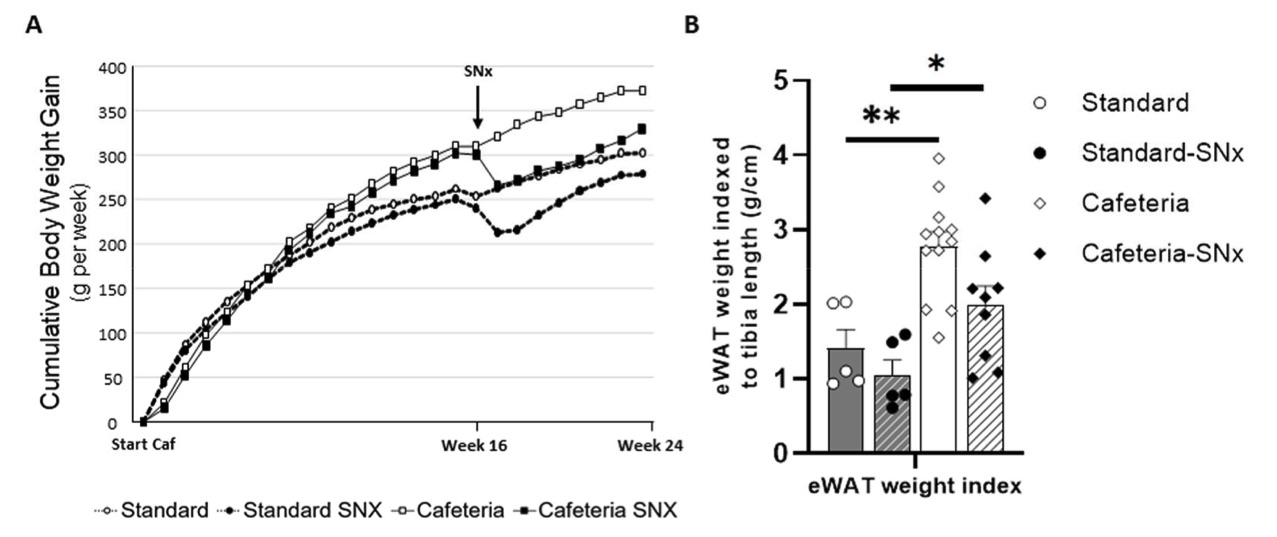 Fig. 1 Body and epididymal white adipose tissue weights increase with cafeteria diet and reduce in 5/6 nephrectomized rats.1
At the beginning of the enriched diet, rats fed a cafeteria diet showed a faster rate of body weight gain compared to those on a standard diet (Figure 1A). Following SNx surgery, rats experienced an initial weight loss of approximately 29 g over the first week. After this, weight gain resumed at a similar rate in both SNx rats on the standard and cafeteria diets, with a cumulative increase of 38 ± 6 g and 38 ± 4 g over 6 weeks, respectively. By the end of the experiment, the body weight of SNx rats remained lower than that of intact rats on the corresponding diet. The adiposity index of epididymal white adipose tissue (eWAT) (Figure 1B) was significantly higher in cafeteria diet-fed rats compared to those on the standard diet, both in sham (p < 0.001) and SNx rats (p < 0.005). Regarding body weight, there was a trend toward a decrease following SNx surgery, observed in both standard diet and cafeteria diet-fed rats.
Reference
- Laget, Jonas et al. "Cafeteria Diet-Induced Obesity Worsens Experimental CKD." Nutrients vol. 15,15 3331. 26 Jul. 2023, DOI:10.3390/nu15153331. Distributed under an Open Access license CC BY 4.0, without modification.
For Research Use Only.