
Diabetic Nephropathy Modeling & Pharmacodynamics Service
Creative Biolabs offers a range of advanced and reliable Diabetic Nephropathy models, designed to evaluate the efficacy of new drugs and therapeutic strategies. These models closely replicate the key features of the disease, offering valuable insights into potential interventions and treatment pathways.
Introduction
Diabetic nephropathy (DN) is a common and severe complication of diabetes, often leading to chronic kidney disease (CKD) and end-stage renal failure. It is characterized by progressive kidney damage, including glomerulosclerosis, tubular atrophy, and fibrosis, which results in impaired renal function and increased proteinuria. The development of DN is primarily due to prolonged hyperglycemia, leading to the accumulation of advanced glycation end-products (AGEs) and activation of various inflammatory and fibrotic pathways. Early intervention is critical to prevent the progression of DN to end-stage renal disease. DN affects a significant portion of diabetic patients worldwide, with both type 1 and type 2 diabetes contributing to its development. As a result, it remains a major area of research, especially in the search for effective treatments to slow or halt disease progression.
Diabetic Nephropathy Model
Our diabetic nephropathy model is established by inducing diabetes through the administration of streptozotocin (STZ) or genetic modification, such as db/db mice. The model exhibits common diabetic complications, including glomerular hypertrophy, mesangial expansion, tubulointerstitial fibrosis, and renal dysfunction, which are indicative of the disease's progression. The advantage of this model lies in its ability to replicate the chronic, progressive nature of diabetic kidney disease, closely resembling human DN. However, it has some limitations, including variability in the severity of renal damage and the potential lack of certain human-specific pathophysiological features. Nevertheless, it remains an essential tool for studying the mechanisms behind DN and testing potential therapeutic interventions.
- Simulates: The model simulates diabetic nephropathy, a condition characterized by chronic kidney disease resulting from prolonged hyperglycemia and its associated metabolic disturbances.
- Evaluates Drugs: It is used to evaluate drugs aimed at slowing the progression of diabetic nephropathy, including antihyperglycemic agents, angiotensin-converting enzyme inhibitors (ACE inhibitors), and anti-inflammatory agents. These drugs are tested for their ability to reduce albuminuria, prevent kidney fibrosis, and improve overall renal function.
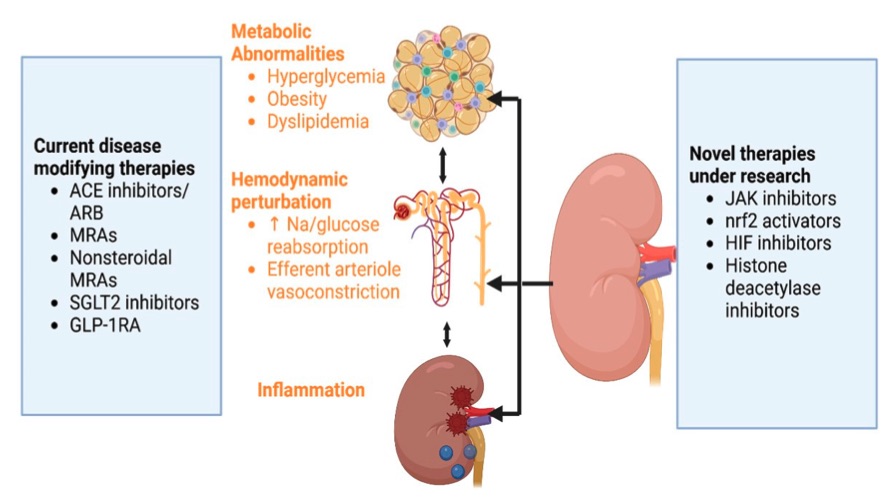 Fig. 1 Pathophysiology of diabetic nephropathy and the therapeutic strategies. 1,3
Evaluation Platform
- Animals: Mouse, Rat.
-
Measurements
We offer a comprehensive set of measurements for evaluating drug efficacy in diabetic nephropathy models, using a range of advanced techniques, including but not limited to:- General observations: body weight, water intake, blood glucose levels, kidney function markers (e.g., serum creatinine, BUN).
- Urinary biomarkers: Albumin-to-creatinine ratio (ACR), urine volume, and protein excretion levels.
- Histopathological analysis: Hematoxylin and eosin (H&E) staining to assess glomerular and tubular damage.
- Immunohistochemistry: Detection of fibrosis markers (e.g., collagen I, fibronectin) and inflammation markers (e.g., TNF-α, IL-1β).
- Renal function: Measurement of glomerular filtration rate (GFR) and serum creatinine levels.
- Gene/protein expression analysis: Quantification of kidney injury markers (e.g., TGF-β1, VEGF) via RT-qPCR and Western blot techniques.
In addition to established models, we can develop custom diabetic nephropathy models based on your specific research needs, and our expert team is available to support you with experimental design, model selection, and data analysis throughout the project.
Related Services
Besides the classic STZ-induced diabetic nephropathy model, we also offer alternative models such as the Obesity-related Glomerulopathy Model, which mimics the combined effects of obesity and type 2 diabetes on kidney function.
- Obesity-related Glomerulopathy Model
- HDF-CHOL & Salt Feed & 5/6 Nephrectomy-Induced Nephropathy Model
Our advantages
- Advanced Expertise: Our team has extensive experience in developing and managing diabetic nephropathy models, ensuring high-quality results.
- Tailored Solutions: We offer customizable models to match your specific research requirements.
- Comprehensive Data: Our models provide both functional and molecular data, aiding in in-depth drug evaluation.
- State-of-the-Art Facilities: We utilize cutting-edge technology and facilities to guarantee precise and reliable data.
- Global Support: Our team provides global scientific collaboration, offering guidance at every stage of your research.
Work with Us
- Summarize the project requirements and fill in the information collection form.
- Sign a CDA from both parties to further communicate information, such as targets.
- Select an animal model, discuss experimental design, and determine assay parameters.
- Project costing and project schedule forecasting.
- We provide a detailed project plan, including the required sample quantities, methods, and protocols.
- Both parties confirm the project details and start the project.
- Confirm the timeline of the project.
- We provide periodic results and information on the animal's condition.
- We will work together to make project adjustments as necessary.
- We provide a comprehensive project report promptly.
- We arrange transportation for the produced samples.
- We provide a discussion of the project results and help to arrange the next steps.
- Data storage and archiving.
FAQs
-
1. How is diabetic nephropathy induced in the model?
Diabetic nephropathy is induced using streptozotocin (STZ) injections or by using genetically predisposed models like db/db mice to replicate type 1 and type 2 diabetes conditions.
-
2. What types of drugs can be tested using this model?
This model is used to test antihyperglycemic agents, anti-inflammatory drugs, ACE inhibitors, and other compounds aimed at halting kidney damage progression.
-
3. Can this model be used to study other complications of diabetes?
Yes, the model is versatile and can be used to study diabetic retinopathy, neuropathy, and cardiovascular complications in conjunction with kidney damage.
-
4. How long does it take for the diabetic nephropathy model to develop kidney damage?
Kidney damage in the diabetic nephropathy model typically develops over 8 to 12 weeks, with more pronounced fibrosis and glomerulosclerosis after 16 weeks.
Published Data
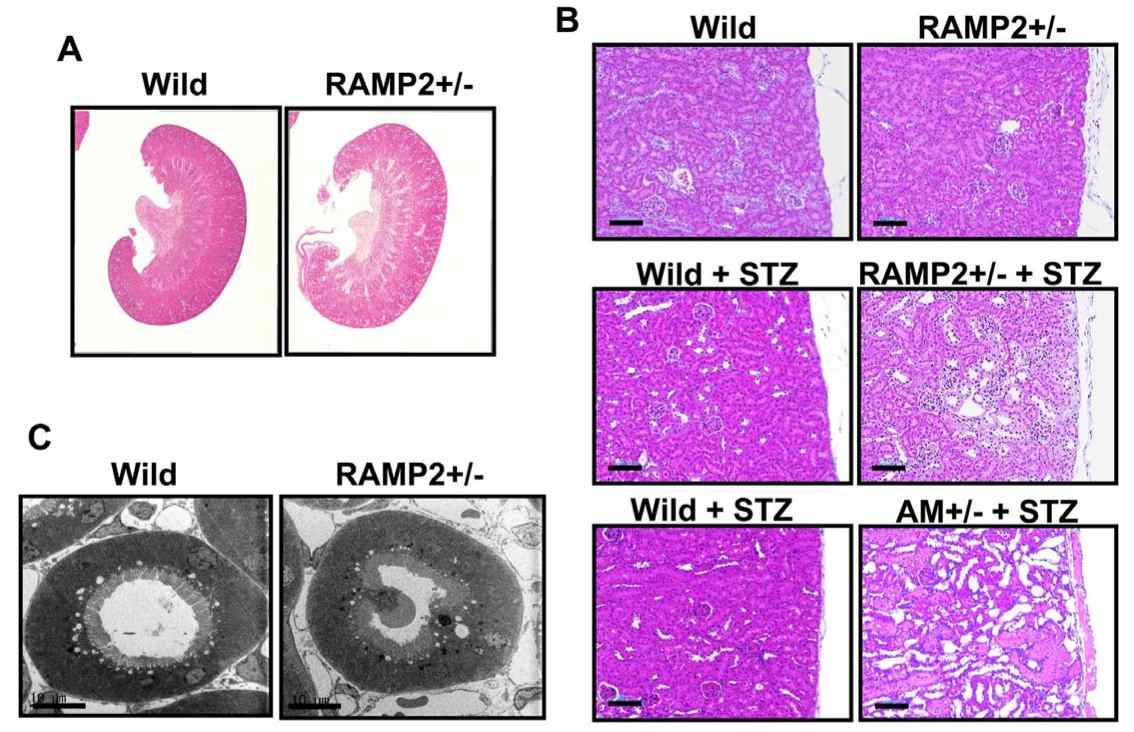 Fig.2 Renal tubular changes in the STZ-induced diabetic nephropathy model.2,3
Urinary tubular changes were found to be significantly more pronounced in STZ-treated RAMP2+/− mice compared to wild-type (WT) mice. Histological analysis after 4 weeks of STZ administration revealed that RAMP2+/− kidneys showed poor staining with H&E, indicating the presence of interstitial edema (Fig. 2A). In the cortical region of RAMP2+/− kidneys, there was considerable degeneration of tubule cells, with some tubules appearing atrophic or even absent (Fig. 2B). No notable inflammation, deposits, or vascular abnormalities were observed. Similar tubular damage was also observed in AM+/− mice following STZ treatment; however, no such damage was present in RAMP2+/− mice without STZ administration. Electron microscopy further revealed that the cellular membranes of tubule cells in RAMP2+/− kidneys were protruding into the tubule lumen, indicating damage to the brush border (Fig. 2C).
References
- Shetty, Sahana et al. "Emerging Biomarkers and Innovative Therapeutic Strategies in Diabetic Kidney Disease: A Pathway to Precision Medicine." Diagnostics (Basel, Switzerland) vol. 15,8 973. 11 Apr. 2025. https://doi.org/10.3390/diagnostics15080973
- Uetake, Ryuichi et al. "Adrenomedullin-RAMP2 system suppresses ER stress-induced tubule cell death and is involved in kidney protection." PloS One vol. 9,2 e87667. 5 Feb. 2014. https://doi.org/10.1371/journal.pone.0087667
- Distributed under Open Access license CC BY 4.0, without modification.
For Research Use Only.