
Diet induced Hyperuricemia Modeling & Pharmacodynamics Service
Creative Biolabs offers a variety of well-established models to assess the efficacy of hyperuricemia treatments. These models provide valuable insights into uric acid reduction, inflammation control, and kidney protection, offering a comprehensive platform for drug testing and development.
Introduction
Hyperuricemia is a metabolic disorder characterized by an excess of uric acid in the blood, which can lead to the formation of urate crystals. These crystals accumulate in joints, causing painful conditions like gout, and can also deposit in the kidneys, leading to kidney stones and, over time, kidney damage. Hyperuricemia arises from an imbalance between uric acid production and its elimination, often exacerbated by factors such as obesity, excessive alcohol consumption, and a high-purine diet. The condition is closely linked to several other diseases, including hypertension, cardiovascular disease, and metabolic syndrome. Uric acid is a byproduct of purine metabolism, and its elevated levels trigger inflammatory responses in tissues, particularly in joints, causing intense pain and swelling. Managing hyperuricemia involves the use of uric acid-lowering drugs, anti-inflammatory medications, and lifestyle changes.
Diet-Induced Hyperuricemia Model
The Diet-Induced Hyperuricemia Model is created by feeding rodents a high-purine diet or other diet modifications that elevate uric acid levels, mimicking the human condition of hyperuricemia. This model is used to assess the impact of elevated uric acid on kidney function, inflammation, and metabolic disturbances, providing valuable insights into the pathophysiology of gout. While this model effectively replicates the biochemical conditions of hyperuricemia, it may not fully replicate the chronic progression seen in human gout, limiting its application in long-term studies.
- Simulates: This model simulates hyperuricemia and gout, including the key features of uric acid overproduction and deposition, kidney inflammation, and joint swelling, like human disease progression.
- Evaluates Drugs: It is used to evaluate drugs that lower uric acid levels, including xanthine oxidase inhibitors, uricosuric agents, and anti-inflammatory treatments.
Evaluation Platform
- Animals: Mouse, Rat.
-
Measurements
We offer a variety of measurements to assess drug efficacy in Diet-Induced Hyperuricemia Models, using advanced technologies such as:- General observations: Body weight, uric acid levels, and the presence of joint swelling or inflammation.
- Serum biomarkers: Measurement of serum uric acid, creatinine, and blood urea nitrogen (BUN) levels.
- Histopathological analysis: Kidney and joint tissue examination for uric acid crystal deposition, inflammation, and tissue damage.
- Immunohistochemistry: Detection of immune cell infiltration (e.g., macrophages, neutrophils) in affected tissues.
- Cytokine profiling: Analysis of inflammatory mediators such as IL-1β, TNF-α, and IL-6 in serum and tissue samples.
- Gene/protein expression: RT-PCR and Western blot to assess expression of inflammation-related genes and proteins.
We can assist with experimental design, model selection, and data analysis for a tailored approach to your research needs.
Our advantages
- Expertise: Our team brings extensive experience in model development and therapeutic testing, ensuring high-quality research outcomes.
- Comprehensive Services: From model creation to data analysis, we provide end-to-end support for your project.
- Customizable Models: We tailor models to your specific research needs, enhancing the relevance and accuracy of your findings.
- Advanced Technology: Utilizing cutting-edge technologies for accurate measurements and reliable results.
- Quick Turnaround: Timely execution and reporting to help advance your research faster.
Work with Us
- Summarize the project requirements and fill in the information collection form.
- Sign a CDA from both parties to further communicate information, such as targets.
- Select an animal model, discuss experimental design, and determine assay parameters.
- Project costing and project schedule forecasting.
- We provide a detailed project plan, including the required sample quantities, methods, and protocols.
- Both parties confirm the project details and start the project.
- Confirm the timeline of the project.
- We provide periodic results and information on the animal's condition.
- We will work together to make project adjustments as necessary.
- We provide a comprehensive project report promptly.
- We arrange transportation for the produced samples.
- We provide a discussion of the project results and help to arrange the next steps.
- Data storage and archiving.
FAQs
-
1. What is the typical duration for inducing hyperuricemia in this model?
The diet-induced model typically takes 4-6 weeks to elevate uric acid levels to the desired threshold, allowing sufficient time for drug testing.
-
2. Can this model be used for long-term studies on gout?
While suitable for acute studies, long-term gout progression is better modeled with chronic methods, such as those involving genetic modifications or prolonged exposure to high-purine diets.
-
3. What drug types can be tested in this model?
This model is ideal for testing uric acid-lowering drugs, anti-inflammatory agents, and therapies aimed at reducing kidney inflammation caused by uric acid crystals.
Published Data
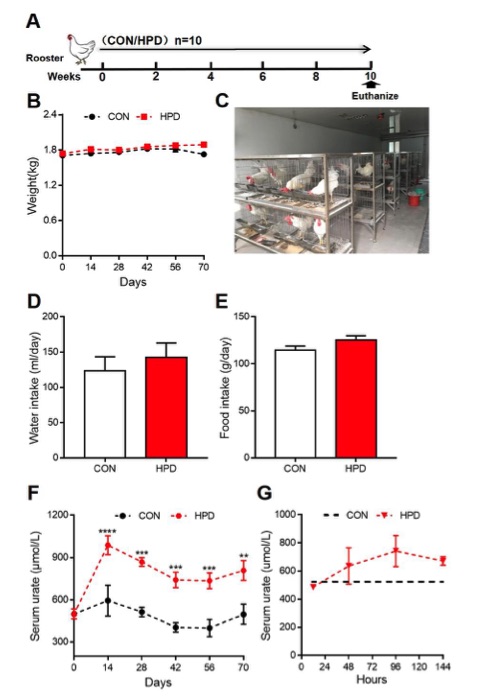 Fig.1 High-protein diet (HPD) increases serum levels of urate in chickens.1
A long-term hyperuricemia model was established using 24-week-old male white Leghorn chickens, which were housed in cages and allowed ad libitum access to food and water (Figure 1A, C). Over a 10-week feeding period, changes in body weight, serum urate levels, and food and water intake were monitored every two weeks. No significant differences were observed in weight gain, water intake, or food consumption between the control (CON) and high-purine diet (HPD) groups (Figure 1B, D, E). However, serum urate levels in the HPD group significantly increased compared to the CON group after two weeks of feeding (Figure 1F). The serum urate levels in the HPD group initially declined at day 28 but then stabilized at a consistently high level for the remainder of the study. To assess the onset of changes in serum urate levels, additional measurements were taken at 12, 48, 96, and 144 hours following the initiation of the HPD feeding in several chickens (n = 6). The results indicated a significant increase in serum urate levels within 48 hours of starting the HPD, reaching approximately 650 μmol/L after 144 hours of feeding (Figure 1G).
Reference
- Hong, Fan et al. "High-Protein Diet Induces Hyperuricemia in a New Animal Model for Studying Human Gout." International Journal of Molecular Sciences vol. 21,6 2147. 20 Mar. 2020. https://doi.org/10.3390/ijms21062147 Distributed under Open Access license CC BY 4.0, without modification.
For Research Use Only.