
Salt induced Left Heart Failure Modeling & Pharmacodynamics Service in Dahl Salt-Sensitive Rat
Creative Biolabs, with extensive expertise in cardiovascular research, provides a diverse array of well-established and highly translational animal models to comprehensively evaluate the efficacy of your novel HF therapeutics.
Introduction
Heart failure (HF) represents a complex and devastating syndrome where the heart cannot pump enough blood to meet the body's demands. With a rising global prevalence and significant mortality, HF continues to pose an immense challenge to healthcare systems worldwide, particularly the often-underdiagnosed HF with preserved ejection fraction (HFpEF). Developing effective new therapies is critically important.
Salt-Induced Left HF Model in Dahl Salt-Sensitive Rats
The Dahl salt-sensitive (DSS) rat is a powerful and widely recognized preclinical model for investigating the mechanisms and therapeutic interventions for hypertension-induced HF, particularly HFpEF. Its genetic predisposition to salt sensitivity makes it uniquely valuable for studies focused on diet-induced cardiovascular pathologies.
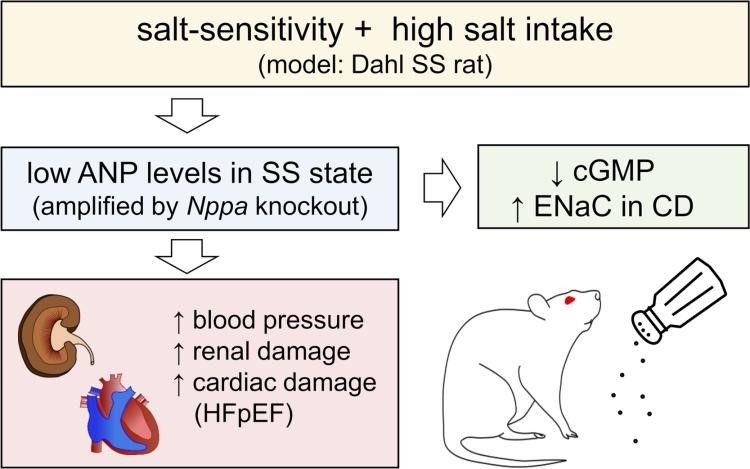 Fig.1 The DSS rat model for studying the effects of ANP elevation and deficiency on cardiorenal function.1,3
Model Construction Steps
The construction of the salt-induced left HF model in DSS rats typically follows a well-defined protocol to ensure robust and reproducible disease development:
01Acclimation
Young DSS rats, commonly male or female, are first acclimated to the laboratory environment and a standard control diet for approximately one week upon arrival. This ensures animal well-being and reduces stress.
02Dietary Intervention
Following the acclimation period, the study animals are transitioned to a high-salt diet, often containing 8% sodium chloride (NaCl), which is continuously provided throughout the study duration.
03Control Group
A control group receives an identical diet with a low-salt content, typically around 0.26% NaCl, to serve as a baseline for comparison.
04Disease Progression Monitoring
Over several weeks, the rats on the high-salt diet progressively develop severe hypertension, leading to a cascade of cardiac and renal remodeling events characteristic of HF. Regular monitoring of body weight, food intake, and blood pressure ensures proper model development.
Strengths and Limitations
Strengths:
- Translational Relevance: The DSS model accurately recapitulates key pathophysiological features of human HFpEF, including rapid-onset hypertension, concentric left ventricular hypertrophy, progressive diastolic dysfunction, myocardial fibrosis, and systemic inflammation.
- Sex-Specific Studies: The model allows for the establishment of HFpEF phenotypes in both male and female rats, critically addressing the higher prevalence of HFpEF in women and enabling sex-specific mechanistic and therapeutic investigations.
- Cardiorenal Syndrome Modeling: The development of significant renal injury alongside cardiac dysfunction makes it an excellent model for studying the complex interplay in cardiorenal syndromes and the role of volume overload.
- Metabolic Insights: It proves valuable for exploring the role of metabolic factors in HF progression and testing novel metabolic interventions that target energy metabolism and cellular function.
- Reproducibility: The predictable and rapid progression of disease in response to a high-salt diet ensures high reproducibility and consistency in experimental outcomes.
Limitations:
- Monogenic Model: As a genetically predisposed model, it may not fully capture the multifactorial etiology of HF in all human patients, which can involve a broader spectrum of comorbidities beyond salt sensitivity.
- Species-Specific Differences: As with all rodent models, direct translation to humans must consider physiological and pharmacological differences between rats and humans.
- Acute vs. Chronic Stages: While excellent for chronic hypertension-induced HF, certain acute or rapidly progressive forms of HF may require alternative models.
Evaluation Platform
Creative Biolabs provides a comprehensive evaluation platform to generate robust and reliable data from your DSS rat studies. Our state-of-the-art facilities and experienced scientific team offer a multi-modal approach encompassing biochemical, molecular, cellular, histopathological, and imaging analyses.
Key Test Indicators:
- Non-Invasive Cardiac Imaging (Echocardiography): Left ventricular dimensions and wall thickness, mass, Ejection Fraction (EF), Fractional Shortening (FS), E/A ratio, E/e' ratio, Isovolumic Relaxation Time (IVRT).
- Hemodynamic Measurements: Systolic/Diastolic/Mean Arterial Pressure (SBP, DBP, MAP), Left Ventricular End-Diastolic Pressure (LVEDP), dp/dtmax/min, and Pressure-Volume Loop Analysis.
- Histopathological Analysis: Myocardial collagen content, cardiomyocyte size, inflammatory cell infiltration, renal glomerulosclerosis, interstitial fibrosis, and wet lung weight.
- Biochemical and Molecular Biomarkers: NT-proBNP, Cardiac Troponins, Creatinine, BUN, Albuminuria/Proteinuria, inflammatory cytokines, oxidative stress markers, cardiac remodeling gene/protein expression, microRNAs, and mitochondrial function markers.
Applications
Modeling Complex Cardiac Pathologies: Accurately simulates hypertension-induced HF, particularly HFpEF, cardiorenal syndrome, and associated metabolic and fibrotic complications.
Evaluating Diverse Therapeutic Agents: Serves as a robust platform for assessing a wide range of pharmacological interventions, including antihypertensives, anti-inflammatory, anti-fibrotic, and metabolic modulators.
Assessing Advanced Treatment Modalities: Ideal for preclinical testing of novel therapeutic strategies, such as gene therapies, cell-based approaches, and combination treatments.
Related Heart Failure Models
PA Constriction induced Right HF Model
Ascending Aortic Arch Constriction induced Post-Pressure Overload Heart Failure Model
Abdominal Aortic Stenosis induced Left HF Model
DOCA & Salt induced Left HF Model
Adriamycin induced Left HF Model
Our Advantages
- Clinically Relevant Models: Our profound understanding ensures experimental designs yield highly translational data.
- Robust & Reproducible Data: Strict adherence to validated protocols guarantees consistent and reliable results.
- Comprehensive Endpoints: We offer a full spectrum of advanced analytical capabilities for deep mechanistic insights.
- Tailored Study Design: Custom protocols are developed to precisely meet your specific research objectives.
- Accelerated Development: High-quality, actionable data de-risks and speeds up your drug discovery programs.
Work with Us
- Summarize the project requirements and fill in the information collection form.
- Sign a CDA from both parties to further communicate information, such as targets.
- Select an animal model, discuss experimental design, and determine assay parameters.
- Project costing and project schedule forecasting.
- We provide a detailed project plan, including the required sample quantities, methods, and protocols.
- Both parties confirm the project details and start the project.
- Confirm the timeline of the project.
- We provide periodic results and information on the animal's condition.
- We will work together to make project adjustments as necessary.
- We provide a comprehensive project report promptly.
- We arrange transportation for the produced samples.
- We provide a discussion of the project results and help to arrange the next steps.
- Data storage and archiving.
Contact Us
Creative Biolabs is dedicated to providing high-quality preclinical research services for HF. We invite you to contact our scientific team to discuss your specific research needs and explore how our expertise with the DSS rat model can advance your therapeutic development efforts.
FAQs
-
Q1: Why is the DSS rat model particularly suited for HFpEF research?
A: The DSS model closely mimics human HFpEF due to its genetic predisposition. It replicates key hallmarks: salt-induced hypertension, LV hypertrophy, diastolic dysfunction, and myocardial fibrosis, enabling highly translational studies of disease mechanisms and therapeutic efficacy.
-
Q2: What are the primary indicators of diastolic dysfunction measured in this model?
A: We assess diastolic dysfunction via echocardiography, focusing on E/A, E/e' ratios, and IVRT. Invasive hemodynamic analysis, including pressure-volume loop data, provides comprehensive insights into myocardial stiffness and relaxation.
-
Q3: Can this model be utilized for studying sex-specific differences in HF with preserved ejection fraction?
A: Absolutely. Given HFpEF's higher prevalence in women, the DSS model is invaluable for exploring sex-specific differences. We establish robust HFpEF phenotypes in both male and female rats, allowing investigation of unique pathways and potential sex-dependent therapeutic responses.
-
Q4: What methods are employed to assess myocardial fibrosis in the DSS rat model?
A: Myocardial fibrosis, a critical HFpEF feature, is quantified using histological staining (Masson's, Sirius Red) for collagen deposition. Molecular approaches like RT-qPCR and Western Blotting assess pro-fibrotic gene and protein expression (e.g., collagen types, α-SMA).
-
Q5: Does the DSS model exhibit features of cardiorenal syndrome, and how is it evaluated?
A: Yes, the DSS model consistently develops significant renal injury alongside cardiac dysfunction, making it an excellent platform for cardiorenal syndrome studies. Renal involvement is assessed via histology (glomerulosclerosis, interstitial fibrosis) and biochemical analysis (serum creatinine, BUN, proteinuria/albuminuria). Wet lung weight indicates pulmonary congestion due to fluid overload, reflecting cardiorenal interaction.
-
Q6: Is the DSS model suitable for evaluating therapies that target metabolic pathways in HF?
A: Indeed, the DSS model is highly suitable for investigating metabolic dysregulation in HF progression and evaluating targeted therapies. Research demonstrates its utility in assessing compounds influencing energy metabolism, mitochondrial function, and endothelial health, offering a comprehensive platform for novel strategies.
-
Q7: What kind of quality control measures does Creative Biolabs implement for DSS rat studies?
A: Creative Biolabs prioritizes stringent quality control. We adhere to standardized, validated protocols for animal husbandry, diet, disease induction, and endpoint measurements. Our experienced team monitors animal health, ensuring highly reproducible data. Equipment is calibrated, and assays follow best practices, guaranteeing robust results.
Published Data
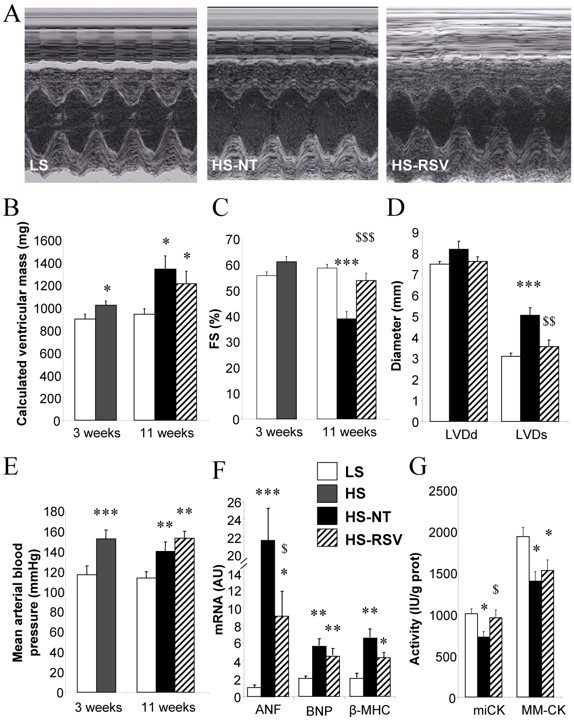 Fig.2 Effect of resveratrol on cardiac function and remodeling using the DSS rat model.2,3
A compelling example demonstrating the utility of the DSS rat model in identifying promising therapeutic strategies is a study that investigated the polyphenol resveratrol. In a relevant model of hypertension-induced heart failure, treatment with resveratrol significantly improved survival rates, counteracted cardiac dysfunction without affecting hypertension or hypertrophy, and preserved aortic endothelial function. This highlights the model's capacity to uncover novel therapeutic mechanisms impacting survival and cardiac function.
References
- Ilatovskaya, Daria V et al. "Effects of elevation of ANP and its deficiency on cardiorenal function." JCI insight vol. 7,9 e148682. 9 May. 2022. https://doi.org/10.1172/jci.insight.148682
- Rimbaud, Stéphanie et al. "Resveratrol improves survival, hemodynamics and energetics in a rat model of hypertension leading to heart failure." PloS one vol. 6,10 (2011): e26391. https://doi.org/10.1371/journal.pone.0026391
- Distributed under Open Access license CC BY 4.0, without modification.
For Research Use Only.