
db/db Type II Diabetic Nephropathy Modeling & Pharmacodynamics Service
Creative Biolabs offers a wide range of advanced models for evaluating the efficacy of drugs aimed at managing Type II Diabetic Nephropathy, ensuring comprehensive solutions for your research and therapeutic development.
Introduction
Type II Diabetic Nephropathy (T2DN) is a major cause of chronic kidney disease (CKD) and end-stage renal failure, commonly associated with long-standing Type II diabetes. The disease develops because of persistent hyperglycemia, insulin resistance, and metabolic dysregulation, leading to kidney dysfunction. T2DN is characterized by progressive glomerular injury, tubulointerstitial fibrosis, and loss of renal function. Key pathological features include glomerular hypertrophy, increased extracellular matrix deposition, and elevated albumin levels in the urine (albuminuria). Over time, these changes impair renal filtration, resulting in the deterioration of kidney function. This condition significantly contributes to the increased mortality and morbidity in diabetic patients. The disease is often complicated by other diabetes-related conditions, such as hypertension and hyperlipidemia, further exacerbating kidney damage. Early detection and therapeutic intervention are crucial in preventing the progression to end-stage renal failure.
Disease Models and Applications
The db/db Type II Diabetic Nephropathy Model is commonly used for studying the pathophysiology of diabetic kidney disease. The model is created by breeding db/db mice, which carry a mutation in the leptin receptor gene, leading to obesity and insulin resistance. These mice develop hyperglycemia, and over time, they exhibit characteristics like human diabetic nephropathy, including glomerular hypertrophy, albuminuria, and renal fibrosis. The db/db model allows for the assessment of both early and advanced stages of kidney damage. However, this model has limitations, such as the absence of hyperlipidemia, which is typically seen in human diabetic nephropathy, making it less suitable for evaluating lipid-targeting therapies.
- Simulates: The db/db Type II Diabetic Nephropathy Model simulates the progression of diabetic kidney disease in humans, including features like glomerulosclerosis, tubulointerstitial fibrosis, and renal dysfunction.
- Evaluates Drugs: This model is ideal for evaluating drugs aimed at slowing the progression of diabetic nephropathy, including anti-inflammatory agents, antioxidants, and inhibitors of fibrosis. It also supports the investigation of novel therapeutics targeting kidney protection in diabetic conditions.
Measurements
We offer a variety of measurements for evaluating drug efficacy in the db/db Type II Diabetic Nephropathy Model, utilizing an array of advanced technologies, including but not limited to:
General observations: Blood glucose levels, albuminuria, body weight, and kidney function (serum creatinine, BUN).
Histological analysis: Renal tissue analysis for glomerulosclerosis, tubular damage, and fibrosis via H&E staining and Masson's trichrome.
Cytokine profiling (e.g., ELISA): Expression levels of inflammatory mediators such as TNF-α, IL-6, IL-1β, and kidney injury markers.
Gene/protein expression profiling: RT-qPCR and Western blotting for fibrosis-related markers (e.g., TGF-β, collagen IV) and kidney injury markers (e.g., KIM-1).
Our team is available to assist in experimental design, model selection, and data analysis, ensuring a customized and effective approach to your research needs.
Related Services
In addition to the db/db Type II Diabetic Nephropathy Model, we offer other inducible diabetes complications models, such as the STZ induced diabetic nephropathy model, which allows for the study of kidney damage following short-term insulin resistance. Furthermore, our services extend to cardiovascular complications, including diabetic cardiomyopathy models, to provide a comprehensive solution for your diabetes-related research.
- Streptozotocin (STZ) induced Type I Diabetic Skin Defect/Burn Model
- Streptozotocin (STZ) induced Type I Diabetic Foot Ulcer Model
- Streptozotocin (STZ) induced Type I Diabetic Peripheral Vascular Disease Model
- Streptozotocin (STZ) induced Type I Diabetic Cataract Model
- High-Fat Diet & Streptozotocin (STZ) induced Type II Diabetic Nephropathy Model
Advantages
- Expertise and Experience: Our team of experienced scientists brings a wealth of knowledge in diabetes research, particularly in Type II Diabetic Nephropathy, ensuring accurate and reliable results for your studies.
- Advanced Animal Models: We offer a wide range of well-established and customizable animal models, including those for diabetic nephropathy, allowing for comprehensive testing of therapeutic agents.
- Tailored Solutions: We work closely with you to provide personalized services, helping with experimental design, model selection, and data analysis to meet your specific research needs.
- State-of-the-Art Technology: Our advanced technologies and methodologies ensure high-quality, reproducible results that will accelerate the development of your therapeutic strategies.
- Comprehensive Support: From model selection to data interpretation, our dedicated team provides continuous support throughout your research process, ensuring the success of your project.
Work with Us
- Summarize the project requirements and fill in the information collection form.
- Sign a CDA from both parties to further communicate information, such as targets.
- Select an animal model, discuss experimental design, and determine assay parameters.
- Project costing and project schedule forecasting.
- We provide a detailed project plan, including the required sample quantities, methods, and protocols.
- Both parties confirm the project details and start the project.
- Confirm the timeline of the project.
- We provide periodic results and information on the animal's condition.
- We will work together to make project adjustments as necessary.
- We provide a comprehensive project report promptly.
- We arrange transportation for the produced samples.
- We provide a discussion of the project results and help to arrange the next steps.
- Data storage and archiving.
FAQs
-
Q: What types of measurements can I expect from the db/db model?
A: We provide a variety of measurements, including general observations (e.g., blood glucose, body weight), histological analysis of renal tissues, cytokine profiling, and gene/protein expression profiling to evaluate kidney function and damage.
-
Q: Can the db/db model be used to study other diabetic complications?
A: Yes, the db/db model can also be used to study other complications of Type II diabetes, such as diabetic cardiomyopathy, vascular disease, and metabolic disorders, making it a versatile tool for comprehensive diabetes research.
-
Q: Do you offer custom animal models for specific research needs?
A: Yes, Creative Biolabs offers customized animal models tailored to your specific research needs. Our team works with you to design models that best align with your research goals.
-
Q: How do I get started with your services?
A: You can contact us directly for an initial consultation. Our team will guide you through the process, helping you select the right model, experimental design, and measurement techniques for your research.
-
Q: What makes Creative Biolabs different from other service providers?
A: We combine cutting-edge technology, expert scientific knowledge, and a client-focused approach to deliver high-quality, customized solutions that help accelerate your research and drug development.
Published Data
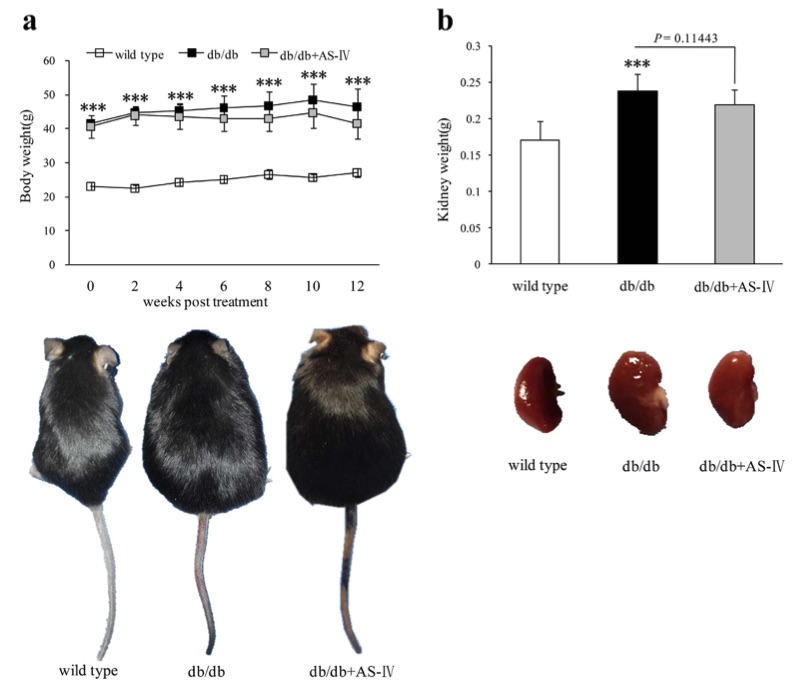 Fig. 1 In mice treated with AS-IV, body weight and kidney weight both showed declining trends, but not to a significant degree.1
The study investigated the effects of AS-IV supplementation on diabetic nephropathy (DN) in db/db mice, a model of Type 2 diabetes. Throughout the experiment, mice in the db/db group showed an increase in body weight from the start of the treatment and exhibited heavier kidney weights at the study's conclusion. In contrast, mice treated with AS-IV demonstrated a decreasing trend in body weight after 4 weeks of treatment. By the 12-week mark, the kidney weight of AS-IV-treated mice had decreased, although the reduction was not statistically significant (Fig. 1a, b).
Reference
- Sun, Huili et al. "Astragaloside IV ameliorates renal injury in db/db mice." Scientific Reports vol. 6 32545. 2 Sep. 2016, DOI:10.1038/srep32545. Distributed under an Open Access license CC BY 4.0, without modification.
For Research Use Only.