
- Summarize the project requirements and fill in the information collection form.
- Sign a CDA from both parties to further communicate information, such as targets.
- Select an animal model, discuss experimental design, and determine assay parameters.
- Project costing and project schedule forecasting.
Thrombosis Modeling & Pharmacodynamics Services
Introduction
Thrombosis refers to the formation of a blood clot inside a blood vessel, which obstructs the vital blood flow. This critical condition can manifest in both veins and arteries, leading to severe consequences such as deep vein thrombosis (DVT), pulmonary embolism (PE), myocardial infarction, and ischemic stroke. Given its widespread and critical role in numerous debilitating diseases, the development of robust animal models is essential for unraveling its complex pathophysiology and advancing safer, more effective therapeutic interventions.
Creative Biolabs stands ready to address this urgent need, offering a diverse array of well-established thrombosis models specifically designed to rigorously evaluate the efficacy of novel anti-thrombotic agents.
Available Thrombosis Models at Creative Biolabs
Thrombosis models are meticulously constructed to mimic clinical scenarios through vascular injury, blood flow stasis, or localized hypercoagulability. Controlling these factors yields insights into thrombotic processes and allows assessment of anti-thrombotic, thrombolytic, and anti-platelet drugs. Genetic modifiability, particularly in mice, enables investigation of specific gene roles and their in vivo relevance.
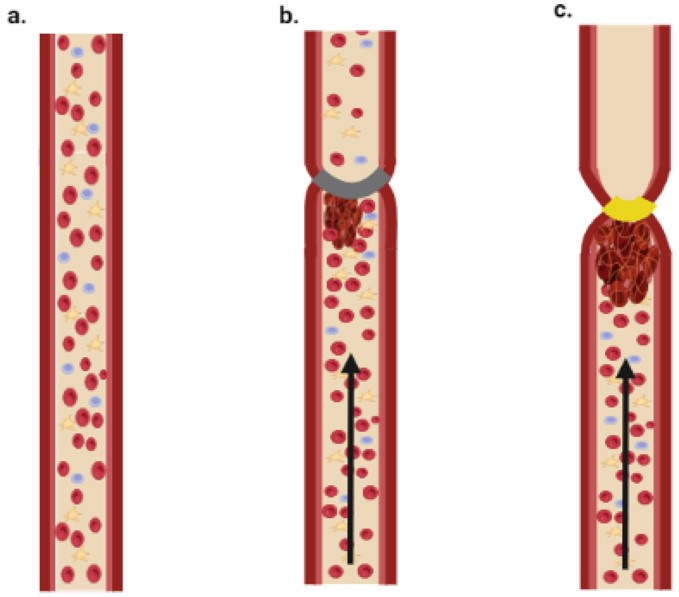 Fig.1 Diagram of stasis and stenosis models.1,3
Creative Biolabs offers a comprehensive suite of thrombosis models for studying disease mechanisms and rigorously testing drugs. Each model employs specific strategies to induce and characterize thrombus formation, ensuring high relevance and reproducibility:
| Thrombosis Models | Modeling and applications | Animal species |
|---|---|---|
| Transient Blood Flow Occlusion induced Inferior Vena Cava Thrombosis Model | Temporary IVC occlusion induces blood flow stasis (Virchow's triad), assessing anti-coagulants and thrombolytics on nascent clots. | Rabbit, NHPs |
| Thrombin induced Inferior Vena Cava Thrombosis Model | Direct thrombin infusion or local IVC application rapidly initiates fibrin formation and platelet activation, yielding a robust, fibrin-rich thrombus. Effectively evaluates direct thrombin inhibitors and other anti-coagulants. | Rabbit |
| Arteriovenous Fistula Thrombosis Model | Surgical AV fistula creation connects an artery to a vein, producing high-flow, turbulent conditions. Useful for studying thrombosis under altered shear stress and evaluating therapies preventing device-related complications. | Rat, Rabbit |
| Fe2O3 induced Arterial Thrombosis Model | Induces arterial oxidative stress and endothelial damage, promoting platelet adhesion and aggregation, leading to thrombus formation. This alternative chemical injury approach tests anti-platelet or anti-thrombotic agents. | Mouse,Rat |
| Foreign Matter induced Arterial Thrombosis Model | Inserting foreign material (e.g., wire, catheter) into an artery directly injures the endothelium, providing a surface for thrombus formation. Highly relevant for device-related thrombosis (e.g., stent thrombosis) and evaluating biomaterial biocompatibility or drug-eluting coating properties. | Rat, Rabbit |
| Ferric Chloride induced Thrombosis Model | Topical FeCl3 application to an artery (carotid or femoral) causes rapid endothelial injury and oxidative stress, leading to robust platelet activation and aggregation. This results in an occlusive, platelet-rich thrombus, an established method for evaluating anti-platelet agents and thrombolytics. | Rat, Rabbit |
Evaluation Platform
To rigorously evaluate the efficacy of novel therapeutic agents, Creative Biolabs provides a comprehensive evaluation platform encompassing diverse analytical techniques. We offer precise measurements of various parameters, including but not limited to:
- Thrombus Analysis: Thrombus weight and size, histological assessment of thrombus composition, and vessel wall changes.
- Molecular & Cellular Analysis: Immunohistochemical and immunofluorescent localization of specific proteins, quantification of circulating biomarkers, flow cytometric analysis of cell populations.
- Functional Assays: Ex vivo platelet function tests.
- Omics & Hematology: Gene expression analysis, protein level analysis, and comprehensive hematology analysis.
Applications
Disease Simulation: These models accurately simulate various clinical thrombotic conditions, including deep vein thrombosis (DVT), pulmonary embolism (PE), myocardial infarction, ischemic stroke, and device-related thrombosis.
Drug Evaluation: We rigorously evaluate the efficacy and safety of a wide range of anti-thrombotic drugs, including novel anti-platelet agents, anti-coagulants, and thrombolytics.
Therapeutic Strategies: Our platforms are instrumental in assessing new therapeutic strategies aimed at preventing thrombus formation, promoting thrombus resolution, and mitigating associated organ damage, thereby accelerating the development of life-saving treatments.
Related Cardiovascular Models
Our Advantages
- Diverse Animal Species: Access to a wide range of rodent strains and species, allowing for optimal model selection.
- One-Stop Evaluation: Integrated in vivo and in vitro capabilities for comprehensive drug evaluation.
- Expert Team: A highly professional team with deep scientific expertise and a robust quality management system.
- Tailored Solutions: Customized study protocols to meet unique research objectives and maximize resource efficiency.
- Accelerated Timelines: Streamlined processes to de-risk drug candidates and expedite development.
Work with Us
Inquiry Stage
Project Start
- We provide a detailed project plan, including the required sample quantities, methods and protocols.
- Both parties confirm the project details and start the project.
- Confirm the timeline of the project.
Project Progress
- We provide periodic results and information on the animal's condition.
- We will work together to make project adjustments as necessary.
Project Completion
- We provide a comprehensive project report promptly.
- We arrange transportation for the produced samples.
- We provide a discussion of the project results and help to arrange the next steps.
After-Sales Support
- Data storage and archiving.
Contact Us
Leveraging decades of experience and scientific leadership, Creative Biolabs is dedicated to providing unparalleled preclinical services with the highest standards of quality and accuracy. We adopt a collaborative approach, working closely with our clients to precisely understand their research needs. Our expert scientists are ready to assist you in selecting the most suitable models and tailoring study-specific protocols to optimize your results. Contact us today to discuss your detailed research plan.
FAQs
-
Q1: What types of thrombosis models do you offer?
A: We provide a comprehensive array of thrombosis models, meticulously designed to study both arterial and venous thrombotic events. Our offerings include models induced by chemical injury (e.g., Ferric Chloride, Fe2O3), mechanical injury (e.g., transient blood flow occlusion, foreign matter insertion), and specific pro-coagulant agents like thrombin. We also offer models that simulate thrombosis in the context of underlying conditions like atherosclerosis.
-
Q2: What endpoints can be evaluated in your thrombosis studies?
A: Our evaluation platform is extensive, covering a wide range of endpoints to provide a holistic view of therapeutic efficacy. Beyond quantitative measures like thrombus weight and size, we perform detailed histological and immunohistochemical analyses, assess circulating biomarkers, conduct flow cytometry, and evaluate ex vivo platelet function. We also offer gene expression, protein level analysis, and comprehensive hematology assessments.
-
Q3: Can you customize thrombosis models for specific research needs?
A: Absolutely. We understand that each research project has unique requirements. Our scientific team excels in model selection and customization, working in close collaboration with clients to adapt existing models or develop novel approaches. This tailored strategy ensures that the chosen model precisely aligns with your specific research questions, therapeutic targets, and desired experimental outcomes.
-
Q4: Do you offer in vitro services to complement in vivo thrombosis studies?
A: Yes, we provide integrated in vivo and in vitro evaluation capabilities. This one-stop approach allows for a more comprehensive understanding of your drug candidate's mechanism of action and efficacy. We offer a range of in vitro assays, including platelet aggregation studies, coagulation assays, and endothelial cell function tests, which can be seamlessly integrated with your in vivo thrombosis models.
-
Q5: How can I initiate a project with Creative Biolabs for thrombosis model services?
A: Initiating a project with Creative Biolabs is straightforward. We encourage potential clients to contact us directly through our website, email, or phone. Our dedicated team will then schedule a confidential consultation to discuss your specific research needs, provide detailed information on our services, and develop a customized proposal tailored to your project requirements.
Published Data
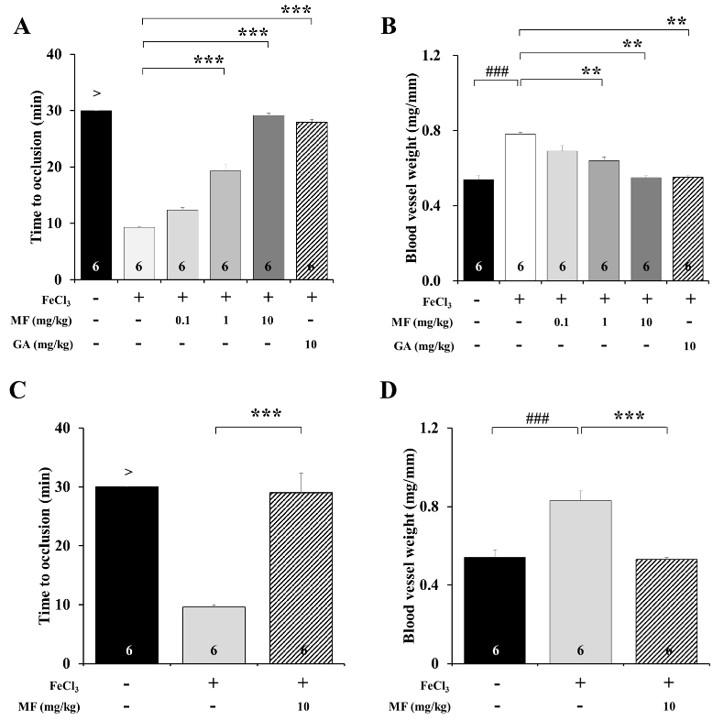 Fig.2 Effects of MF on blood flow in an FeCl3-induced arterial thrombosis model.2,3
This research utilized the ferric chloride-induced arterial thrombosis model, a core type of thrombosis model, to investigate the effects of mumefural (MF) on blood flow. The study demonstrated that MF significantly improved blood flow and reduced thrombus formation in a dose-dependent manner, highlighting its potential as an anti-thrombotic agent. This case exemplifies how robust preclinical models provide essential data for identifying and validating novel therapeutic compounds, thereby accelerating drug discovery and development.
References
- Ayyoub, Sana et al. "Thrombosis Models: An Overview of Common In Vivo and In Vitro Models of Thrombosis." International journal of molecular sciences vol. 24,3 2569. 29 Jan. 2023, DOI:10.3390/ijms24032569.
- Bang, Jihye, and Won Kyung Jeon. "Mumefural Improves Blood Flow in a Rat Model of FeCl3-Induced Arterial Thrombosis." Nutrients vol. 12,12 3795. 10 Dec. 2020, DOI:10.3390/nu12123795.
- Distributed under Open Access license CC BY 4.0, without modification.
For Research Use Only.
Online Inquiry