
Cataract Modeling & Pharmacodynamics Services
Introduction
Cataract is the leading cause of blindness worldwide. It is an eye disease characterized by lens opacity caused by genetic and environmental factors. Clinically, it is mainly divided into congenital cataract, traumatic cataract, and metabolic cataract. At present, one of the main methods to study the pathogenesis of cataract is to construct animal models. The commonly used animals to construct cataract models are rats, mice, and guinea pigs. Creative Biolabs builds a series of cataract animal models, like human lens opacity, to help our customers more effectively explore the mechanisms of cataract disease and screen effective drugs.
Cataract Disease Models Available at Creative Biolabs
- Sodium Selenite-Induced Cataract
The animal cataract model induced by sodium selenite has become the most commonly used animal cataract model because it partially simulates the characteristics of human senile nuclear cataract. Selenite can reach the lens through the body fluid circulation and can react with trace H2O2 in aqueous humor. Different forms of reactive oxygen free radicals change the structure of lens proteins, causing lens opacity and forming selenium cataracts. The modeling method is a single subcutaneous injection or intraperitoneal injection of sodium selenite. After 4 days, 80% of the lens can develop into dense opacity, and 20% of the lens can develop into partial opacity.
- UVR-B Induced Cataract
The main mechanism of ultraviolet damage to the lens is the oxidative damage to the lens caused by free radicals. When constructing this type of cataract animal model, the animals were anesthetized and fixed, and the eyeballs of the experimental animals were irradiated with ultraviolet light with constant light intensity. The 7-day-old C57BL/6 mice are irradiated with UVB twice a week for 3 weeks. The lens begins to appear turbid at 4-8 months of age, and all the lenses are turbid at 20 months of age.
- Diabetic Cataract
Diabetic cataract is one of the main complications of diabetes, and its pathogenesis mainly includes oxidative damage to the lens and the occurrence of glycosylation. Diabetic cataract models can be induced by D-galactose, streptozotocin (STZ), alloxan, glucose, etc. The animal model is mainly constructed by intraperitoneal or subcutaneous injection of a certain concentration of galactose solution. After 18 days, the rat galactose cataract model is established.
- Congenital Cataract
Congenital cataract is caused by chromosome variation or gene mutation. This type of cataract animal model can be established by physical or chemical methods to induce gene mutation. Congenital cataract animal models can also use animals with occasional congenital cataracts in the population to maintain their genetic characteristics through lateral mating, backcrossing, and other reproductive methods.
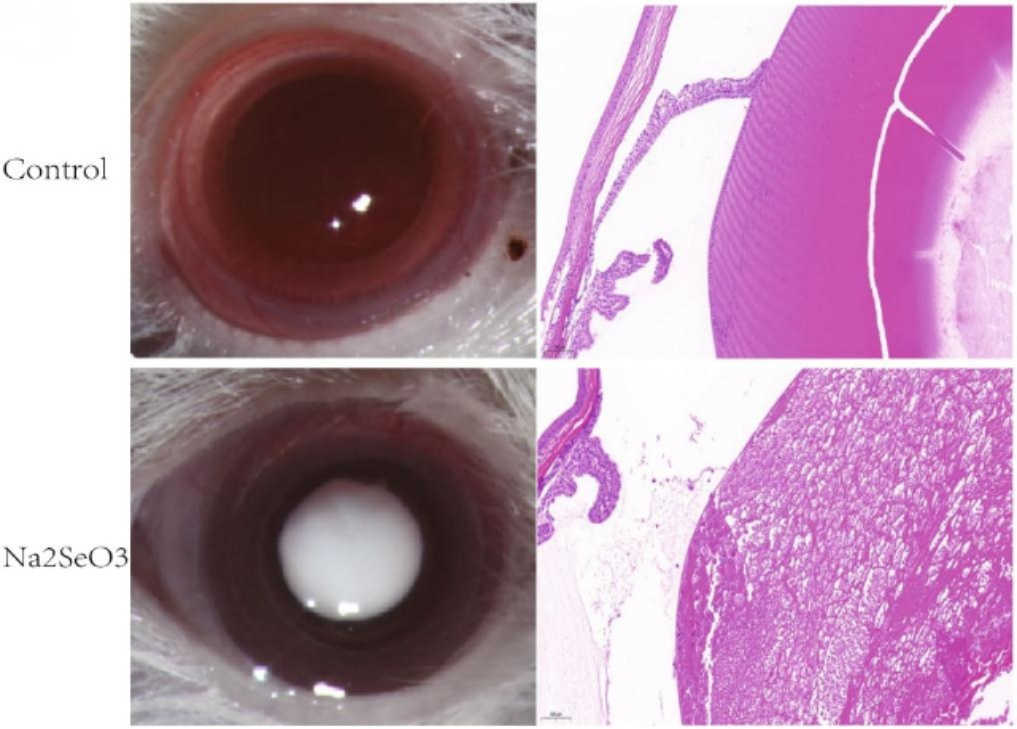 Fig 1. Images of the Na2SeO3-induced SD rat cataract model.1
Measurements
Creative Biolabs' ophthalmology platform can provide a variety of testing services after drug administration in cataract models, such as:
- Lens opacity (e.g. severity and region)
- Western blotting analysis (SIRT1, NF-κB)
- ELISA method (SOD, GSH, MDA)
- Histopathological observation (e.g. cornea, lens, retina)
Related Ocular Disease Models
Furthermore, you may also find other types of ocular disease models, such as:
- Dry Eye Models
- Corneal Disease Models
- Glaucoma Models
- Dry Age-Related Macular Degeneration (AMD) Models
- Wet Age-Related Macular Degeneration (AMD) Models
- Fundus Disease Models
- Diabetic Retinopathy Models
- Retinal Fibrosis Models
- Retinal Vein Occlusion Models
- Ocular Inflammation Models
Creative Biolabs has a perfect evaluation system to measure whether the disease model is successfully constructed. Our contact information can be located on the company's homepage.
Reference
- Fang, Rui, et al. "Transcriptome sequencing and microRNA–mRNA regulatory network construction in the lens from a Na2SeO3-induced Sprague Dawley rat cataract model." BMC ophthalmology 23.1 (2023): 461. Distributed under Open Access license CC BY 4.0. The image was modified by extracting and using B parts of the original image.
For Research Use Only.