
DDC (3,5-Diethoxycarbonyl-1,4-Dihydrocollidine) induced Acute Liver Injury Modeling & Pharmacodynamics Service
Creative Biolabs offers a variety of well-established models, including the DDC induced model, to evaluate the efficacy of therapeutic interventions for ALI, ensuring accurate, reliable, and reproducible results for preclinical testing.
Introduction
Acute liver injury (ALI) is a condition that involves rapid liver dysfunction, often caused by factors such as toxins, drugs, infections, and ischemia. ALI can lead to severe liver damage, inflammation, and potential failure if left untreated. Common causes include drug induced liver injury (DILI), alcohol consumption, and viral infections. The pathophysiology of ALI is complex, involving oxidative stress, hepatocyte apoptosis, inflammation, and tissue necrosis. Animal models are essential for studying ALI, as they allow for a better understanding of its mechanisms and evaluation of potential therapeutic agents. The DDC (3,5-Diethoxycarbonyl-1,4-dihydrocollidine) induced acute liver injury model is one such model that simulates cholestasis and liver fibrosis, providing a platform for testing drugs targeting these conditions.
Disease Models and Applications
The DDC induced Acute Liver Injury Model is commonly used to simulate cholestasis and liver injury, a condition characterized by impaired bile flow. To establish this model, rodents are fed a diet supplemented with 0.1% DDC for a period of 4 weeks. DDC disrupts bile acid metabolism and induces bile duct damage, leading to liver inflammation, fibrosis, and hepatocellular necrosis. This model mimics aspects of human cholestatic liver diseases such as primary biliary cholangitis and drug induced liver toxicity. One of its key advantages is the reproducibility of liver injury, which allows for reliable evaluation of therapeutic compounds. However, it also has limitations, such as not fully replicating chronic liver disease progression and the absence of certain pathological features seen in human liver diseases. Despite these limitations, the DDC model remains a valuable tool for studying the mechanisms of cholestasis and evaluating hepatoprotective treatments.
- Simulates: The DDC induced Acute Liver Injury Model simulates cholestatic liver injury, which is characterized by impaired bile flow and subsequent liver inflammation, fibrosis, and hepatocellular necrosis.
- Evaluates Drugs: This model is used to evaluate drugs that target liver injury, cholestasis, and liver fibrosis. It is particularly useful for assessing the effectiveness of compounds with hepatoprotective properties, anti-inflammatory drugs, and those that aim to restore bile acid homeostasis.
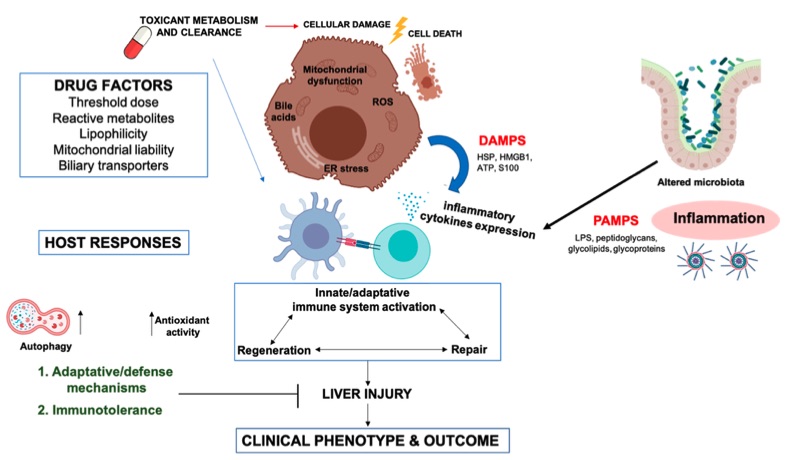 Fig. 1 Cellular and molecular mechanisms involved in idiosyncratic drug induced liver injury.1
Measurements
To evaluate drug efficacy in the DDC induced Acute Liver Injury Model, we offer a variety of measurement techniques based on literature and proven methodologies:
- General observations: body weight, survival rate, and liver function parameters such as ALT, AST, and total bilirubin levels.
- Histopathological analysis: Liver tissue staining (H&E, Masson's Trichrome) to assess liver damage, fibrosis, and inflammatory cell infiltration.
- Immunohistochemistry: Detection of immune cell infiltration (e.g., T-cells, macrophages) in liver tissues.
- Cytokine profiling (e.g., ELISA): Quantification of pro-inflammatory cytokines such as TNF-α, IL-6, and IL-1β to assess inflammatory responses.
- Gene/protein expression: RT-PCR and Western blot analysis for markers of liver damage, apoptosis, and fibrosis.
Additionally, our team can assist with experimental design, model selection, and data analysis to provide tailored support throughout your research process.
Related Services
In addition to the DDC induced Acute Liver Injury Model, we also offer other models for acute liver injury, including those induced by CCl4, acetaminophen, and ANIT. These models offer a range of options to study different mechanisms of liver damage.
- CCL4 induced Acute Liver Injury Model
- Concanavalin A (Con A) induced Acute Liver Injury Model
- Polyinosinic: Polycytidylic Acid induced Acute Liver Injury Model
- Acetaminophen (APAP) induced Acute Liver Injury Model
- Alcohol induced Acute Liver Injury Model
- Ischemia-Reperfusion induced Liver Injury Model
- Alpha-Naphthylisothiocyanate (ANIT) induced Acute Liver Injury Model
Advantages
- Comprehensive model portfolio: A variety of liver injury models to suit specific research needs.
- Expert guidance: Our team provides full support from model selection to data interpretation.
- Reliable and reproducible results: High-quality models that ensure consistency across experiments.
- Customizable solutions: We can tailor experimental protocols and measurements to your research goals.
- Advanced technologies: Access to cutting-edge techniques such as RNA sequencing and proteomics for in-depth analysis.
Work with Us
- Summarize the project requirements and fill in the information collection form.
- Sign a CDA from both parties to further communicate information, such as targets.
- Select an animal model, discuss experimental design, and determine assay parameters.
- Project costing and project schedule forecasting.
- We provide a detailed project plan, including the required sample quantities, methods, and protocols.
- Both parties confirm the project details and start the project.
- Confirm the timeline of the project.
- We provide periodic results and information on the animal's condition.
- We will work together to make project adjustments as necessary.
- We provide a comprehensive project report promptly.
- We arrange transportation for the produced samples.
- We provide a discussion of the project results and help to arrange the next steps.
- Data storage and archiving.
FAQs
-
1. What is the main advantage of using the DDC model for liver injury research?
The DDC model is ideal for studying cholestatic liver injury and evaluating drugs targeting bile flow dysfunction, making it a valuable tool for drug development in liver diseases.
-
2. How long does it take to observe results from the DDC model?
The liver injury and biochemical changes typically become evident within 4 weeks of DDC administration, with significant liver damage and cholestasis markers appearing by this time.
-
3. Can the DDC model be used for chronic liver disease studies?
While the DDC model is excellent for studying acute liver injury and cholestasis, it is less suitable for modeling chronic liver diseases like cirrhosis. For chronic studies, other models may be more appropriate.
Published Data
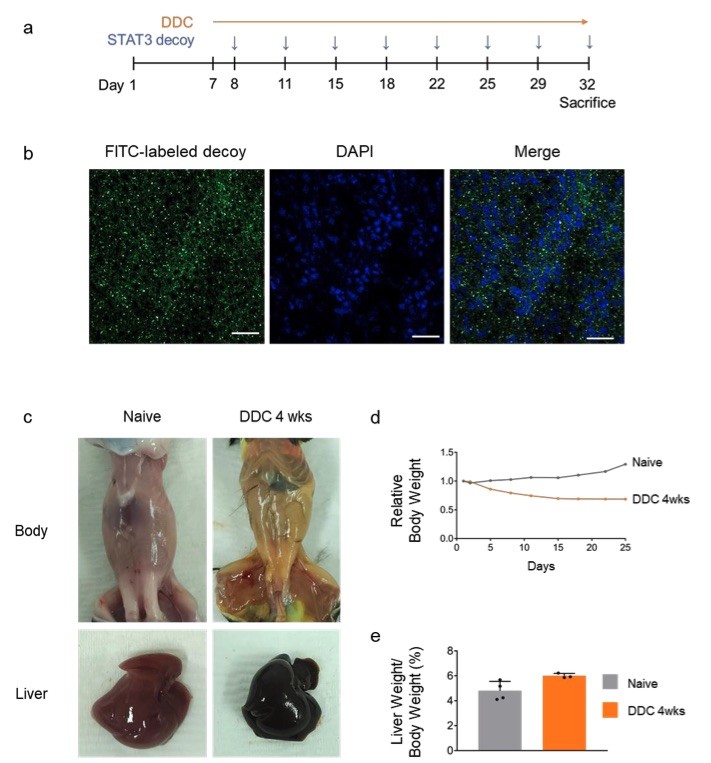 Fig. 2 Evaluation of decoy ODN transfection efficiency and the development of a DDC induced liver injury mouse model. 2
To assess the anti-fibrotic efficacy of STAT3 decoy ODN in vivo, a DDC induced fibrosis mouse model was treated with FITC-labeled STAT3 decoy ODN (DDC + STAT3 mice), which were fed a 0.1% DDC-supplemented diet (Figure 2a). To confirm the effective delivery of STAT3 decoy ODN, the distribution of FITC-labeled ODN in the liver was examined using confocal microscopy. Strong fluorescence of the FITC-labeled STAT3 decoy ODN was detected in the liver cytoplasm (Figure 2b). In contrast, the liver of vehicle-treated mice (DDC + Veh mice) with the same DDC-supplemented diet appeared black and exhibited a rough surface (Figure 2c). The body weight of DDC + Veh mice was significantly reduced compared to untreated naïve mice (Figure 2d), and the liver weight/body weight ratio was higher in DDC + Veh mice compared to naïve controls (Figure 2e). Jaundice was evident in the mice after four weeks of treatment. These results confirm the successful establishment of a DDC induced liver fibrosis model.
References
- Villanueva-Paz, Marina et al. "Oxidative Stress in Drug induced Liver Injury (DILI): From Mechanisms to Biomarkers for Use in Clinical Practice." Antioxidants (Basel, Switzerland) vol. 10,3 390. 5 Mar. 2021, DOI:10.3390/antiox10030390. Distributed under an Open Access license CC BY 4.0, without modification.
- Choi, Hye Jin et al. "STAT3 Decoy Oligodeoxynucleotides Suppress Liver Inflammation and Fibrosis in Liver Cancer Cells and a DDC induced Liver Injury Mouse Model." Molecules (Basel, Switzerland) vol. 29,3 593. 25 Jan. 2024, DOI:10.3390/molecules29030593. Distributed under an Open Access license CC BY 4.0, without modification.
For Research Use Only.