
Barium Chloride induced Ventricular Tachycardia Modeling & Pharmacodynamics Service
Introduction
Ventricular tachycardia (VT) represents a severe form of cardiac arrhythmia originating in the ventricles, often leading to hemodynamic instability and a high risk of sudden cardiac death. Its complex electrophysiological mechanisms necessitate rigorous preclinical investigation to develop effective therapeutic strategies.
At Creative Biolabs, we are dedicated to accelerating antiarrhythmic drug discovery by providing a comprehensive suite of well-established rodent cardiovascular disease models, including diverse VT models, designed to precisely evaluate novel compounds' efficacy and safety profiles.
Barium Chloride-Induced VT Model
The barium chloride (BaCl2)-induced VT model is a widely recognized and highly reproducible preclinical model for studying ventricular arrhythmias. It serves as an invaluable platform for screening and evaluating the antiarrhythmic potential of new drug candidates, as well as for elucidating the underlying mechanisms of action. This model is particularly effective due to BaCl2's specific inhibition of inwardly rectifying potassium (IK1) channels, which leads to a characteristic depolarization of the resting membrane potential, prolongation of action potential duration, and increased automaticity, thereby creating a reliable substrate for sustained VT.
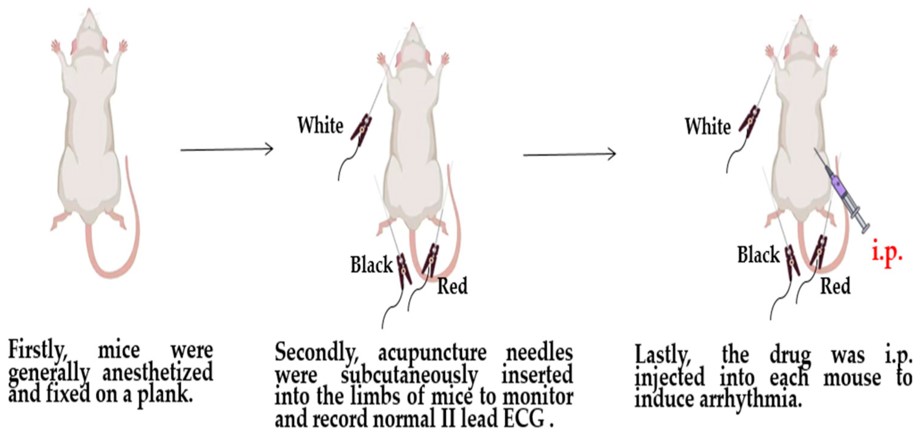 Fig.1 Schematic of BaCl2-induced cardiac arrhythmia mouse and rat models.1,3
Model Construction Steps
The construction of the BaCl2-induced VT model typically involves systemic administration of barium chloride to induce a stable and reproducible arrhythmic state, followed by electrophysiological monitoring. This approach allows for the real-time assessment of arrhythmic events and the subsequent evaluation of test compounds.
01Animal Preparation
Healthy rodents (e.g., rats or mice) are selected and acclimatized to the laboratory environment.
02Anesthesia
Animals are anesthetized using appropriate agents to ensure comfort and minimize stress during the procedure.
03ECG Monitoring Setup
Electrocardiogram (ECG) electrodes are carefully placed to allow continuous monitoring of cardiac electrical activity.
04BaCl2 Administration
A precise dose of Barium Chloride is administered, typically via intraperitoneal (i.p.) injection, to induce ventricular arrhythmias.
05Arrhythmia Induction and Stabilization
The animal's ECG is monitored closely for the onset and stabilization of VT.
06Compound Administration
Once stable VT is established, the test compound is administered, and its effects on arrhythmia parameters (e.g., termination, reduction in duration, heart rate changes) are recorded.
07Data Collection
Continuous ECG recordings are captured for detailed analysis of various arrhythmic parameters.
Strengths and Limitations
Strengths:
- High Reproducibility: Consistent and reliable induction of VT.
- Well-Defined Mechanism: Specific targeting of IK1 channels allows for clear mechanistic studies.
- Cost-Effective: Utilizes readily available and relatively inexpensive reagents.
- Acute Model: Ideal for assessing immediate antiarrhythmic effects.
Limitations:
- Acute Nature: Primarily models acute arrhythmias, may not fully replicate chronic or structural heart disease-related arrhythmias.
- Non-Ischemic Origin: The induced arrhythmia is pharmacologically, not ischemia-induced, which is important for model selection.
Evaluation Platform
Our state-of-the-art evaluation platform integrates advanced biochemical, molecular, cellular, histopathological, behavioral, and imaging instruments, ensuring a holistic assessment of your compounds. We employ sophisticated techniques to capture detailed physiological responses and provide robust data.
Key Test Indicators:
- ECG parameters (PR, QRS, QT intervals)
- Heart Rate (HR)
- Incidence and duration of VT/VF
- Number of premature ventricular contractions (PVCs)
- Arrhythmia score/severity
- Mortality rate
- Action potential duration changes (in isolated preparations)
Applications
- Simulating Diseases: This model effectively mimics acute ventricular arrhythmias, including drug-induced or early-stage electrical instabilities. It provides a valuable platform for studying ion channelopathies, particularly those affecting potassium currents, as the BaCl2 mechanism directly targets IK1 channels, allowing investigation of dysfunctional channel conditions.
- Evaluating Drugs: It serves as a crucial tool for preclinical assessment of novel antiarrhythmic agents, including traditional Class I, III, and IV antiarrhythmics, and compounds targeting other ion channels or signaling pathways. The model also evaluates cardioprotective compounds that may reduce arrhythmogenic substrate or protect cardiac cells.
- Investigating Treatments: The model allows detailed investigation into the efficacy of single agents for dose-response relationships and optimal therapeutic windows. It is also highly valuable for assessing combination therapies, identifying synergistic effects for improved efficacy or reduced side effects, thereby optimizing treatment strategies.
- Understanding Pathophysiology: By inducing arrhythmias through specific ion channel blockade, the model excels at elucidating the role of specific ion channels and cellular excitability in arrhythmia initiation and maintenance. Researchers gain deeper insights into how IK1 alterations contribute to abnormal electrical activity in VT.
- Safety Pharmacology: Beyond efficacy, the BaCl2 model is leveraged in safety pharmacology to assess potential proarrhythmic effects of both cardiac and non-cardiac drugs. Compounds that might prolong the QT interval or induce new or more severe arrhythmias can be identified, mitigating risks in later development stages.
Related Ventricular Tachycardia Models
Our Advantages
- Years of Expertise: Deep scientific knowledge and proven track record in cardiovascular models.
- Robust Protocols: Meticulously optimized and reproducible study designs.
- Comprehensive Analysis: State-of-the-art electrophysiological and multi-omics assessment.
- Tailored Solutions: Flexible study designs customized to your specific research objectives.
Work with Us
- Summarize the project requirements and fill in the information collection form.
- Sign a CDA from both parties to further communicate information, such as targets.
- Select an animal model, discuss experimental design, and determine assay parameters.
- Project costing and project schedule forecasting.
- We provide a detailed project plan, including the required sample quantities, methods, and protocols.
- Both parties confirm the project details and start the project.
- Confirm the timeline of the project.
- We provide periodic results and information on the animal's condition.
- We will work together to make project adjustments as necessary.
- We provide a comprehensive project report promptly.
- We arrange transportation for the produced samples.
- We provide a discussion of the project results and help to arrange the next steps.
- Data storage and archiving.
Contact Us
Creative Biolabs stands as a trusted partner in preclinical cardiovascular research, offering expert services utilizing the barium chloride-induced VT model. Our commitment to scientific excellence and comprehensive data analysis provides valuable insights for your drug development. We encourage you to contact us to discuss how our specialized services can advance your antiarrhythmic research program.
FAQs
-
Q1: How reproducible is the barium chloride-induced VT model in your hands?
A: Our extensive experience with the barium chloride model has allowed us to refine protocols to achieve exceptional reproducibility. We meticulously control variables such as animal strain, weight, BaCl2 dosage, and administration route, ensuring consistent induction of stable VT. This rigorous standardization minimizes variability, providing reliable data for your compound evaluations.
-
Q2: Can this model differentiate between different classes of antiarrhythmic drugs?
A: Absolutely. Given its specific mechanism of action primarily targeting IK1 channels, the barium chloride model is particularly sensitive to Class III antiarrhythmics (potassium channel blockers) and can also demonstrate effects of Class I (sodium channel blockers) and Class IV (calcium channel blockers) agents, depending on their broader electrophysiological impact. Our detailed ECG and electrogram analyses allow for nuanced differentiation of drug effects.
-
Q3: Is it possible to combine the BaCl2 model with other cardiovascular models or assessments?
A: Yes, the BaCl2 model can be integrated into broader study designs. For instance, it can be used in conjunction with assessments of cardiac function (e.g., echocardiography) or histological analysis to understand long-term effects or structural changes. We are adept at designing customized study protocols that combine various models and endpoints to provide a holistic understanding of your compound's effects.
-
Q4: Can this model be used to assess proarrhythmic risk?
A: While primarily an efficacy model, the BaCl2-induced VT model can offer insights into proarrhythmic risk, especially if a compound exacerbates the existing arrhythmia or induces new types of arrhythmias at higher doses. Careful dose-response studies and detailed ECG analysis are crucial for identifying such potential liabilities.
-
Q5: How do you assist in interpreting complex or unexpected results from the model?
A: Our team of seasoned biologists and pharmacologists provides more than just data; we offer expert interpretation. If results are complex or unexpected, we engage in thorough discussions, review all raw data, and leverage our deep scientific understanding to provide context and suggest potential follow-up experiments or alternative interpretations. Our goal is to help you make informed decisions.
Published Data
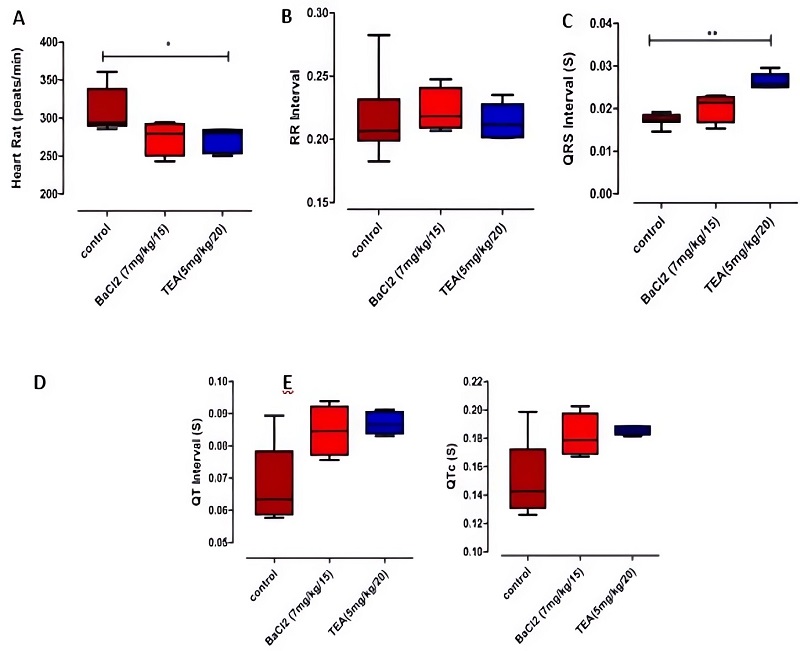 Fig.2 The effects of TEA infusion on heart rate, RR interval, QRS interval, QT interval, and QTc interval in male albino rats.2,3
The study investigated the cardioprotective effects of bradykinin (BK) and tetraethylammonium (TEA) on barium chloride-induced arrhythmias in male rats. The research demonstrated that both compounds reduced heart rate and significantly inhibited mortality, with TEA showing a greater effect. This case highlights the BaCl2 model's utility in identifying novel cardioprotective agents and understanding their impact on cardiac electrical activity, contributing to new antiarrhythmic therapies.
References
- Zeng, Mengting et al. "Barium Chloride-Induced Cardiac Arrhythmia Mouse Model Exerts an Experimental Arrhythmia for Pharmacological Investigations." Life (Basel, Switzerland) vol. 14,8 1047. 22 Aug. 2024. https://doi.org/10.3390/life14081047
- Mohammed, C. M. "Cardio-protective effects of bradykinin and tetraethyleamonium on the arrhythmia induced by barium chloride in male rat." Adv. Anim. Vet. Sci 10.12 (2022): 2622-2629. DOI:10.17582/journal.aavs/2022/10.12.2622.2629
- Distributed under Open Access license CC BY 4.0, without modification.
For Research Use Only.