
T-Cell Epitope Prediction
With the commitment of being your best antibody discovery partner, Creative Biolabs is capable of providing a variety of customized services in T-cell epitope prediction for immunogenicity analysis. Equipped with a team of professional scientists, we have won a good reputation among our worldwide customers for accomplishing numerous challenging projects in this field.
Introduction to Antibody Immunogenicity
Antibodies have shown promising success in treating a variety of human diseases, such as cancers and chronic diseases. Previous studies have indicated that antibodies, especially for monoclonal antibodies (mAbs), have high specificity for potential targets and represent different kinds of effector functions, including cellular cytotoxicity and the receptor-ligand blockade. However, recent reports have revealed that mAbs can trigger unnecessary immunogenic responses and cause several adverse effects in clinical use. Moreover, many researchers have demonstrated that immunogenic responses can also impact pharmacokinetic and toxicokinetic (PK/TK) features which are critical to the safety and efficacy of the candidate antibodies.
As a result, the assessment of immunogenicity has become an important part of antibody discovery and development. A series of factors have been confirmed to be associated with the incidence of immunogenicity, such as dosing protocol, delivery route, as well as adjuvants. Among them, anti-drug antibodies (ADA) have been regarded as severe adverse immune responses and may neutralize and inhibit the therapeutic effects in clinical use. In the past few years, a panel of assays, including in silico assays, in vitro, and in vivo assays, have been broadly developed for predicting and evaluating the unwanted immunogenicity in preclinical and clinical settings.
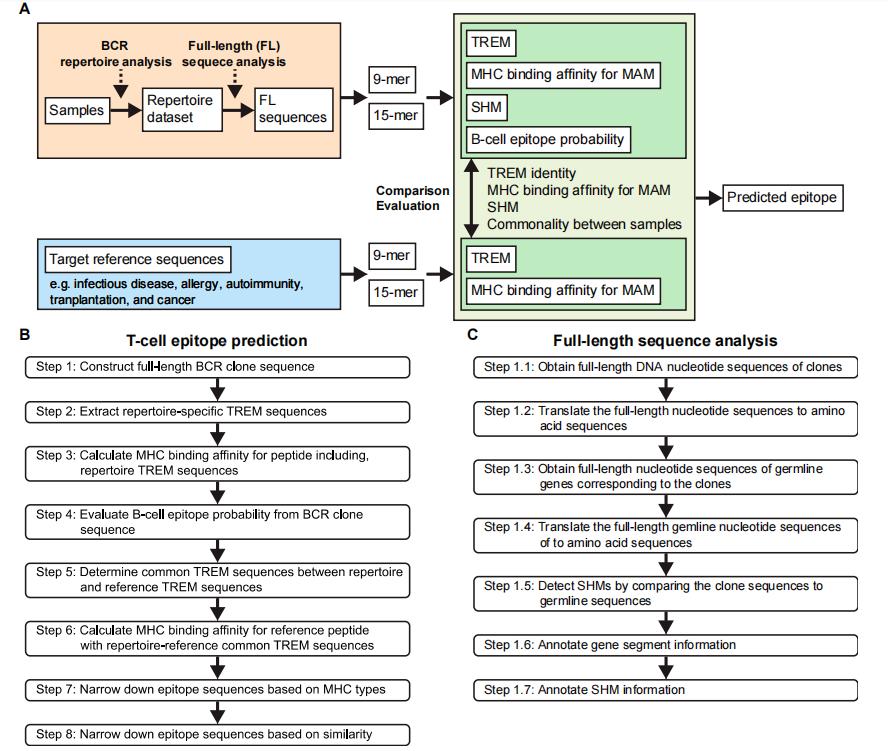 Fig.1 The scheme for T-cell epitope prediction.1, 2
T-Cell Epitope Prediction for Immunogenicity Analysis
Evidence has suggested that T cell epitopes play an important role in binding major histocompatibility complex (MHC) and stimulating T cell immune responses in the human body. Meanwhile, the identification of T-cell epitopes is essential to tracking and triggering T cells involved in immune responses against various human diseases. Besides, the prediction of T-cell epitopes is vital to screen potential antibodies for potential immunogenicity. Therefore, many attempts have been made to identify T-cell epitope in a specific individual. Computational and experimental epitope mapping studies are commonly used for analyzing the immunogenicity potential of a candidate antibody or therapeutic proteins.
Nowadays, Creative Biolabs offers T-cell epitope prediction services based on the massive amount of high-quality computational techniques and software programs. Our T-cell epitope prediction tools are designed by using machine learning algorithms. The linear regions of protein or antibody will be evaluated to select the specific sequences that have the potential to activate enough immune responses. In general, the peptides binding to MHC receptors with high affinity have a great probability of eliciting immune responses. Furthermore, the mutation will be introduced into these regions to prevent MHC II-peptide binding, avoiding immune cell recognition to maintain protein structure and function. For instance, several open-source software tools, such as IEDB, have been generated to predict the T-cell epitope. Also, the performance of T-cell epitope prediction has been improved based on various neural networks trained on large MHC binding and MHC ligand databases.
Service Highlight
- Well-established in silico T-cell epitope prediction platform
- Fast turnaround times
- Efficient and cost-effective services
- Accurate data analysis
Creative Biolabs is a leader in the field of epitope identification and antibody discovery for years. With in-depth expertise in antibody structural analysis, immunogenicity studies, as well as safety evaluation, we offer a high throughput T-cell epitope prediction service. If you are interested in our services, please contact us for more details. Let us know what you need and we will accommodate you. We look forward to working with you in the future.
References
- Nakamura, Yukio, et al. "Idiotope-driven T-cell/B-cell collaboration-based T-cell epitope prediction using B-cell receptor repertoire sequences in infectious diseases." Viruses 15.5 (2023): 1186.
- Under Open Access license CC BY 4.0, without modification.
For Research Use Only.