
Immune Checkpoint targeted Reporter Gene Assay Services
Overview
Immune checkpoint inhibitors have revolutionized cancer treatment, spurring interest in new immuno-oncology drugs. Despite their promise, the complexity of immune responses and cancer variability complicate drug development. Reporter gene assays, known for their versatility and performance, serve as crucial tools in evaluating the activity of antibody drugs, particularly those targeting immune checkpoints, cytokines, and tumor angiogenesis. Widely used from early-stage antibody discovery to the evaluation stage for batch release, reporter gene assay provides a reliable method for assessing the in vitro functions of antibodies.
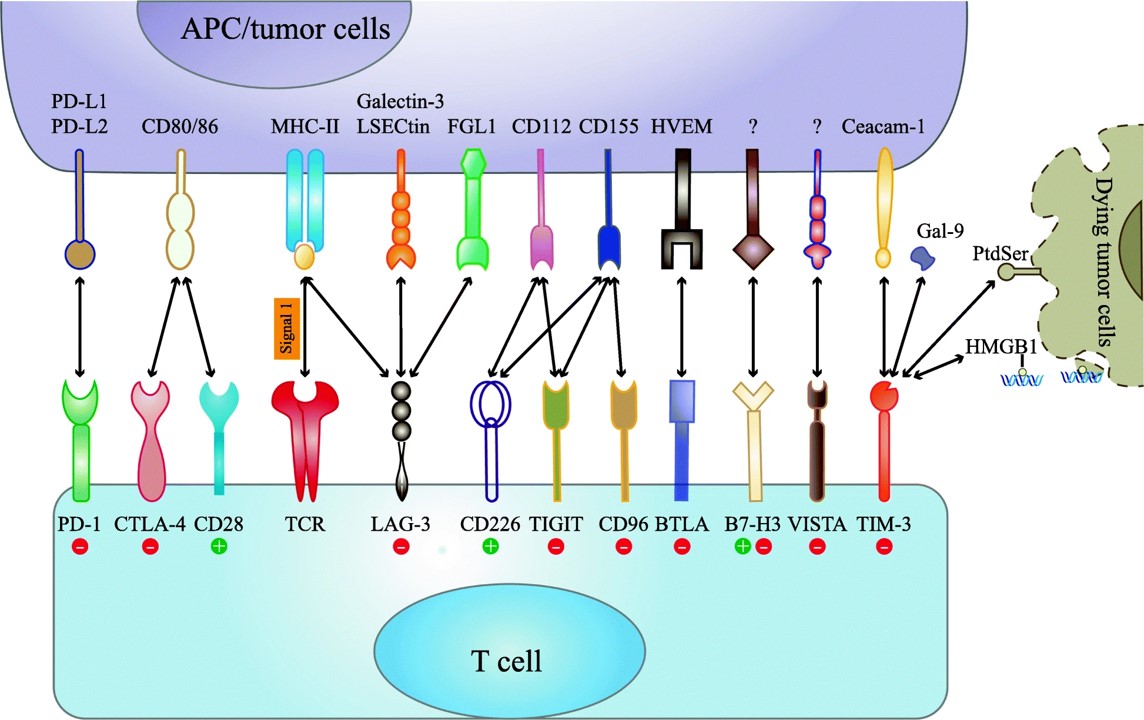 Fig.1 Emerging immune checkpoint receptors and their corresponding ligands.1, 4
Immune Checkpoint-targeted Reporter Gene Assay at Creative Biolabs
Creative Biolabs develops a series of reporter gene assays targeting various immune checkpoints, providing premium services for global customers to meet your requirements on drug research.
At Creative Biolabs, we provide comprehensive immune checkpoint-targeted reporter gene assays designed to evaluate the efficiency of antibody drugs through cell-based reporter gene reactions post-treatment. Meanwhile, we offer premium-grade immune checkpoint reporter cell lines, meticulously engineered with optimal reporter gene systems to enhance the detection and quantification of bioluminescence signals in high-throughput drug screening. Whether your focus is on inhibitory, co-stimulatory, or other immune checkpoints, we have the ability to tailor specialized solutions to fit your specific needs. Backed by our experienced expert team, we are committed to delivering high-quality, reliable results with a swift turnaround time.
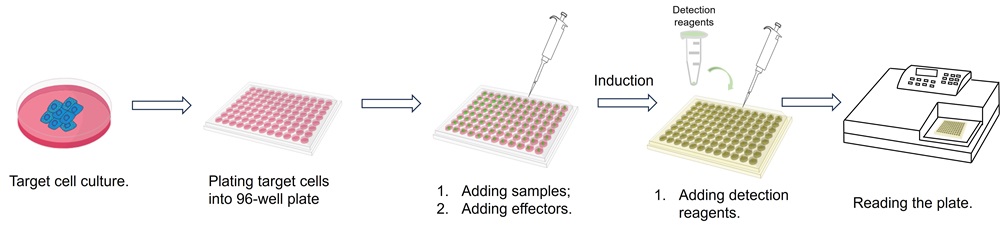 Fig.2 Workflow of our assay.
Our Immune Checkpoint-targeted Reporter Gene Assay Package
| Inhibitory Immune Checkpoint-targeted Reporter Gene Assay | Co-stimulatory Immune Checkpoint-targeted Reporter Gene Assay |
|
Tumors exploit inhibitory immune checkpoints to evade immune attack, making their blockade a promising strategy to restore anti-tumor immunity. At Creative Biolabs, our inhibitory immune checkpoint-targeted reporter gene assays offer a streamlined approach for assessing the efficacy of checkpoint inhibitors, facilitating the development of novel anti-cancer therapeutics. Inhibitory immune checkpoints: PD-1, TIGIT, PD-L1, LAG3, CTLA-4, TIM-3 |
Co-stimulatory immune checkpoint interactions are vital for effective T-cell activation. Creative Biolabs offers a co-stimulatory immune checkpoint-targeted reporter gene assay designed to aid in the discovery and development of agonists that enhance immune responses against tumor cells. Co-stimulatory immune checkpoint: OX40, GITR, CD40, 4-1BB |
| Myeloid Cell Immune Checkpoints-targeted Reporter Gene Assay | Bi-specificity Immune Checkpoint-targeted Reporter Gene Assay |
|
Myeloid checkpoints are critical regulators expressed on myeloid cells that can regulate anti-tumor immune responses. Our specialized myeloid cell checkpoint-targeted reporter gene assay provides a dependable and sensitive method for developing targeted therapies. Myeloid cell immune checkpoints: CD47-SIRPα, LILRB4/ILT4 |
Our bi-specificity immune checkpoint reporter gene assay offers a robust and precise method for evaluating therapeutics targeting dual immune checkpoints, promising enhanced efficacy for cancer treatment. Bi-specificity Immune Checkpoint: PD-1/TIGIT, PD-1/4-1BB, PD-1/LAG3, PD-1/CTLA-4 |
| Other-targeted Reporter Gene Assay Development | |
|
At Creative Biolabs, our reporter gene assay is also suitable for other targets such as tumor angiogenesis and interleukin. Robust and advanced platforms, a competitive research team, and rapid timelines work together to make our assay effective for customers' project advancement. Other targets: VEGF-VEGFR2, TIE2-ANG2; IL-1β, IL-33, IL-1α, IL-36 |
Selective Sample Types
- Macromolecular monoclonal antibodies
- Small molecular: chemical compounds and short peptides
Optimal Reporter Genes Empower Our Assay
Based on our robust platforms, we provide several optimal reporter genes to design for your projects, including:
- NFAT response element
- NF-κB luciferase reporter
- β-GAL
- GFP
Engineered Immune Checkpoint-targeted Reporter Cell Lines Available at Creative Biolabs
Achieving your research goals requires reliable tools. We offer a range of meticulously engineered immune checkpoint-targeted reporter cell lines to support the execution of your projects.
- Human PD-1-NFAT-Jurkat Reporter Cell Line (Luciferase)
- Human TIGIT-NFAT-Jurkat Reporter Cell Line (Luciferase)
- Human OX4-NF-κB-HEK293 Reporter Cell Line (Luciferase)
- Human CD40-NF-κB-HEK293 Reporter Cell Line (Luciferase)
- Human GITR-NF-κB-Jurkat Reporter Cell Line (Luciferase)
- Human LAG3-NFAT-Jurkat Reporter Cell Line (Luciferase)
Benefits for You
- High-throughput screening.
- Easy to operate and detect.
- Stable signal output.
- High reproducibility.
- Robust platforms.
- Rapid results delivery.
Representative Data
Numerous research efforts are focused on immune checkpoints, resulting in extensive published data that provide valuable insights. Here, we present a curated selection of key findings for your reference.
Representative data 1:
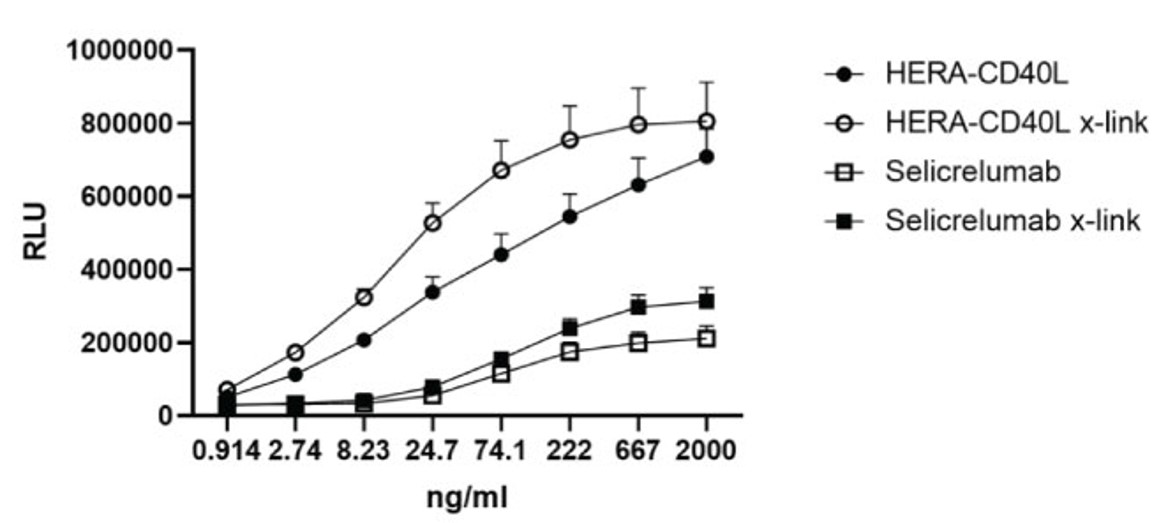 Fig.3 CD40 luciferase assay comparing the activation potential of HERA-CD40L versus a control antibody.2, 5
Representative data 2:
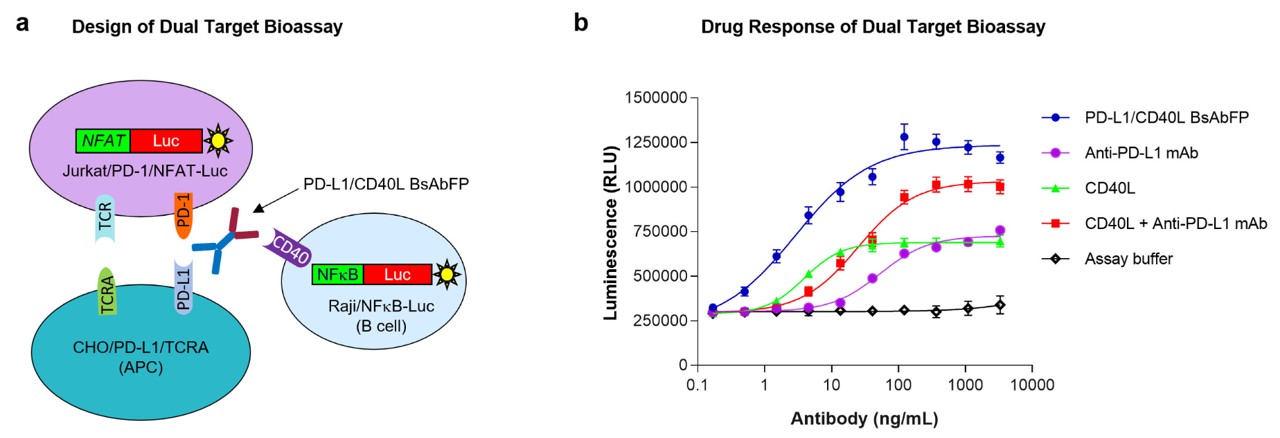 Fig.4 Establishment of a dual-target reporter gene assay for anti-PD-L1/CD40L bispecific antibody.3, 4
For more details about our immune checkpoint-targeted reporter gene assay, please don't hesitate to contact us.
References
- Qin, Shuang, et al. "Novel immune checkpoint targets: moving beyond PD-1 and CTLA-4." Molecular cancer 18 (2019): 1-14.
- Frankish, Jamie, et al. "The CD40 agonist HERA-CD40L results in enhanced activation of antigen presenting cells, promoting an anti-tumor effect alone and in combination with radiotherapy." Frontiers in Immunology 14 (2023): 1160116.
- Pandey, Madhu S., et al. "Simultaneous inhibition of PD-1 and stimulation of CD40 signaling pathways by anti-PD-L1/CD40L bispecific fusion protein synergistically activate target and effector cells." International Journal of Molecular Sciences 22.21 (2021): 11302.
- under Open Access License CC BY 4.0, without modification.
- under Open Access License CC BY 4.0. The original image was modified by extracting and using only a part, and the title was changed to " CD40 luciferase assay comparing the activation potential of HERA-CD40L versus a control antibody".
For Research Use Only.