
Adjuvant induced Arthritis (AIA) Modeling & Pharmacodynamics Service
Creative Biolabs offers a variety of well-established and validated Adjuvant Induced Arthritis Models that can be used to assess the drug efficacy and explore the pathogenesis of RA, providing reliable and reproducible results for preclinical research.
Introduction
Adjuvant-induced arthritis (AIA) is a widely used animal model that mimics the pathological and immunological features of rheumatoid arthritis (RA), a chronic, autoimmune inflammatory disorder primarily affecting the joints. RA is characterized by synovial inflammation, cartilage destruction, bone erosion, and systemic complications. The AIA model is induced by the subcutaneous injection of Freund’s complete adjuvant (FCA), which contains heat-killed mycobacteria, into the rodents. This results in the development of acute inflammatory reactions in the joints, followed by chronic arthritis, which mirrors the clinical manifestations seen in RA patients. The model is particularly useful for studying the underlying mechanisms of joint inflammation and tissue damage, as well as for evaluating the efficacy of novel therapeutic agents targeting the immune system, cytokine signaling, and inflammatory pathways. Researchers also use it to test disease-modifying antirheumatic drugs (DMARDs), biologics, and non-steroidal anti-inflammatory drugs (NSAIDs) for potential therapeutic benefit.
Adjuvant induced Arthritis Model and Applications
The Adjuvant-Induced Arthritis Model is typically induced by injecting an emulsion of heat-killed mycobacteria and mineral oil into the footpad of rats or mice. The model is characterized by progressive swelling, erythema, and sometimes deformities in the joints, often observed in the paw and ankle areas. Key features include immune cell infiltration, cytokine production, and changes in joint architecture, which can be studied through histopathological analysis. A significant advantage of this model is its reproducibility and the ability to evaluate both acute and chronic phases of the disease. However, a limitation is that the model may not fully replicate the genetic and environmental factors contributing to human RA, which makes it necessary to complement findings with other models or human-based studies.
- Simulates: The model simulates autoimmune diseases such as rheumatoid arthritis (RA), focusing on chronic inflammation, joint destruction, and immune responses.
- Evaluates Drugs: It is used to assess the efficacy of anti-inflammatory drugs, disease-modifying antirheumatic drugs (DMARDs), biologics, pain relievers, and immunosuppressants.
Evaluation Platform
- Animals: Mouse, Rat, Hamster, Rabbit, Cat, Dog, NHPs.
-
Measurements
We offer a variety of measurements for evaluating drug efficacy in the Adjuvant-Induced Arthritis Model, utilizing advanced techniques including, but not limited to:- General Observations: Paw swelling, joint stiffness, weight loss, and overall health assessment.
- Immunohistochemistry: Assessment of immune cell infiltration, such as T-cells, B-cells, and macrophages, within inflamed joints.
- Cytokine Profiling (e.g., ELISA): Measurement of inflammatory mediators like TNF-α, IL-1β, IL-6, and IL-17 via ELISA, which are crucial in arthritis pathogenesis.
- Radiographic Imaging: X-ray or micro-CT scans for assessing bone erosion and joint deformities.
- Histopathology: Examination of joint tissues for structural damage, synovial hyperplasia, cartilage loss, and bone erosion.
- Gene/Protein Expression: Profiling the expression of key inflammatory genes and proteins involved in the disease using RT-PCR and Western blot techniques.
Our advantages
- Tailored Services: Customizable study designs based on your research goals and therapeutic areas.
- Comprehensive Expertise: In-depth experience with a range of arthritis models and drug evaluation platforms.
- Reproducible Results: Reliable, high-quality models that deliver consistent outcomes across studies.
- Advanced Techniques: Cutting-edge imaging, molecular, and histological tools for comprehensive analysis.
- Dedicated Support: Our team works closely with you throughout the study, from design to data interpretation.
Work with Us
- Summarize the project requirements and fill in the information collection form.
- Sign a CDA from both parties to further communicate information, such as targets.
- Select an animal model, discuss experimental design, and determine assay parameters.
- Project costing and project schedule forecasting.
- We provide a detailed project plan, including the required sample quantities, methods, and protocols.
- Both parties confirm the project details and start the project.
- Confirm the timeline of the project.
- We provide periodic results and information on the animal's condition.
- We will work together to make project adjustments as necessary.
- We provide a comprehensive project report promptly.
- We arrange transportation for the produced samples.
- We provide a discussion of the project results and help to arrange the next steps.
- Data storage and archiving.
FAQs
-
1. What species are used for the Adjuvant-Induced Arthritis Model?
Rats and mice are the primary species used in this model, with rats being more commonly used due to their larger joint size.
-
2. How long does it take to establish arthritis in this model?
Arthritis typically develops within 10-14 days after adjuvant injection, with peak inflammation observed around 21 days.
-
3. What are the common signs of arthritis in this model?
The most common signs include paw swelling, redness, and limited mobility, with progression leading to joint deformities.
-
4. Can this model be used for chronic disease studies?
Yes, this model can mimic both acute and chronic phases of arthritis, making it ideal for long-term studies on disease progression.
-
5. What drugs can be tested using this model?
Anti-inflammatory drugs, pain relievers, biologics targeting specific cytokines, and disease-modifying agents are commonly tested in this model.
Published Data
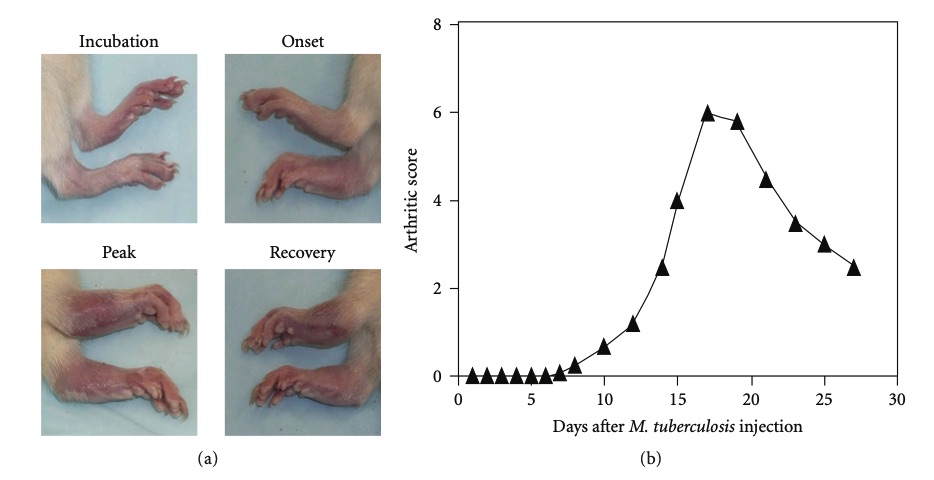 Fig. 1 Experimentally-induced adjuvant arthritis (AA) in the Lewis rat.1
Adjuvant arthritis (AA) can be experimentally induced in the Lewis (RT.1l) rat through immunization with heat-killed Mycobacterium tuberculosis (Mtb) strain H37Ra. This model exhibits inflammation primarily in the paw joints, including the ankles, wrists, and smaller joints. The onset of arthritis typically occurs 8 to 10 days post-immunization, with peak inflammation observed between days 15 and 17. Following this peak, the disease undergoes a spontaneous, gradual recovery over the next 12 to 15 days, making it a valuable model for studying the progression and resolution of inflammatory joint diseases. The model provides a robust platform for evaluating therapeutic interventions targeting inflammatory pathways in arthritis.
Reference
- Venkatesha, Shivaprasad H et al. "Immunomodulation of Autoimmune Arthritis by Herbal CAM." Evidence-based complementary and alternative medicine: eCAM vol. 2011 (2011): 986797. Distributed under Open Access license CC BY 4.0, without modification. https://doi.org/10.1155/2011/986797
For Research Use Only.