
Mouse Auricle Swelling Inflammatory Modeling & Pharmacodynamics Service
Creative Biolabs offers well-established protocols and a comprehensive range of services to evaluate drug efficacy in the Mouse Auricle Swelling Inflammatory Model. Our services include dosing regimen, drug administration routes, and inflammation measurement tools, ensuring precise results.
Introduction
Inflammatory diseases are a group of disorders characterized by an abnormal immune response, leading to tissue damage, swelling, pain, and dysfunction. These conditions can affect a variety of organs and systems in the body, from joints and skin to internal organs like the gut, liver, and kidneys. Inflammatory diseases can be classified as acute or chronic, with the latter often resulting in long-term damage to tissues and organs. Common examples include rheumatoid arthritis (RA), osteoarthritis, inflammatory bowel disease (IBD), psoriasis, and systemic lupus erythematosus (SLE). In rheumatoid arthritis, inflammation of the synovial joints leads to pain, swelling, and eventual joint damage, while IBD includes chronic inflammatory conditions like Crohn's disease and ulcerative colitis, which affect the digestive tract. Psoriasis, on the other hand, involves immune-mediated inflammation of the skin, leading to scaly, red patches. Inflammatory diseases can also occur because of infections, autoimmune responses, or environmental factors. The role of inflammation in these diseases is central to the pathophysiology, involving the activation of immune cells like T-cells and macrophages, and the release of pro-inflammatory cytokines such as TNF-α, IL-6, and IL-1β. These molecules contribute to the chronicity and progression of tissue damage in many inflammatory diseases. Understanding these pathways and developing therapeutic interventions to modulate the immune response are essential for treating these conditions.
Mouse Auricle Swelling Inflammatory Model and Applications
The Mouse Auricle Swelling Inflammatory Model is constructed by inducing inflammation in the auricle of mice using agents like carrageenan or LPS. The process typically involves the injection of inflammatory agents into the ear pinna, causing local swelling that can be measured for its size and severity over time. It is particularly useful for assessing both systemic and local effects of drugs on inflammation, immune cell infiltration, and cytokine production. One of the main advantages of this model is its simplicity and reproducibility, allowing for easy measurement of swelling as a direct marker of inflammation.
- Simulates: Acute inflammation, cytokine release, immune cell infiltration, and tissue damage associated with inflammatory diseases such as arthritis and dermatitis.
- Evaluates Drugs: Anti-inflammatory agents, corticosteroids, NSAIDs, immunosuppressants, and novel immunomodulatory drugs.
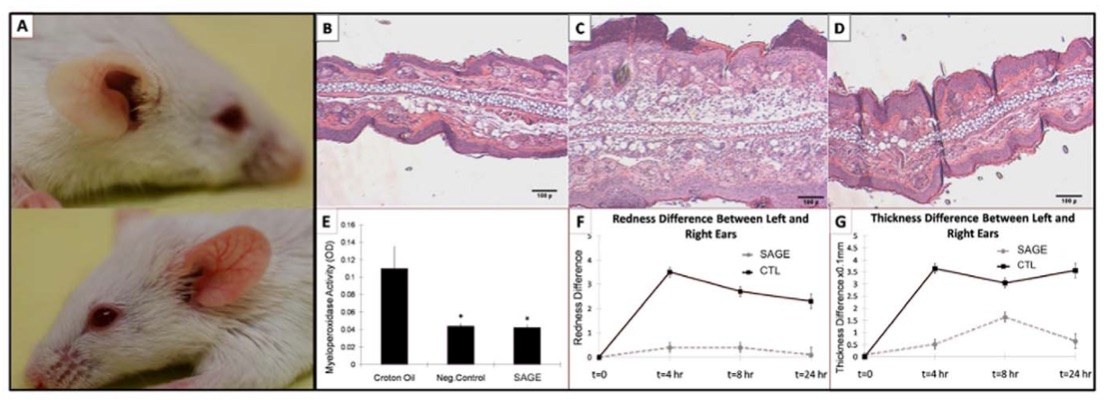 Fig.1 Topical SAGE reduces ear edema from croton oil.1
Evaluation Platform
- Animals: Mouse, Rat, Hamster, Rabbit, Cat, Dog, NHPs.
-
Measurements
We offer a variety of measurements for evaluating drug efficacy in the Carrageenan-Induced Paw Edema Model, utilizing an array of advanced technologies, including but not limited to:- General observations: Paw swelling, erythema, body temperature, and clinical signs of discomfort.
- Histopathological analysis: Examination of inflammatory cell infiltration, edema, and tissue damage in paw tissues.
- Cytokine profiling (e.g., ELISA): Expression of pro-inflammatory cytokines such as TNF-α, IL-1β, and IL-6 via ELISA.
- Hematology analysis and serum biomarkers: Measurement of leukocyte count, CRP, and other systemic inflammation markers.
- Gene/protein expression profiling RT-qPCR and Western blot: Detection of inflammation-related genes and proteins in paw tissues.
Our advantages
- Expertise & Customization: We offer tailored solutions for your specific research needs, ensuring that each model is adapted to your unique study objectives.
- Reliability & Precision: Our models are carefully developed to provide reproducible and accurate results, supporting high-quality preclinical research.
- Comprehensive Support: From experimental design to data analysis, our scientific team provides full support at every stage of your project.
- State-of-the-Art Technology: We utilize advanced technologies for precise measurements and analyses, including histopathology, cytokine profiling, and gene expression analysis.
- Wide Range of Models: In addition to the Mouse Auricle Swelling Inflammatory Model, we offer a variety of disease models and customized services to meet diverse research needs.
Work with Us
- Summarize the project requirements and fill in the information collection form.
- Sign a CDA from both parties to further communicate information, such as targets.
- Select an animal model, discuss experimental design, and determine assay parameters.
- Project costing and project schedule forecasting.
- We provide a detailed project plan, including the required sample quantities, methods, and protocols.
- Both parties confirm the project details and start the project.
- Confirm the timeline of the project.
- We provide periodic results and information on the animal's condition.
- We will work together to make project adjustments as necessary.
- We provide a comprehensive project report promptly.
- We arrange transportation for the produced samples.
- We provide a discussion of the project results and help to arrange the next steps.
- Data storage and archiving.
FAQs
-
1. What diseases are studied using the Mouse Auricle Swelling Inflammatory Model?
This model is commonly used to study localized inflammation, including conditions like arthritis, allergic reactions, and acute inflammatory responses.
-
2. What are the advantages of using this model for drug testing?
The model offers clear, quantifiable results with minimal variability, making it ideal for evaluating the efficacy of anti-inflammatory agents and other therapeutic compounds.
-
3. Can this model be used for chronic inflammation studies?
While the Mouse Auricle Swelling Inflammatory Model primarily focuses on acute inflammation, it can provide valuable insights into the early stages of inflammatory processes. For chronic conditions, complementary models may be used.
-
4. What measurement methods are used in the model?
We use a range of techniques, including swelling measurement, histopathological analysis, cytokine profiling, and gene/protein expression analysis, to assess drug efficacy and inflammatory markers.
-
5. How do I customize this model for my specific research needs?
Our team can help customize the model by adjusting experimental protocols, dosing schedules, and measurement parameters based on your specific research goals.
Published Data
In a recent study, the Mouse Auricle Swelling Inflammatory Model was used to investigate the effects of anti-inflammatory treatments on acute inflammation. The model was established by injecting carrageenan into the auricle of C57BL/6J mice to induce localized inflammation. The purpose of the experiment was to evaluate the therapeutic potential of novel anti-inflammatory compounds and to understand the underlying mechanisms driving acute inflammation. Key parameters were monitored throughout the study, including the degree of auricle swelling, which was measured at multiple time points to assess the progression of inflammation. Inflammatory cytokines, such as TNF-α and IL-1β, were quantified through ELISA and immunohistochemistry to evaluate the inflammatory response at the molecular level. Additionally, histological analysis of auricle tissue was performed to examine changes in tissue structure and the presence of immune cell infiltration. The results showed that carrageenan injection led to significant swelling of the auricle, which peaked within 24 hours, indicating the establishment of acute inflammation. Elevated levels of TNF-α and IL-1β were observed, confirming the involvement of these pro-inflammatory cytokines in the inflammatory response. Histological findings revealed increased infiltration of neutrophils and macrophages in the inflamed tissue. These findings suggest that the model effectively mimics the acute inflammatory process and can be used to assess the anti-inflammatory efficacy of therapeutic agents, making it a valuable tool for screening potential treatments for inflammatory diseases.
Reference
- Zhang, Jianxing et al. "Novel sulfated polysaccharides disrupt cathelicidins, inhibit RAGE and reduce cutaneous inflammation in a mouse model of rosacea." PloS one vol. 6,2 e16658. 9 Feb. 2011. https://doi.org/10.1371/journal.pone.0016658
For Research Use Only.