
A Comprehensive Analysis of the Physiological Characteristics of C57BL/6 Mice
In the field of biomedical research, the C57BL/6 inbred mouse is a well-deserved "star model". This is due to its stable genetic background and unique disease susceptibility-for example, if it is fed a high-fat diet for 12 weeks, its weight can soar by 50%, and its fasting blood sugar can easily exceed 11mmol/L, which is a "textbook case" of metabolic syndrome. When it comes to the origin of this strain, we have to mention the key "separation" in the 1950s. At that time, two important branches were differentiated from the original C57BL/6 population-C57BL/6J of the Jackson Laboratory and C57BL/6N of the National Institutes of Health. Behind this separation, there is an interesting genetic story: due to genetic drift that occurred during the early seed conservation process, the B6J substrain accidentally had a spontaneous mutation of the ApoE gene locus during long-term single-cage breeding, which resulted in a blockbuster in the study of atherosclerosis; while the B6N substrain held its ground, maintaining lipid metabolism characteristics closer to the wild type, and became a natural control group benchmark. After decades of breeding, more than 20 C57BL/6 substrains have been derived worldwide, and their genetic differences are concentrated in chromosome 12 (such as the Mthfr gene polymorphism of B6NJ) and immune-related gene clusters. Precisely characterizing their physiological parameters is crucial. In immunology, understanding immune response thresholds, such as the 1800 pg/mL IFN-γ level in MTB infection models, is essential. In neuroscience, neurobehavioral baselines like the 28.5-second latency in the Morris water maze test matter. These characterizations form the bedrock for ensuring experimental reproducibility across disciplines like immunology, neuroscience, and metabolic disease research. This article will lead readers to comprehensively "scan" C57BL/6 mice, so that C57BL/6 will no longer have any secrets.
C57BL/6 mice body weight
Body weight is a biosensor of body status. As mentioned earlier, the two main sub-strains are C57BL/6J and C57BL/6N. Figure 1 presents the body weight data of these two substrains from 3 to 27 months of age.
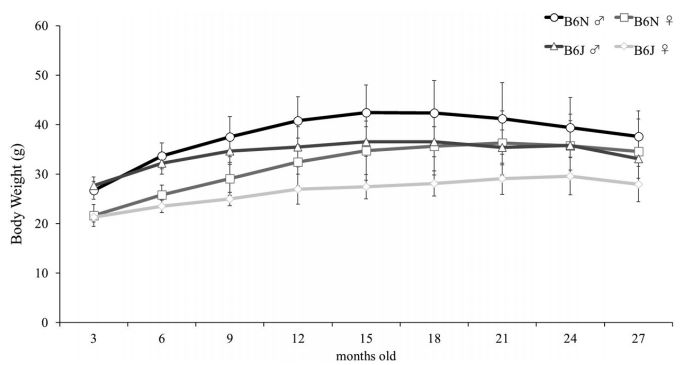 Fig.1 Changes in body weights of C57BL/6J and C57BL/6N.1,5
As a "living textbook" for metabolic disease research, C57BL/6 can establish a typical metabolic syndrome model in 12 weeks under the induction of a high-fat diet (D12492 formula with 60% fat energy supply): body weight gain reaches 45-55%, fasting blood glucose exceeds 11.1mmol/L, and the area under the OGTT curve increases by 2.3 times. This strain also hides a more complex metabolic profile:
- Defect of Vitamin K in metabolism
The ability of C57BL/6 mice intestinal flora to synthesize vitamin K2 (MK4) is only 1/3 of that of BALB/c mice, which is directly related to the reduced expression level of the Cyp4f18 gene, The research find that prothrombin time (PT) can be extended to 16 seconds (normal value 11-13 seconds) when the amount of vitamin K1 supplemented in the feed is lees than 1.5 mg/kg. Especially after antibiotic treatment, the inhibition of endogenous vitamin K synthesis will aggravate coagulation dysfunction. Therefore, the International Laboratory Animal Association (ICLAS) recommends that the feed for this strain should maintain 1.8-2.2 mg/kg of vitamin K1 (1.5-2 times the NTP-2000 standard feed).
- Phytic acid-metal ion interaction trap
Although C57BL/6 mice usually eat well, their duodenum is a "picky eater"-the zinc transporter Zip4 is particularly sensitive to phytic acid in the feed. Once the phytic acid content exceeds 0.3% (equivalent to 1.5 times that of regular feed), the zinc absorption rate immediately "dives" by 40%, and the serum zinc level can plummet from the normal value of 12-15μmol/L to 7.8μmol/L, and even the fur will become as rough as dead grass. At the same time, characteristic phenotypes such as rough fur and delayed wound healing also appear. More importantly, phytic acid can also chelate 60% of the iron and 30% of the calcium in the feed, which may interfere with anemia or bone metabolism research.
- Strain-specific metabolic compensation
In response to chronic nutritional imbalance, the expression level of FGF21 in the liver of C57BL/6 mice is 5-7 times higher than that of other strains. This adaptive response may mask the true effects of certain metabolic interventions and requires mechanistic analysis through a liver-specific gene knockout model.
C57BL/6 mice lifespan
The average lifespan of C57BL/6 mice is 24-30 months, and the longest can reach 36 months, but environmental interventions (such as dietary restrictions, microbiota regulation, etc.) can significantly change their survival curves. Figure 2 shows the specific survival curves of the two strains, C57BL/6J and C57BL/6N: the average lifespan of B6J mice is about 15% longer than that of B6N. This phenomenon may be related to the single nucleotide polymorphism of the Mthfr gene carried by the B6J strain that affects antioxidant capacity. In addition, the NIA Aging Research Database shows that the median lifespan of the group with continuous 30% calorie restriction increased by 32%, and the longest lifespan reached 42 months. The lifespan of IGF-1 receptor heterozygous knockout (Igf1r+/-) mice was extended by 26%, and its mechanism involves inhibiting the mTOR signaling pathway and activating autophagy.
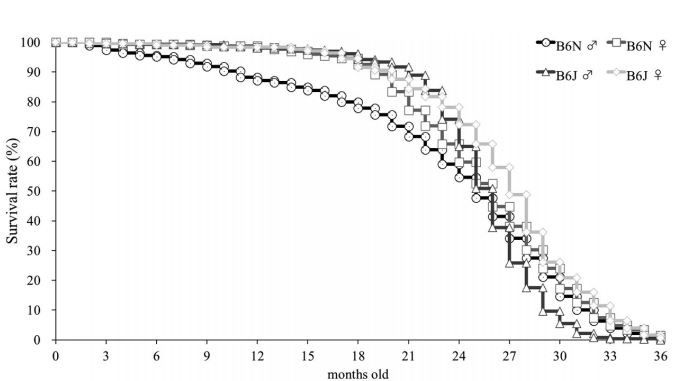 Fig.2 The survival rate of two strains of mice.1,5
C57BL/6 mice immune system
In the tuberculosis attack experiment, researchers often see such a scene: when 500 H37Rv strains are accurately injected into the lungs of C57BL/6 mice through the trachea, the immune system of these mice is like receiving a "first-level combat readiness" order-in just 8 weeks, a fierce attack and defense battle is staged in their alveoli. Under the microscope, the granulomas in the lungs of BALB/c mice are just a few spots, while the lesion area of C57BL/6 has expanded 1.2 times, like a "battle damage medal" branded on the lung lobe. Even more amazing is that the IFN-γ concentration detected in their alveolar lavage fluid can soar to 1800pg/mL, which is three times that of the control group BALB/c mice. This immune storm of "killing one thousand enemies and injuring eight hundred of oneself" has caused the tuberculosis load in the lung tissue to increase by tens of thousands of times. It is worth noting that its Th1-type immune polarization characteristics may interfere with the study of autoimmune diseases. Take the ulcerative colitis model as an example: in an SPF environment, when induced by long-term drinking water with 0.05% dextran sulfate sodium (DSS), the incidence of colitis in C57BL/6 mice was as high as 75%, significantly higher than that in mice in ordinary environments (40%). This difference may be related to the reduced α diversity of intestinal flora and the imbalance of Th1/Th17 in the SPF environment, suggesting that when using this strain for immune-related research, it is necessary to strictly control the feeding environment and evaluate the baseline immune status.
This strain showed a unique time dependence when constructing experimental autoimmune encephalitis (EAE). Anti-MBP antibodies (titer 1:3200) could be detected on the 7th day after MOG35-55 peptide immunization, but clinical symptoms did not appear significantly until the 14th day (myelitis score ≥ 3 points), suggesting that it has a strong immune tolerance buffer mechanism. In addition, in the allergic asthma model, its bronchoalveolar lavage fluid (BALF) not only had abnormally increased eosinophils, but also was accompanied by thickening of the airway basement membrane (2.1 times compared with the control group), providing a precise phenotypic platform for studying chronic airway remodeling.
These characteristics highlight the complex duality of the immune system of C57BL/6 mice: it can simulate the core pathological characteristics of human Th1-dominant diseases, and the high sensitivity of the flora-immune axis may amplify the experimental intervention effect. Researchers need to strictly match the model induction conditions and the feeding environment control strategy according to the target pathological link.
Service you may interested in
The neurobehavioral characteristics of C57BL/6 mice
The neurobehavioral characteristics of C57BL/6 mice present unique contradictions, making them a "natural laboratory" for analyzing complex mental illnesses. In the spatial cognition assessment, C57BL/6 mice performed significantly worse than FVB/N mice in the Morris water maze. In the navigation phase, the average escape latency of C57BL/6 mice was as high as 28.5 seconds (only 12.3 seconds for FVB/N, p<0.01), and the number of crossing the platform area was 1.2 times/minute (2.9 times/minute for FVB/N). The core mechanism of this cognitive defect is closely related to the reduction in dendritic spine density in the CA1 region of the hippocampus.
The behavioral phenotype further reveals its neuropsychiatric characteristics: in the elevated plus maze, the open arm residence time of C57BL/6 mice is only 23 seconds (BALB/c mice are 68 seconds, p<0.05), and the number of fecal particles increases by 2.5 times, indicating that its basal anxiety level is significantly increased. This anxiety susceptibility may be related to the overactivation of the noradrenergic system in the locus coeruleus. In the assessment of depressive-like behavior, C57BL/6 mice needed 4 weeks of chronic unpredictable stress (CUS) to reduce their sugar water preference rate from 85% to 62%, which was significantly longer than the 2 weeks of outbred CD1 mice (reduced to 55%). This difference reflects that the homogeneity of the genetic background of inbred strains leads to a higher threshold of stress response, suggesting that strains should be selected according to the purpose of the study in the construction of depression models-if the focus is on stress resistance mechanisms, C57BL/6 is an ideal model; if a depressive phenotype needs to be induced quickly, CD1 may have more advantages. This delayed response was related to the strong ability to maintain the firing frequency of 5-HT neurons in the dorsal raphe nucleus (only 18% after stress vs 42% of CD1). However, C57BL/6 mice have obvious advantages in comorbidity modeling. Combined social frustration stress (10 days) + corticosterone drinking water (35 mg/L) can induce a unique anxiety-depression mixed phenotype: C57BL/6 mice reduce the exploration time of the open arm by 50%, while the forced swimming immobility time increases by 120%, which can perfectly simulate the core symptoms of human comorbidity.
Details in neurobehavioral experiments
First, the light intensity should be strictly maintained at 50-70 lux (higher than 80 lux will activate the non-imaging visual protein OPN4, resulting in a 30% decrease in spontaneous activity); and in terms of spectral selection, red light with a wavelength > 600 nm should be used first, because the retinal degeneration caused by the rd1 gene mutation retains long-wave light sensitivity for a longer time (the survival rate of rod cells in P60 mice increased by 2.1 times.
Second, in terms of circadian rhythm synchronization, the experimental period should be limited to Zeitgeber time ZT3-ZT6 (3-6 hours after the start of the light cycle), when the expression of c-Fos in the suprachiasmatic nucleus of the hypothalamus reaches its peak and the amount of spontaneous activity stabilizes at 480-520 turns/hour;
Then there is the regulation of melatonin, which requires adjusting the light cycle 1 week in advance (such as inverting 12 hours), which can increase the amplitude of corticosterone rhythm by 40% and enhance the induction efficiency of depression model.
It is also necessary to pay attention to the group density, 3-4/cage is the best (single cage for >2 weeks will cause the expression of BDNF in the prefrontal cortex to decrease by 27%, and the forced swimming immobility time will increase from 90 seconds to 126 seconds);
Another point to note is gender specificity, females need to maintain a stable social hierarchy (regular introduction of strangers can prevent dominant mice from attacking behavior), while males need to avoid frequent cage changes (cage odor changes increase their grooming behavior by 3 times, interfering with anxiety assessment).
If you want to learn more about the C57BL/6, please refer to:
References
- Ogiso, Noboru, et al. "Biological characteristics of age-related changes in C57BL/6 mice sub-strains in the national center for geriatrics and gerontology aging farm." Experimental Animals 74.2 (2025): 229-238. https://doi.org/10.1538/expanim.24-0095
- Pohorec, Viljem, et al. "Glucose-stimulated calcium dynamics in beta cells from male C57BL/6J, C57BL/6N, and NMRI mice: a comparison of activation, activity, and deactivation properties in tissue slices." Frontiers in endocrinology 13 (2022): 867663. https://doi.org/10.3389/fendo.2022.867663
- Graber, Ted G., et al. "C57BL/6 life span study: age-related declines in muscle power production and contractile velocity." Age 37 (2015): 1-16. https://doi.org/10.1007/s11357-015-9773-1
- Matsuo, Naoki, et al. "Behavioral profiles of three C57BL/6 substrains." Frontiers in behavioral neuroscience 4 (2010): 1584. https://doi.org/10.3389/fnbeh.2010.00029
- Distributed under Open Access license CC BY 4.0, without modification.
For Research Use Only.