
Applications of Transgenic Mice in Disease Research & Drug Development
Background of transgenic mouse models
Transgenic mice occupy a pivotal position in the field of biomedical research. As an indispensable key tool in disease research and drug development, their value is self-evident. As transgenic technology has gradually evolved from simple gene introduction in the early days to today's highly accurate gene editing era, especially the widespread application of CRISPR-Cas9 technology, it has opened up new paths for building more ideal model animals and effectively promoted human disease research. In-depth development. In the journey of exploring human diseases, researchers cleverly use genetically modified mice to simulate the natural process of human diseases, and conduct in-depth analysis of disease-related genes by finely modifying specific genes in mice, such as overexpressing pathogenic genes or knocking out tumor suppressor genes. The biological functions of disease-related genes and the signal transduction pathways they participate in. Taking the field of cancer research as an example, the use of transgenic mouse models can deeply analyze the intrinsic mechanisms of cancer occurrence and development from the molecular level. This paper will focus on the construction of disease models (including typical disease types such as neurodegenerative diseases, tumors, and infectious diseases), the discovery and verification of drug targets, drug efficacy and safety evaluation, and the use of humanized models in drug development practice. Conduct systematic and in-depth discussions in multiple core areas such as specific applications.
Key Applications of Transgenic Mice in Disease Model Development
Neurodegenerative Disease Models
- Alzheimer's disease transgenic mice: This model uses cutting-edge gene editing technology to introduce key human genes such as APP and PS1 into the mouse genome. The APP gene encodes an amyloid precursor protein, and its abnormal addition produces beta amyloid protein; the PS1 gene is involved in the formation of the gamma-secretase complex and is closely related to the production of beta amyloid protein. After introducing these genes, mice were able to simulate pathological characteristics very similar to human Alzheimer's disease, such as senile plaques formed by large amounts of β-amyloid deposition in the brain, and neurofibrillar tangles caused by hyperphosphorylation of tau protein in neurons.
In the study of the mechanism of disease occurrence, researchers used this model to deeply explore the direct damage of β-amyloid deposition on neuron function, including abnormal electrical activity of neurons, obstruction of neurotransmitter transmission, etc., and how it activates inflammatory responses and recruits microglia cell and causes them to release inflammatory cytokines, which in turn damages neurons.
In terms of drug research and development, this model plays an important role and can be used for high-throughput screening of therapeutic drugs. During the experiment, it is possible to accurately evaluate the ability of the drug to clear amyloid plaques, and observe whether the drug can reduce the production of beta amyloid protein or promote its degradation by regulating the activity of relevant enzymes; at the same time, the effect of the drug on improving neurofibrillar tangles is analyzed, such as can it inhibit tau protein hyperphosphorylation; More importantly, using behavioral tests and other means to investigate whether drugs can restore cognitive function in mice, such as improving spatial learning and memory abilities in mice in the Morris water maze experiment, providing a powerful drug candidate for clinical treatment of Alzheimer's disease.
- Other neurodegenerative disease models: In addition to Alzheimer's disease, transgenic technology also plays an important role in building models of neurodegenerative diseases such as Parkinson's disease and Huntington's disease. Taking the Parkinson's disease model as an example, by over-expressing alpha-synuclein, the process of dopaminergic neuron damage and Lewy body formation can be accurately simulated, providing a basis for in-depth exploration of the pathogenesis of Parkinson's disease and the development of effective treatment strategies. Reliable platform.
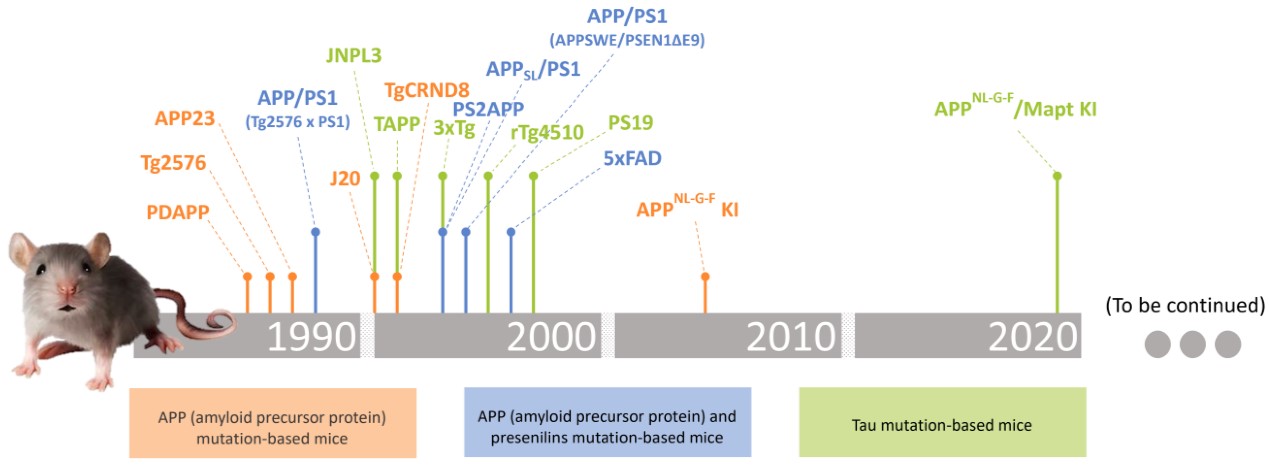 Fig. 1 Timeline of transgenic mice models for AD research. 1,2
Cancer Models
By introducing oncogenes (such as Ras, Myc, etc.) or knocking out tumor suppressor genes (such as p53, PTEN, etc.), various cancer models such as lung cancer, breast cancer, and colon cancer can be constructed. These models can be used to explore the mechanisms of tumor occurrence, development and metastasis. Spontaneous tumor models are genetically modified to allow mice to develop tumors naturally. The advantage is that they are closer to the actual occurrence process of human tumors and can show the natural evolution of tumors in the body; inductive tumor models use chemical carcinogens, radiation, etc. External factors induce mice to produce tumors, which are characterized by short modeling cycles and easy control of experimental conditions.
Infectious Disease Models
- ACE2 transgenic mice: In COVID - 19 research, ACE2 humanized mice played an important role. Since human angiotensin converting enzyme 2 (ACE2) is a key receptor for the new coronavirus to enter the host cell, the human ACE2 gene was transferred into mice to build a humanized mouse model of ACE2, which can simulate the new coronavirus infection of mice. process. Using this model, researchers can evaluate the protective effect of vaccines, the therapeutic effect of antiviral drugs, and the pathogenic mechanism of the virus.
- Other infectious disease models: Genetically modified technology can also be used to build models of infectious diseases such as influenza and AIDS. For example, in the influenza model, the infection process and immune response mechanism of the influenza virus can be studied by modifying the immune system or virus receptor gene of the mice to make the mice sensitive to specific influenza viruses.
Immune System Disease Models
- TCR transgenic mice: TCR (T cell receptor) transgenic mice have important applications in studying T cell development, function and immune response. By transferring a specific TCR gene, mouse T cells can recognize specific antigens, which can be used to study the abnormal activation mechanism of T cells in autoimmune diseases (such as rheumatoid arthritis, systemic lupus erythematosus, etc.), and the anti-tumor effect of T cells in tumor immunotherapy.
- Other immune models: By constructing immunodeficient mice (such as SCID mice) to study the impact of loss of immune system function on diseases; using immune overactivation models to explore the pathogenesis of inflammatory diseases.
Other Important Disease Models
In cardiovascular disease research, overexpressing angiotensin II or knocking out the nitric oxide synthase gene can build models such as hypertension and atherosclerosis, which can be used to explore disease progression and drug intervention strategies; in the field of metabolic diseases, knocking out the leptin gene or insulin receptor gene can establish models of obesity and diabetes, which can help clarify the mechanism of metabolic disorders and develop drugs for blood sugar and weight loss. These models provide a key experimental platform for disease research and treatment.
Service you may interested in
Significant Role of Transgenic Mice in Drug Development
Drug Target Discovery and Validation
Using genetically modified mouse models, researchers have been able to verify the role of potential drug targets in disease development and progression. Gene knockout or overexpression experiments were used to observe changes in the phenotype of mice to assess the impact of target intervention on the disease. Taking tumor research as an example, if it is found that the overexpression of a gene is closely related to tumor growth, the gene can be knocked out in transgenic mice to observe whether tumor growth is inhibited, and then determine whether the gene has a drug target. possibility.
Drug Efficacy Evaluation
Testing the therapeutic effect of candidate drugs on a transgenic mouse model can be evaluated by observing the inhibition of disease progression (such as reduction in tumor size, alleviation of symptoms of neurodegenerative diseases, etc.) and the improvement of symptoms (such as improvement in cognitive function, reduction in blood sugar levels, etc.). At the same time, combining imaging (such as MRI, PET-CT, etc.), biomarkers (such as specific proteins in the blood, cytokines, etc.) and other means can be used to evaluate the efficacy of drugs more comprehensively and accurately.
Drug Safety Evaluation
Transgenic mice were used to assess the potential toxicity and side effects of candidate drugs and to study the metabolism and distribution of drugs in different organs and systems. Observing physiological indicators and histopathological changes in mice through long-term administration can provide an important basis for the safety evaluation of drugs and avoid serious adverse reactions in human trials.
Unique Value of Humanized Mice in Drug Development
Construction strategies for humanized mice include human immune system reconstruction mice, human liver chimeric mice, etc. Human-derived immune system reconstruction mice transplant human hematopoietic stem cells or immune cells into immunodeficient mice, allowing them to rebuild the human immune system and more accurately simulate the human immune system's response to drugs, especially in immunotherapy.(such as CAR-T cell therapy) has important advantages; human-derived liver chimeric mice are implanted with human hepatocytes in the mouse liver, which can be used to study the metabolism and toxicity of drugs in human liver and improve the success rate of drug development.
Potential for Personalized Medicine
Using genetic engineering technology, disease models that are more consistent with the individual characteristics of patients can be constructed. For example, a transgenic mouse model can be constructed based on the patient's genetic mutations to guide the formulation of personalized treatment plans. By testing the effects of different drugs on models and selecting the most suitable treatment drugs and doses for patients, precision medicine is achieved.
Limitations and Challenges of Transgenic Mouse Models
In the field of human disease research, although genetically modified mouse models have made outstanding contributions, they still face three core challenges. First, due to the natural biological differences between mice and humans in terms of immune systems, metabolic pathways and gene regulation mechanisms, this model has significant limitations in simulating the pathological characteristics of complex human diseases and predicting drug responses. Secondly, although gene editing technology has made great progress, its accuracy is still limited by problems such as off-target effects and unstable gene insertion efficiency. Especially when building complex disease models involving multi-gene interactions, the technical difficulty is particularly prominent. Finally, during the implementation of the experiment, it is necessary to strictly abide by animal ethical principles, while pursuing scientific research goals, fully protect the welfare of experimental animals, and optimize experimental design to minimize the number of experimental animals used and reduce their suffering. The above factors are intertwined and together restrict the application effectiveness and research value of transgenic mouse models.
Conclusion and Future Perspectives
Transgenic mouse models play an irreplaceable core role in the biomedical field: It not only provides a key platform for human disease mechanism research, drug target screening and preclinical evaluation by building various disease models (especially humanized models have significantly improved the efficiency of drug research and development), but also continues to evolve under the impetus of emerging technologies--Precise gene editing technology represented by base editing and lead editing, combined with organoid culture and multi-species comparative research, is making it a qualitative leap in its accuracy in simulating human diseases. Despite technical challenges such as species differences, with the deep integration of innovative technologies, genetically modified mouse models will continue to release their unique value in personalized medicine, complex disease research and next-generation drug development, and become a key to promoting the development of human health. Experimental system.
If you want to learn more about the transgenic mice, please refer to:
- What Are Transgenic Mice? Definition, Types, and Key Concepts
- Transgenic Mice in Cancer Research: From Tumor Models to Therapy Development
- How Are Transgenic Mice Created? Methods and Technologies
- Transgenic Mice vs Knockout Mice: Understanding the Differences and Research Benefits
- Humanized Transgenic Mice: Bridging Animal Models and Human Disease Studies
- Inducible and Conditional Transgenic Mice Tools for Controlled Gene Expression
- Popular Transgenic Mouse Models in Neuroscience and Immunology
- Advances in Genetic Engineering: CRISPR and BAC Technologies in Transgenic Mice
- Transgenic Reporter Mice: Tools for Visualizing Gene Expression
Is your drug discovery research in need of a specific transgenic mouse model? Connect with us to discuss your project requirements. Creative Biolabs is ready to partner with you to create the ideal model for your studies.
References
- Pádua, Mafalda Soares, et al. "Insights on the use of transgenic mice models in Alzheimer’s disease research." International Journal of Molecular Sciences 25.5 (2024): 2805. https://doi.org/10.3390/ijms25052805
- Distributed under Open Access license CC BY 4.0 , without modification.
For Research Use Only.