
Basic Characteristics & Common Applications of CD1 Mice
The basic characteristic of CD1 mice
CD1 mice originate from Swiss albino mice. Due to their genetic heterogeneity and physiological stability, CD1 mice are suitable for various research areas such as genetics, toxicology, pharmacology, and aging research. They are common laboratory animal. In adult CD1 mice, sexual dimorphism is evident in body weight, male CD1 mice typically weigh between 35-40 grams, and females weigh between 25-35 grams. The CD1 mice's body length is around 10-12 centimeters (from the nasal tip to the tail root). Additionally, the Agouti gene governs the coat color of CD1 mice, giving rise to a classic "Agouti" pattern. This pattern is typified by individual hairs that feature yellow or gray bases and black tips. In reproduction, female CD1 mice's gestation is 19-21 days, they have an average of 8-12 pups per litter, and more than 90% survive weaning.
Behavior studies show that CD1 mice have less territorial aggression compared with C57BL/6.This trait makes them suitable for being housed together. The diversity of their immune system comes from their outbred genetic background, and they have a polymorphic MHC complex. This is very useful in vaccine development and related research. For instance, CD1 mouse populations have 6-8 MHC class I variants, while C57BL/6 mice have a fixed H-2b haplotype.
The characteristics of CD1 mice compared with Balb/c and C57BL/6
CD1 Mice vs Balb/c Mice
Researchers have identified clear differences between CD1 and Balb/c mice in three key areas: how likely they are to develop tumors, their behavioral responses in neurological tests, and the diversity of their gut bacteria. CD1 mice rarely develop spontaneous tumors—fewer than 5% of cases in controlled studies—making them a go-to option for experiments requiring baseline cancer-free data. On the other hand, Balb/c mice carry a built-in vulnerability: their DNA includes the mouse mammary tumor virus (MMTV). This virus drives breast cancer rates above 60% in aging female Balb/c mice, which is why scientists frequently use this strain for models like the 4T1 tumor transplant, a method that mimics human cancer growth in animals. Research on behavior has found that CD1 mice stay immobile for shorter times in forced swim tests. This indicates that they are more sensitive to antidepressant medications than Balb/c mice. Additionally, the gut diversity of CD1 mice is much higher than that of Balb/c mice. The unique gut bacteria profiles between these mouse strains could throw off immunotherapy study results. When tracking how drugs get processed in the body, CD1 mice show much wider differences between individuals (±25%) in their liver's drug-processing enzymes compared to genetically identical lab mice. This reflects their outbred genetic heterogeneity. Meanwhile, due to their genetic uniformity, Balb/c mice are more suitable for standardized pharmacokinetic studies.
CD1 Mice vs C57BL/6 Mice
CD1 mice and C57BL/6 mice differ in the aging process, experimental operability, and genetic application scenarios. The median lifespan of CD1 mice is 18-22 months, shorter than that of C57BL/6 mice (24-28 months). CD1 mice are more likely to develop age-related diseases like cataracts. For example, at 12 months old, 35% of CD1 mice have cataracts, while only 8% of C57BL/6 mice do. This is closely related to differences in oxidative stress regulatory pathways. During experiments, the thicker tail veins of CD1 mice (0.8-1.2 mm in diameter) make it easier to take blood samples repeatedly compared to the thinner vessels (0.4-0.6 mm) of C57BL/6 mice. In genetic and immunological research, due to their genetic homogeneity, C57BL/6 mice are considered the gold standard for gene-editing models. Also, CD1 mice require higher doses of isoflurane anesthesia (ED50 = 1.4%, compared to 1.1% in C57BL/6) to maintain surgical anesthesia. You can the difference of characteristics more clearly from the following table.
Table1. The characteristics of CD1 mice compared with Balb/c and C57BL/6
| Characteristics | CD-1 | BALB/C | C57BL/6 |
|---|---|---|---|
| Tumor susceptibility | spontaneous tumors (fewer than 5%) | Carry the MMTV virus; The rate of breast cancer in elderly female mice is over 60% | There is no definite spontaneous tumor tendency |
| The diversity of the intestinal flora | The diversity of the flora was significantly higher than that of Balb/c | The diversity of the microbiota is relatively low and the genetic background is single | The diversity of the microbiota is relatively low and the genetic background is single |
| Tail veins | 0.8-1.2 mm | 0.6 - 0.8 mm | 0.4-0.6 mm |
| Lifespan and Aging | 18-22 months | 12-18 months | 24-28 months |
Application of CD1 mice in diabetic models
As for genetic heterogeneity and metabolic sensitivity, CD1 mice have unique advantages in diabetic research. The high-fat-diet-induced model of type 2 diabetes represents a classic and widely-recognized approach for the investigation of insulin resistance and β-cell dysfunction. Studies have shown that CD1 mice fed 60% fat HFD for 8-12 weeks will show significant weight gain (20%-30% higher than the control group) and fasting blood glucose (up to 10-15 mmol/L). Moreover, in the adipose tissue of CD1 mice, the expression of inflammatory factors like TNF-α and IL-6 is up regulated, moreover, the activities of key gluconeogenic enzymes such as PEPCK and G6Pase in the liver are also increased. This leads to an imbalance in glucose homeostasis. It's worth noting that the degeneration of beta-cell function in CD1 mice is shown by a delayed peak of insulin secretion and more fluctuation in insulin levels after glucose stimulation. This is very similar to the "loss of first-phase insulin secretion" seen in human type 2 diabetes.
When researching type 1 diabetes, CD1 mice are moderately sensitive to streptozotocin (STZ). By injecting 150-200 mg/kg of STZ into CD1 mice cloud induce hyperglycemia, the blood glucose levels exceeding 16.7 mmol/L, and the mortality rate kept within 10%-15%. This is because, compared with C57BL/6 mice, the pancreatic islet beta cells of CD1 mice have a lower tolerance to STZ. Chances are their oxidative stress defense system is relatively weaker. For example, take superoxide dismutase (SOD) and catalase (CAT) in CD1 mice. Their activities are notably lower than those in C57BL/6 mice. Consequently, CD1 mice struggle to promptly clear excessive reactive oxygen species (ROS). So, they're more easily damaged by STZ, which impairs the function of islet beta cells, greatly reduces insulin secretion, and causes blood sugar levels to rise sharply.
Moreover, CD1 mice are good at being used to construct diabetic nephropathy models, and they show a series of typical pathological features. When the mice reach 12 weeks old, histological examination shows that the mesangial region of the glomeruli is clearly dilated, and the mesangial matrix content increases by 40% compared to the normal state. Some studies have observed that podocytes undergo fusion, accompanied by a significant reduction in the density of interpodocyte processes. This suggests that the process of kidney fibrosis has begun.
Service you may interested in
Study on immune deficiency and tumor in CD1 Nude Mice
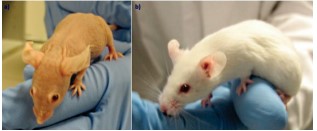 Fig.1 Nude female homozygote (nu/nu) (around 7 weeks of age).1,4
The immunodeficiency characteristics of CD1 nude mice
CD1 Nu/Nu (nude mice) have a homozygous mutation (c. 1009C>T) in the Foxn1 gene located on chromosome 11q23.1. This mutation stops the thymic epithelial cells from developing properly, and it can't help T cell precursors turn into mature CD4+ or CD8+ T cells. The immune system of CD1 nude mice has some remarkable features. There is a serious lack of T cells. In the peripheral blood of CD1 nude mice, the proportion of CD3+ T cells is less than 1%, but in normal mice, this proportion is more than 60%. Even though the number of CD19+ B cells in CD1 nude mice is within the normal range of 45-55%, the T-cell-dependent antibody response, like IgG production, is significantly weakened. Moreover, natural killer (NK) cells show compensatory activation, and the cytotoxic activity of splenic NK cells (CD49b+) doubles. This unique immunodeficient state makes CD1 nude mice extremely crucial experimental animals in the field of tumor research.
Tumor model construction
In terms of tumor model construction, CD1 nude mice are regarded as a standardized platform. For CDX models (cell line-derived xenografts), commonly used cell lines include HCT116 (colorectal cancer), A549 (lung cancer), etc. The specific inoculation parameters are subcutaneous injection of 1×10⁶ cells, with a latency period of 2 to 3 weeks and a transplantation success rate of over 90%. With the advantage of high experimental repeatability (coefficient of variation of tumor volume less than 15%), they play an irreplaceable role in large-scale drug screening work. In the patient-derived xenotransplantation (PDX) model, nude mice demonstrated a high retention of genomic features from the primary tumor, with total exon sequencing similarity exceeding 85%. Additionally, histopathological structures such as glandular duct formation and necrotic foci were preserved. However, the transplantation cycle in the PDX model is relatively prolonged, lasting approximately 6–8 weeks, which is nearly twice that of the cell-derived xenograft (CDX) model. Furthermore, it typically requires more than three generations to stabilize the phenotype, making it particularly suitable for advanced research applications, including personalized drug sensitivity testing and tracking tumor clonal evolution.
Tumor microenvironment
From the vantage point of tumor microenvironment research, CD1 nude mice, despite their lack of T cells, prove to be invaluable for delving deep into various tumor-host interactions. For instance, the infiltration degree of tumor-associated macrophages (TAMs, identified by F4/80+) has a remarkably strong link with chemotherapy resistance. Additionally, in transplanted tumor tissues, there's a positive correlation between the expression level of VEGF and microvascular density (represented by the CD31+ area). Tumor-associated fibroblasts (CAFs, marked by α-SMA +) play a role in promoting the expansion of tumor stem cells (CD44+/CD24-) through the secretion of cytokines such as IL-6 and HGF.
Notably, CD1 nude mice have carved out a significant niche in tumor metastasis research. Studies have shown that when specific tumor cells are transplanted into CD1 nude mice, they can closely mimic the metastatic pathways seen in human patients. This provides researchers with a clear-cut and highly effective model for unravelling the complex mechanisms underlying tumor metastasis. As gene-editing technologies continue to progress by leaps and bounds, gene-modified models based on CD1 nude mice have been successfully developed. These gene-editing model can accurately simulation the genetic background of human tumors, this means we can develop more personalized cancer treatment strategies for patients.
In the dynamic landscape of pre-clinical research, having the right animal model can make all the difference. At Creative Biolabs, we take pride in offering specialized CD1 mouse model services. Whether you're conducting drug development studies, exploring disease mechanisms, or validating novel therapies, our team of experts is here to support you. We understand that every experiment is unique, which is why we provide highly flexible, customized solutions tailored to your specific research requirements. Our CD1 mouse models are meticulously developed and rigorously characterized to ensure reliable and reproducible results.
References
- Szadvári, Ivan, O. Krizanova, and Petr Babula. "Athymic nude mice as an experimental model for cancer treatment." Physiological research 65 (2016). https://doi.org/10.33549/physiolres.933526
- Cooper, Timothy K., et al. "relevant conditions and pathology of laboratory mice, rats, gerbils, Guinea pigs, hamsters, naked mole rats, and rabbits." ILAR journal 62.1-2 (2021): 77-132. https://doi.org/10.1093/ilar/ilab022
- Acikgoz, Eda, et al. "Repression of the Notch pathway prevents liver damage in streptozotocin-induced diabetic mice." Folia histochemica et cytobiologica 55.3 (2017): 140-148. https://doi.org/10.5603/FHC.a2017.0014
- Distributed under Open Access license CC BY 4.0, without modification.
For Research Use Only.