
Inducible & Conditional Transgenic Mice Tools for Controlled Gene Expression
In the starry sea of biomedical research, genetically modified mice are like a navigation compass, guiding humans to explore the secrets of gene functions. As a cornerstone tool for gene function research, disease mechanism analysis, and drug development, transgenic models have promoted major breakthroughs from tumor immunotherapy to neurodegenerative disease research. However, due to the spatio-temporal uncontrollability of gene expression, traditional transgenic technology often leads to embryonic lethality in development research, or fails to distinguish the direct and indirect effects of toxic genes. This dilemma was completely broken after 2000-the birth of inducible and conditional systems, which enabled the "spatio-temporal remote control" of gene expression through the Cre-lox recombinase and Tet regulatory system, opening a new era of precise genetic control.
Analysis of core concepts: inducible and conditioned transgenic mice
Conditional and inducible systems constitute the wings of modern genetic manipulation:
- Conditional systems (such as Cre-lox) drive recombinant enzymes through tissue-specific promoters, enabling gene activation or silencing in specific cells, as in the case of GPS mapping of gene manipulation.
- Inducible systems use small-molecule drugs such as doxycycline to regulate gene switches, giving researchers "time controllers" that dynamically regulate gene expression at specific stages of animal development or disease progression.
The combination of the two technologies has led to the creation of a triple transgenic system (Triple-transgenic System), such as the ROSA26-STOP-rtTA model, which combines Cre-mediated organizational specificity with the timeliness of Tet’s system to achieve precise "when, where, and how" three-dimensional regulation.
Cre-lox system: The space-time art of molecular scalpel
The core of the Cre-lox system derived from phage P1 lies in the specific interaction between Cre recombinase and loxP site:
- Rule of loxP direction: When two loxP sites are arranged in the same direction, Cre mediates the deletion of DNA fragments; reverse arrangement leads to inversion, providing multiple possibilities for gene knockout, conditional activation, or chromosome engineering.
- Advances in spatio-temporal control: The Tamoxifen inducible Cre-ER system locks the recombinase activity in the administration time window through the nuclear translocation mechanism of estrogen receptor mutants, successfully solving the problem of leaked expression in traditional Cre mice during the embryonic stage.
The Cre-lox system has the advantages of high specificity and wide compatibility, and can be combined with multiple genetic manipulation technologies to play a role in different research fields. However, it also has certain limitations. For example, uneven recombination efficiency may lead to Mosaic phenomenon, that is, gene recombination is successful in some cells but not in some cells; at the same time, there is also a risk of background expression, which may interfere with experimental results.
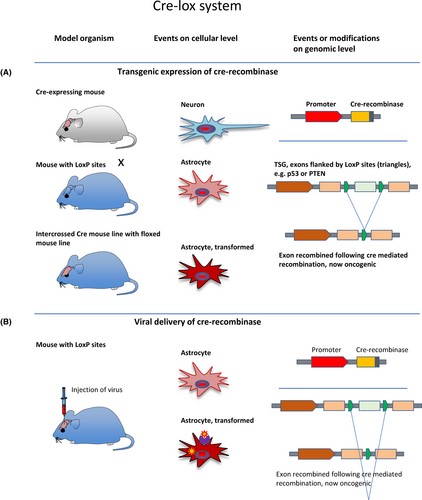 Fig. 1 Brain tumor models utilizing the Cre-lox system.1,2
Tet System: Precise Dose Regulation of Chemical Switches
The system is dose- dependent, allowing researchers to accurately control gene expression levels by adjusting Dox concentrations, and the use of pTRE-Tight vectors gives the system a lower background noise and a more accurate picture of gene expression. In practical research, Tet system often cooperates with Cre system. For example, the triple model of ROSA26-STOP-rtTA, tissue-specific Cre and Tet-O, which combines the advantages of both, realizes the dual precise regulation of tissue and time specificity of gene expression.
Rosa26 Locus: The Ideal "Port" of the Genome
Rosa26 locus on mouse chromosome 6 is a safe port for foreign gene insertion because of its open chromatin structure and broad-spectrum expression.
Conditional vector design: insertion of loxP-STOP-loxP (LSL) or tetO regulatory elements at Rosa26 loci to construct spatiotemporal controlled transgenic models. For example, ROSA26-LSL-Cas9 mice expressed the CRISPR gene editing tool only in the presence of Cre, avoiding the risk of miss in systemic editing.
Double-reporting system innovation: the simultaneous insertion of fluorescent reporter genes and functional genes into the Rosa26 vector can track gene expression patterns in real time through in vivo imaging, significantly improving experimental verifiability.
Rosa26 transgenic mice have the advantage of stable expression and can avoid the unpredictability brought by random integration, providing a reliable model for gene function research and gene therapy.
C-fos-tta mice: molecular probes for decoding neural activity
The classic model of c-fos-tta mice in neuroscience makes clever use of the properties of the immediate early gene c-fos:
- Dynamic labeling principle: When neurons are activated, endogenous c-fos promoters drive the expression of tTA protein, and after Dox is removed, tTA combines with TetO elements to activate the expression of reporter genes (such as GFP), thus realizing "activity-dependent markers."
- Combined use of photogenetics: In the study of photopathic memory, this model successfully labeled the activated imprinted cells in amygdala and induced memory recall by photopathic activation, which provided key evidence for neural circuit resolution.
Service you may interested in
Organizational Specific Model Construction Strategy
There are three principles to follow in building efficient and specific transgenic models:
- Promoter screening: use highly specific endogenous Promoters (such as Myh6 in cardiomyocytes and Albumin in hepatocytes), or use synthetic enhancers (such as CAG).
- Double-validation mechanism: Using Cre; ROSA26-td Tomato dual reporting system, tissue biopsy fluorescence detection was used to verify recombination efficiency.
- Reversible Design: In the Alzheimer's disease model, the Ca2+/calmodulin-dependent protein kinase II alpha promoter was used to drive the inducible Cre to express tau protein in hippocampal neurons.
In biomedical research, it has become a common method to construct specific tissue model by transgenic technology. The heart-targeted Cre transgenic mice (carrying α- MHC promoters) and the islet beta -targeted Cre (insulin promoter) transgenic mice are typical examples in this field, and these models play a key role in the study of heart disease, diabetes and other diseases. With the continuous development of science and technology, new technological trends are emerging. In particular, the dual fluorescence reporting system has become an important tool to verify promoter specificity. By analyzing the expression levels of two fluorescent proteins, this technique can improve the accuracy of tissue specific gene expression identification.
Disease Models: From Mechanism Analysis to Drug Screening
- Lung cancer research: LSL-K-rasG12D mice induced by Sftpc-MerCreMer -mediated Tamoxifen can accurately simulate the process of lung adenocarcinoma, providing a test platform for targeted treatment.
- Gosher's disease model: UBC-CreER-mediated conditional knockout of the Gba gene, phenotypic mimicry of lysosomal enzyme deficiency induced by tamoxifen, and promotion of enzyme replacement therapy.
- Parkinson's disease: SNCA transgenic mice overexpressed α-synaptic nucleoprotein, its dyskinesia phenotype and the pathological characteristics of dopaminergic neuron loss, provide a key model for disease mechanism.
Currently, transgenic mouse models have formed a complete technical chain from basic research to clinical transformation. With the development of technology, there will be three major development trends in the future: intelligent design, modular carriers and multi-dimensional regulation. The first is intelligent design. AI algorithms can predict optimal promoter combinations and gene insertion sites, such as optimizing sgRNA efficiency through deep CRISPR technology. Secondly, there is modular vector. A plug-and-play vector system based on PhiC31 integrase can support rapid replacement of regulatory elements and reporter genes. Finally, there is multi-dimensional regulation. The integration of light control and chemical induction systems can achieve multi-dimensional control of gene expression intensity and duration. These advances will push genetic modification technology from simple genetic manipulation to life programming, providing more powerful research tools for precision medicine.
If you want to learn more about the transgenic mice, please refer to:
- What Are Transgenic Mice? Definition, Types, and Key Concepts
- Transgenic Mice in Cancer Research: From Tumor Models to Therapy Development
- How Are Transgenic Mice Created? Methods and Technologies
- Applications of Transgenic Mice in Disease Research and Drug Development
- Transgenic Mice vs Knockout Mice: Understanding the Differences and Research Benefits
- Humanized Transgenic Mice: Bridging Animal Models and Human Disease Studies
- Popular Transgenic Mouse Models in Neuroscience and Immunology
- Advances in Genetic Engineering: CRISPR and BAC Technologies in Transgenic Mice
- Transgenic Reporter Mice: Tools for Visualizing Gene Expression
Let's discuss your specific requirements and outline a detailed custom mouse model strategy tailored to your needs. Contact us today to explore how our expertise can advance your research.
References
- Brandner, Sebastian. "Rodent models of tumours of the central nervous system." Molecular Oncology 18.12 (2024): 2842-2870. https://doi.org/10.1002/1878-0261.13729
- Distributed under Open Access license CC BY 4.0, without modification.
For Research Use Only.