
What Are Humanized Mice? A Comprehensive Overview of Their Definition & Applications
Bridging the Gap in Biomedical Research
Traditional mouse models have long been fundamental to biomedical research. However, a critical limitation exists: significant biological differences between mice and humans often prevent findings from translating effectively to human patients. This gap hinders progress in understanding human diseases and developing safe, effective therapies. Enter humanized mice–transformative tools engineered to overcome these limitations by incorporating functional human elements into the mouse system. This article provides a comprehensive overview of what humanized mice are, how they are created, the different types available, their diverse applications across research fields, the current challenges they face, and the exciting future directions for this indispensable technology.
Defining Humanized Mice: Core Concepts
At its core, humanized mice meaning revolves around creating a living model where human biological processes can be studied within a mammalian organism. Humanized mice are defined as immunodeficient mice engrafted with functional human biological material. This material can include:
- Cells: Such as hematopoietic stem cells (HSCs) or peripheral blood mononuclear cells (PBMCs).
- Tissues: Like fetal liver or thymus tissue (used in BLT models).
- Genes: Human genes inserted or replacing mouse genes.
- Substances: Human proteins (e.g., insulin) produced by the mouse.
The core purpose is to establish an in vivo environment where human-specific biological pathways, immune responses, disease mechanisms, and therapeutic interventions can be investigated with greater relevance to human physiology and pathology than traditional mouse models allow. This significantly enhances research translatability.
Key components are essential for successful humanization:
- Immunodeficient Host Mice: These mice lack a functional immune system (e.g., strains like NOD/SCID, NSG, NOG), preventing rejection of the introduced human material. They form the essential foundation.
- Human Biological Material: Sourced from umbilical cord blood, adult blood, fetal tissue (with ethical considerations), or genetically engineered constructs.
In essence, humanized mice bridge the species gap, providing a vital platform to study human biology and disease within a living system, significantly accelerating translational research.
How Are Humanized Mice Created? Technical Methods
Creating humanized mice involves two primary steps:
- Genetic Engineering for Immunodeficiency: Researchers use breeding or advanced techniques like CRISPR-Cas9 to generate mouse strains with specific immune deficiencies. The level of deficiency determines what human components can be engrafted and how well they will function.
- Human Cell/Tissue Engraftment: The chosen human biological material (e.g., HSCs purified from cord blood, PBMCs, tumor tissue, liver cells) is introduced into the immunodeficient host, typically via injection (intravenous, intrahepatic, subcutaneous) or surgical implantation. The engrafted cells then populate and function within the mouse environment.
Service you may interested in
Major Types of Humanized Mouse Models
Different research questions require different types of humanized models:
Immune System-Humanized Models (HIS mice): Focused on reconstituting a human-like immune system.
- Hu-PBMC Model: Involves intravenous injection of adult human PBMCs into immunodeficient adults.
- Hu-HSC (Hu-CD34+) Model: Involves engrafting human HSCs (e.g., from cord blood) into preconditioned immunodeficient mice, often newborns.
- Hu-BLT Model: Involves surgical co-implantation of human fetal liver and thymus tissue under the kidney capsule, along with intravenous injection of HSCs from the same donor.
Genomically Humanized Models: These mice have specific human genes or gene networks inserted or swapped into their genome via genetic engineering (e.g., human immune checkpoint genes like PD-1/PD-L1 or CTLA-4, human disease genes like SMN2 for spinal muscular atrophy). They are often crossed onto immunodeficient backgrounds or combined with cell/tissue engraftment.
Humanized Liver/Tumor Xenograft Models:
- Humanized Liver: Immunodeficient mice engrafted with human hepatocytes, used primarily for studying human-specific liver diseases (e.g., Hepatitis B/C), drug metabolism, and hepatotoxicity.
- Tumor Xenografts: Human cancer cell lines (CDX-Cell Line Derived Xenografts) or patient-derived tumor fragments (PDX-Patient-Derived Xenografts) implanted into immunodeficient mice or, increasingly, into HIS mice to study tumor-immune interactions (see Immuno-Oncology below).
| Model Type | Engrafted Material | Primary Research Utility | Key Advantage(s) | Key Limitation(s) |
|---|---|---|---|---|
| Immune System Humanized (HSC) | Human Hematopoietic Stem Cells (CD34+) | Long-term immune studies, multi-lineage immune development, vaccine research | Stable multilineage engraftment, long survival time, robust T cell maturation | Longer reconstitution time (8-12 weeks) |
| Immune System Humanized (PBMC) | Human Peripheral Blood Mononuclear Cells | Short-term immune responses, rapid drug efficacy/toxicity testing | Rapid engraftment (approx. 3 weeks), simple to set up | Prone to Graft-versus-Host Disease (GvHD), short lifespan (4-6 weeks) |
| Liver Humanized | Human Liver Cells | Drug metabolism, liver disease modeling, toxicology studies | Human-specific drug metabolism, improved pharmacokinetic prediction | Incomplete humanization, species differences in other systems |
| Microbiome Humanized | Human Fecal Microbiota | Gut-brain axis research, metabolic disease modeling, host-microbe interactions | Mimics human gut environment, explores systemic microbial impact | Complexity of microbiome interactions, variability among donors |
| Genetically Humanized | Specific Human Genes (knock-in/transgene) | Human gene function studies, target validation for human-specific therapeutics | Precise gene targeting, allows human therapeutic testing in in vivo context | May not fully replicate complex human physiological systems |
Diverse Applications of Humanized Mice in Research
Humanized mice have become indispensable across numerous fields of biomedical research due to their unique ability to model human biology:
Disease Modeling
- Cancer Research: Humanized mice, especially PDX models and immune-reconstituted models, are revolutionizing oncology. They allow researchers to study human tumor growth, metastasis, and the complex tumor microenvironment. Critically, they enable the testing of immunotherapies like CAR-T cells, checkpoint inhibitors, and cancer vaccines within a functional human immune context, predicting human responses far better than conventional models.
- Infectious Diseases: These models are essential for studying pathogens that exclusively or primarily infect humans. Research on HIV/AIDS, hepatitis B/C, Epstein-Barr virus (EBV), malaria, and various bacterial/fungal infections heavily relies on humanized mice to understand pathogenesis, immune responses, and test novel antivirals, antibiotics, and vaccines.
- Autoimmune and Inflammatory Disorders: Models with human immune systems are used to study diseases like lupus, rheumatoid arthritis, multiple sclerosis, and inflammatory bowel disease, enabling investigation into disease mechanisms and testing of immunosuppressive or immunomodulatory therapies.
Drug Development and Testing
- Preclinical Evaluation: Humanized mice provide a more predictive platform for assessing the efficacy, pharmacokinetics (how the body processes a drug), and toxicity of drug candidates, especially biologics (antibodies, therapeutic proteins) designed to interact specifically with human targets. This improves the transition from animal studies to human clinical trials.
- Toxicology Studies: Liver-humanized mice are particularly valuable for predicting human-specific drug metabolism and potential liver toxicity (hepatotoxicity), a major cause of drug failure.
- Personalized Medicine: PDX models and patient-derived immune system models ("avatars") offer the potential to test multiple therapeutic options on a specific patient's tumor or immune system ex vivo, guiding personalized treatment decisions.
Immunology and Vaccine Research
- Human Immune Responses: These models provide an unparalleled system to study the development, activation, and regulation of the human immune system in vivo. This is fundamental for understanding immune disorders.
- Vaccine Development: Evaluating the efficacy and safety of novel vaccines against human pathogens (e.g., HIV, malaria, emerging viruses) requires testing in a model with a human immune system, a role perfectly filled by humanized mice.
- Immunotherapy Evaluation: Beyond cancer, these models are crucial for testing immunotherapies for autoimmune diseases, allergies, and transplant rejection.
Microbiome and Metabolic Studies
- Gut-Host Interactions: Mice engrafted with a human gut microbiome allow researchers to investigate how these complex microbial communities influence human health, nutrition, and diseases like obesity, diabetes, and inflammatory bowel disease.
- Metabolic Disease Modeling: Liver-humanized mice and models incorporating human metabolic pathways help study diseases like diabetes, non-alcoholic fatty liver disease (NAFLD), and metabolic syndrome, and test relevant therapeutics.
Emerging Frontiers
- Integration with Organ-on-a-Chip: Combining humanized mice with microfluidic "organ-on-a-chip" technology offers exciting possibilities for creating even more complex and physiologically relevant multi-organ human systems.
- Advanced Gene Editing: CRISPR-Cas9 allows for more sophisticated humanization, such as knocking in human genes (e.g., cytokines, HLA molecules) or knocking out specific mouse genes to enhance model fidelity for specific applications like gene therapy testing.
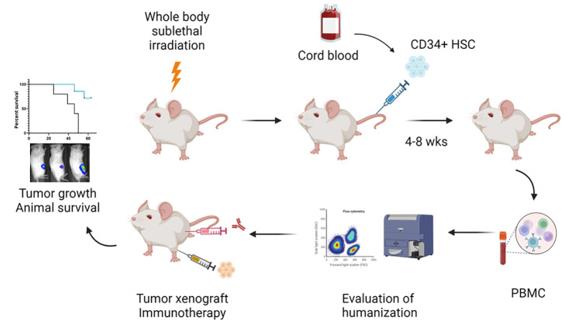 Fig.1 Workflow for establishing an orthotopic humanized mouse model for bone cancer immunotherapy.1,2
Conclusion: A Vital Tool for Human Health
Humanized mice have undeniably revolutionized biomedical research. By bridging the critical gap between traditional animal models and human patients, they provide an indispensable platform for understanding human biology, modeling complex diseases, and accelerating the development of safer and more effective therapies. From unlocking the secrets of cancer immunotherapy and infectious diseases to paving the way for personalized medicine and advanced drug testing, their applications are vast and continually expanding. While challenges in perfecting these models persist, ongoing technological advancements and collaborative efforts promise even more powerful and predictive tools in the years to come. As we harness their potential, humanized mice stand as a testament to scientific ingenuity, holding immense promise for driving breakthroughs that will ultimately improve human health worldwide. Their continued development demands not only technical innovation but also a steadfast commitment to ethical responsibility.
If you want to learn more about the humanized mice, please refer to:
- How to Create Humanized Mice: A Step-by-Step Guide for Researchers
- Humanized Mice in Immuno-Oncology Research: Progress and Challenges
- The Role of Humanized Mice in Studying Human Immunity and Disease
- Humanized Mice Models: From COVID-19 to Cancer – Key Applications
- Humanized Mice for Antibody Production and Disease Modeling
- Humanized Mice in Vaccine Research: From Concept to Clinical Trials
- Humanized Mice in Breast Cancer Research: Modeling Tumor Progression and Treatment
- The Core Applications of Humanized Mice in Prostate Cancer Research
- Humanized Mice: A Revolutionary Tool for Neurological Disease Research
References
- Luo, Wen, et al. "A humanized orthotopic mouse model for preclinical evaluation of immunotherapy in Ewing sarcoma." Frontiers in Immunology 14 (2023): 1277987. https://doi.org/10.3389/fimmu.2023.1277987
- Distributed under Open Access license CC BY 4.0, without modification.
For Research Use Only.