
Drug Abuse Liability Modeling & Pharmacodynamics Services
Introduction
Given the significant public health burden of co-occurring opioid and alcohol use disorders and the high heritability of drug dependence, assessing abuse liability is a critical regulatory mandate for all Central Nervous System (CNS)-active New Chemical Entities (NCEs). Creative Biolabs' platform addresses this requirement by providing a rigorous, IND-enabling evaluation suite that combines microsurgical precision with automated operant technology to quantify the reinforcing strength, rewarding properties, and physical dependence potential of candidate molecules. By delivering high-fidelity data, including self-administration (IVSA), reward-seeking (CPP), and withdrawal profiles, that align with FDA and EMA guidelines, we empower sponsors to navigate the scheduling process and de-risk their CNS pipelines through evidence-based assessments of non-medical use likelihood.
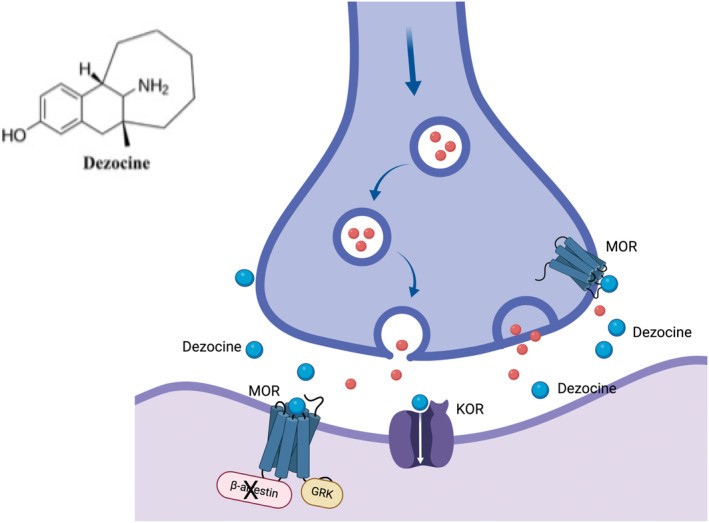 Fig.1 Schematic representation of the opioid receptor activity of Dezocine, highlighting its therapeutic potential for the treatment of Opioid Use Disorder (OUD).1
Available Drug Abuse Liability Models
Our platform offers a suite of behavioral assays to evaluate the rewarding properties, reinforcing effects, and physical dependence potential of CNS-active compounds. By bridging the gap between subjective drug effects and objective behavioral reinforcement, our platform provides a rigorous framework to de-risk the abuse profile of novel therapeutics, ensuring a clear and predictable regulatory pathway. These studies are essential for regulatory scheduling and safety pharmacology.
| Drug Abuse Liability Models | Modeling & Application Values | Animal Species |
| Conditioned Place Preference | Utilizes classical conditioning to assess addictive liability. Evaluating the addictive liability of CNS candidates (e.g., GABA modulators, FAAH inhibitors). Differentiating between pure hedonic reward and the relief of anxiety/stress. Screening for compounds that inhibit drug-seeking behavior or prevent relapse. | Mouse, Rat |
| Drug Discrimination | Through operant conditioning, animals identify a drug's subjective profile by selectively responding to its internal interoceptive cues. Testing if a new compound is perceived as similar to known drugs of abuse (e.g., opioids, stimulants, or depressants). Identifying the specific receptor mechanism. Predicting the psychoactive properties of a drug before it enters human clinical trials. | Rat, NHPs |
| Intravenous Self-Administration | An operant model where animals perform a task (e.g., lever press) to receive an intravenous drug infusion. The Gold Standard operant model for quantifying addictive potential through progressive ratio "break points," assesses the reinforcing strength of novel CNS candidates, and models relapse through cue- or stress-induced reinstatement. | Rat, NHPs |
| Drug Dependence Liability/Withdrawal Test | Chronic administration followed by abrupt cessation or antagonist-precipitated withdrawal. Identifying risks of physical "crashes" or severe withdrawal symptoms (e.g., tremors, weight loss, or seizures) to support drug scheduling. Utilizing specific antagonists (e.g., Flumazenil for GABAA) to demonstrate the receptor systems mediating physiological adaptation. Evaluating rebound hyper-excitability using seizure threshold tests (e.g., PTZ challenge) following drug discontinuation. | Mouse, Rat |
Evaluation Platform
Our platform integrates gold-standard behavioral paradigms with high-precision physiological monitoring to quantify the abuse potential of novel therapeutic candidates. By bridging the gap between subjective drug effects and objective behavioral reinforcement, we deliver the mechanistic evidence required to confirm target engagement and de-risk your Drug Abuse Liability pipeline for successful regulatory submission.
- Conditioned Place Preference (CPP): evaluates a compound's passive hedonic value via Pavlovian association. Using IR beam arrays or AI video tracking (Any-maze) in a three-compartment apparatus, the platform quantifies reward through the Preference Score (TimePost-test - TimePre-test in the drug-paired chamber). Activity Heatmaps and Entry Latency are simultaneously recorded to differentiate true preference from sedative effects and to assess "approach-avoidance" motivation.
- Drug Discrimination (DD): determines pharmacological equivalence by evaluating whether the CNS perceives a novel candidate as similar to known drugs of abuse. Utilizing dual-lever operant chambers with a ≥ 80% training accuracy threshold, the platform quantifies the drug's subjective profile through the Percentage Substitution (proportion of drug-lever responding) and ED50 modeling. Additionally, Response Rate is monitored to identify potential motor suppression, ensuring that generalization data is not confounded by sedation at higher doses.
- IVSA: Utilizing operant systems integrated with precision infusion pumps and swivel-tether assemblies, the platform employs fixed-ratio (FR) and progressive-ratio (PR) schedules to quantify addiction liability. Key metrics include the breaking point (BP), which measures maximal incentive motivation; active vs. inactive responding to confirm goal-directed behavior; and infusion patterns to differentiate between "binge" and "maintenance" profiles.
- Dependence & Withdrawal: characterize physical dependence liability and the severity of withdrawal syndromes through integrated automated activity monitoring and blinded multi-parametric clinical scoring. Key indicators include the Gellert-Holtzman Scale for quantifying somatic signs (e.g., tremors, "wet-dog" shakes), Thermal Hyperalgesia (Hot Plate/Tail Flick) to detect hypersensitivity, and continuous tracking of Weight Flux and Core Temperature post-cessation. This approach provides a definitive profile of a compound's metabolic and behavioral withdrawal impact for safety labeling.
Applications
- Regulatory Submission (IND/NDA): Providing the required "Abuse Potential" section data for the FDA 8-factor analysis.
- Relapse & Reinstatement Studies: Evaluating the efficacy of anti-addiction leads in preventing drug-seeking behavior triggered by cues, stress, or priming doses.
- Comparison to Scheduled Controls: Benchmarking NCEs against standard drugs of abuse (e.g., Cocaine, Morphine, Diazepam).
- Dose-Response Profiling: Establishing the relationship between drug concentration and reinforcing strength.
Our Advantages
- Gold-Standard Operant Expertise: We specialize in complex IVSA protocols, utilizing Progressive Ratio (PR) schedules to determine the breaking point. This provides a quantitative measure of reinforcing strength and "craving" intensity that goes beyond simple preference tests.
- Regulatory-Centric Study Design: Our protocols are strictly aligned with the FDA's 8-Factor Analysis and ICH M3(R2) guidelines. We provide the high-fidelity data packages (CPP, IVSA, and Drug Discrimination) required for scheduling recommendations and IND submissions.
- Surgical Precision & Long-term Patency: We employ advanced microsurgical techniques for indwelling jugular vein catheterization. Our rigorous maintenance protocols (including regular patency checks with ultra-short-acting anesthetics) ensure data consistency across long-term chronic self-administration studies.
- Sophisticated Subjective Profiling: Our Drug Discrimination platform allows for the precise mapping of a novel compound's interoceptive cues. By testing against a library of reference standards (e.g., Cocaine, Morphine, Diazepam), we can identify if a candidate possesses a signature similar to known drugs of abuse.
- Comprehensive Physical Dependence Mapping: We go beyond observation by using both spontaneous and antagonist-precipitated withdrawal models. We quantify physical dependence through multi-parametric scoring of somatic signs, thermal hyperalgesia, and weight fluctuation.
- Integrated PK/PD/Behavioral Correlation: Our platform can integrate real-time in vivo microdialysis or satellite PK groups to correlate neurochemical changes in the Nucleus Accumbens with behavioral drug-seeking, providing a complete mechanistic picture of abuse liability.
Work with Us
- Summarize the project requirements and fill in the information collection form.
- Sign a CDA from both parties to further communicate information, such as targets.
- Select an animal model, discuss experimental design, and determine assay parameters.
- Project costing and project schedule forecasting.
- We provide a detailed project plan, including the required sample quantities, methods, and protocols.
- Both parties confirm the project details and start the project.
- Confirm the timeline of the project.
- We provide periodic results and information on the animal's condition.
- We will work together to make project adjustments as necessary.
- We provide a comprehensive project report promptly.
- We arrange transportation for the produced samples.
- We provide a discussion of the project results and help to arrange the next steps.
- Data storage and archiving.
FAQs
-
Q: When is a Self-Administration study required?
A: If your drug shows CNS activity (behavioral or neurochemical) and belongs to a chemical class known to be abused, or if it produces "liking" effects in early clinical trials.
-
Q: Can you test oral or inhalant drugs?
A: Yes, while Intravenous IVSA is the gold standard for rapid onset, we offer specialized models for oral self-administration and vapor-inhalation chambers.
-
Q: Do you use positive controls in every study?
A: Yes, we benchmark against reference compounds (e.g., Cocaine for stimulants, Midazolam for sedatives) to validate the sensitivity of the model.
-
Q: At what stage of drug development should Abuse Liability studies be performed?
A: While initial screening (like CPP) can occur during lead optimization, definitive studies (IVSA and Drug Discrimination) are typically required as part of the IND-enabling safety pharmacology package for any CNS-active compound or drug with significant systemic exposure.
-
Q: How does IVSA differ from CPP in terms of "addiction" measurement?
A: CPP measures the passive rewarding properties (how much the animal "likes" the drug's effect). IVSA measures active reinforcement, the "work" or craving an animal exhibits to obtain the drug. IVSA is considered the "gold standard" for predicting human abuse potential.
-
Q: Can your platform determine if a new compound will be "scheduled" similarly to opioids?
A: Our Drug Discrimination assays are designed for this specific purpose. By training animals to recognize a reference substance (e.g., Morphine or Cocaine), we can determine if they "generalize" the effects of your novel compound to that reference, providing critical data for DEA/regulatory scheduling.
-
Q: How do you handle drugs that have low solubility or require specific delivery routes?
A: We have extensive experience with diverse Routes of Administration. While IV is standard for IVSA, we also offer intragastric (IG) self-administration or specialized infusion pumps for compounds with unique pharmacokinetic (PK) profiles or solubility challenges.
-
Q: What is the significance of the "Progressive Ratio" (PR) schedule in IVSA?
A: The PR schedule increases the "cost" (number of presses) for each subsequent dose. The point at which the animal stops working is the "Breaking Point." This is a powerful metric to quantify the maximal incentive motivation or "craving" produced by the drug compared to a baseline.
-
Q: How do you validate that the withdrawal symptoms are drug-specific?
A: In Dependence Liability studies, we use both spontaneous withdrawal (cessation of dosing) and antagonist-precipitated withdrawal (e.g., using Naloxone for opioids). This ensures that the physical dependence markers, such as tremors, weight loss, or hyperalgesia, are directly linked to the drug's mechanism of action.
Published Data
Intra-NAc infusion of the mGlu8 agonist S-3,4-DCPG exerts a stage-specific modulation of morphine-induced CPP. Results demonstrate that S-3,4-DCPG dose-dependently attenuates the acquisition (memory formation) of morphine reward, while having no effect on its expression (retrieval). Crucially, all doses spared general locomotor activity, confirming a discrete regulatory role in opioid reward processing while excluding non-specific motor confounds.
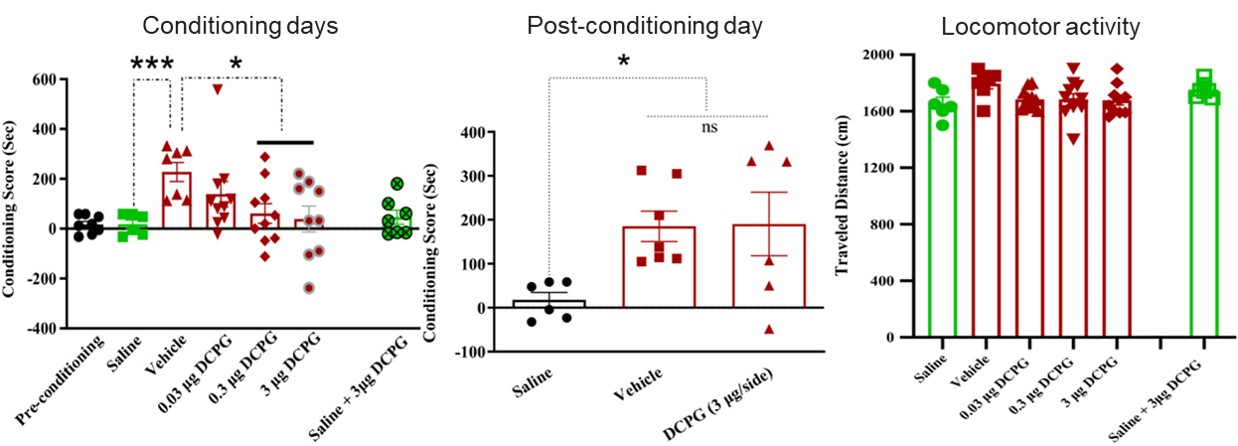 Fig. 2 Effects of S-3,4-DCPG on the acquisition, expression, and locomotor activity of morphine-induced CPP in Rats.2
References
- Barr, Gordon A et al. "Revisiting dezocine for opioid use disorder: A narrative review of its potential abuse liability." CNS neuroscience & therapeutics vol. 30,9 (2024): e70034. Distributed under Open Access license CC BY 4.0, without modification. https://doi.org/10.1111/cns.70034
- Kahvandi, Nazanin et al. "The effect of the mGlu8 receptor agonist, (S)-3,4-DCPG on acquisition and expression of morphine-induced conditioned place preference in male rats." Behavioral and Brain Functions: BBF vol. 17,1 1. Distributed under Open Access license CC BY 4.0, with modification. https://doi.org/10.1186/s12993-021-00174-0
For Research Use Only.