
Epilepsy Modeling & Pharmacodynamics Services
Introduction
Epilepsy remains a formidable global health challenge, affecting over 50 million people worldwide. While 20–30% of cases are acquired through brain insults, an estimated 70–80% are driven by complex genetic factors. Defined by recurrent, unprovoked seizures arising from hypersynchronous neuronal discharges, this chronic disorder demands highly nuanced therapeutic approaches. Creative Biolabs' platform provides a versatile portfolio of validated models spanning focal, generalized, genetic, and acquired epilepsies, supported by high-resolution Video-EEG and standardized behavioral analytics. By combining the latest in neurophysiological monitoring with a deep library of benchmarked models, we bridge the gap between basic discovery and clinical translation, providing the rigorous evidence required to de-risk next-generation anti-seizure medications and gene therapies. We empower sponsors to effectively quantify Anti-Seizure Medication (ASM) efficacy, evaluate the elevation of seizure thresholds, and validate anti-epileptogenic effects to intercept chronic disease progression.
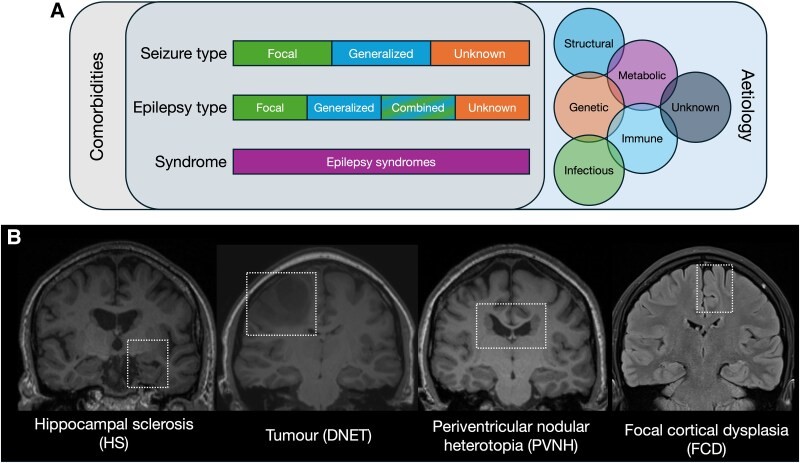 Fig.1 Challenge of heterogeneity in epilepsy. (A) Classification schema for epilepsy. (B) Common structural causes of epilepsy.1
Available Epilepsy Models
Our platform offers a mechanistically driven epilepsy research ecosystem, enabling sponsors to dissect drug efficacy across acute seizure suppression, status epilepticus rescue, and chronic disease modification. Leveraging a comprehensive suite of rodent and non-human primate (NHPs) models, we bridge the gap between early discovery and clinical translation. By integrating gold-standard benchmarks and advanced neurophysiological readouts, we provide the statistical power and biological insight necessary to de-risk anti-seizure drug development.
| Epilepsy Models | Application Values | Animal Species |
| Pentylenetetrazole (PTZ)-Kindling Acute Seizure Model | Utilizes GABAA receptor antagonism to evaluate seizure thresholds. A dual-approach system offering acute screening for anticonvulsants and chronic kindling for epileptogenesis research. By integrating Racine-scale behavioral scoring with gold-standard in vivo EEG and hippocampal molecular profiling, we provide comprehensive validation for anti-epileptic drug (AED) candidates. | Mouse, Rat |
| Kainic Acid (KA)-Kindling Temporal Lobe Epileptic Model | Triggers glutamate-mediated excitotoxicity (predominantly via kainate and AMPA receptors) to replicate the hallmarks of Temporal Lobe Epilepsy (TLE), including hippocampal sclerosis and spontaneous recurrent seizures (SRS). It serves as a premier platform for validating neuroprotective agents against benchmarks like Topiramate and Perampanel. | Mouse, Rat |
| LiCl-Pilocarpine-Kindling Temporal Lobe Epileptic Model | Employs lithium potentiation of muscarinic signaling to induce Status Epilepticus (SE) and subsequent chronic focal epilepsy. This model provides high translational fidelity for evaluating interventions targeting SE termination and chronic focal ictogenesis, benchmarked against Diazepam, Midazolam, and Levetiracetam. | Rat |
| 6-Hz Corneal Kindling Model | A specialized model for studying epileptogenesis and circuit-level remodeling. It assesses the ability of candidates to impede the progression from sub-threshold stimulation to permanent seizure states, validated against "non-traditional" ASMs such as Levetiracetam, Brivaracetam, and Cannabidiol (CBD). | Mouse |
| 6-Hz Corneal Seizure Test | An essential acute screening tool for pharmacoresistant (refractory) epilepsy. It uniquely identifies therapeutic efficacy in "low-frequency" psychomotor seizure circuits, effectively capturing the activity of agents like Levetiracetam that typically bypass detection in conventional Maximal Electroshock (MES) or PTZ assays. | Mouse |
| Pilocarpine induced Status Epilepticus Model | Induces prolonged, severe seizure activity (SE) to facilitate deep mechanistic investigations into neuroinflammation, reactive gliosis, and blood-brain barrier (BBB) compromise. It is optimized for testing disease-modifying therapies and emergency rescue protocols involving Phenobarbital or Ketamine. | Mouse |
| Maximal Electroshock Seizure (MES) Model | Targets voltage-gated sodium channels through transcorneal maximal electrical stimulation. It remains the industry standard for screening candidates against generalized tonic-clonic seizures, utilizing sodium channel blockers like Phenytoin, Carbamazepine, and Lamotrigine for pharmacological benchmarking. | Mouse |
Evaluation Platform
To ensure scientific rigor and maximize the value for regulatory filings, we offer a holistic pharmacodynamics (PD) evaluation framework:
- Translational Neurophysiology: High-resolution, 24/7 Video-EEG telemetry to quantify seizure frequency and duration, paired with qEEG power spectral analysis to monitor interictal discharges and neurophysiological rhythm restoration.
- Disease-Modifying Neuropathology: Quantitative mapping of structural rescue using Fluoro-Jade C (neurodegeneration) and Timm's staining (mossy fiber sprouting) to provide definitive evidence of inhibited circuit maladaptation.
- Comprehensive Safety & Comorbidity Profiling: Rigorous determination of ED50, TD50, and Therapeutic Index (TI), alongside a behavioral battery (Morris Water Maze, EPM) to evaluate the rescue of cognitive and psychiatric comorbidities.
- Molecular Neuroinflammation: Multi-color immunofluorescence (Iba1/GFAP) and Cytokine Arrays to characterize the drug's modulation of the glial and inflammatory cascades driving epileptogenesis.
- Cognitive & Behavioral Comorbidity Battery: Recognizing that epilepsy is a multi-faceted disorder, we assess functional recovery using the Morris Water Maze for spatial memory deficits and the Open Field/Elevated Plus Maze for anxiety and hyperactivity, ensuring that candidates improve overall quality of life.
Applications
- Mechanistic PD & Lead Optimization: High-resolution pathogenesis research utilizing longitudinal pharmacodynamics (PD) to optimize leads and dissect the cellular pathways of ictogenesis.
- Anti-Epileptogenesis Studies: Longitudinal evaluation of therapies designed to intercept the development of chronic epilepsy following initial brain insults, such as Traumatic Brain Injury (TBI) or Status Epilepticus (SE).
- Advanced ASM Efficacy Testing: Rigorous validation of Anti-Seizure Medications (ASMs) across diverse chemical and electrical induction models to establish precise dose-response curves and therapeutic windows.
- Gene Therapy & Modulator Validation: Specialized workflows for AAV gene therapies, synaptic modulators, and small molecules, integrating regional biodistribution with functional rescue data.
- Refractory Epilepsy Research: Specialized screening using the 6-Hz model and chronic kindling protocols to identify candidates for pharmacoresistant and treatment-refractory focal seizures.
- Safety & Pro-convulsant Screening: De-risking CNS drug development by ensuring new chemical entities do not inadvertently lower the seizure threshold or induce aberrant neurophysiological activity.
Our Advantages
- Integrated Model Spectrum: From acute screening (MES/PTZ) to refractory models (6-Hz) and chronic TLE (KA/Pilocarpine), providing the ideal pathological context for any ASM or gene therapy.
- Translational Neurophysiology: High-fidelity, 24/7 video-EEG telemetry to quantify spontaneous seizures (SRS), interictal discharges, and HFOs with clinical-grade precision.
- Disease-Modifying Evidence: Quantitative mapping of structural rescue via Timm's and FJC staining, proving a drug's ability to inhibit mossy fiber sprouting and neurodegeneration.
- End-to-End IND Support: Integrated workflows for small molecules and AAV gene therapies, combining functional rescue data with cognitive comorbidity and biodistribution profiles.
Work with Us
- Summarize the project requirements and fill in the information collection form.
- Sign a CDA from both parties to further communicate information, such as targets.
- Select an animal model, discuss experimental design, and determine assay parameters.
- Project costing and project schedule forecasting.
- We provide a detailed project plan, including the required sample quantities, methods, and protocols.
- Both parties confirm the project details and start the project.
- Confirm the timeline of the project.
- We provide periodic results and information on the animal's condition.
- We will work together to make project adjustments as necessary.
- We provide a comprehensive project report promptly.
- We arrange transportation for the produced samples.
- We provide a discussion of the project results and help to arrange the next steps.
- Data storage and archiving.
FAQs
-
Q: How do you score seizure severity in rodents?
A: We primarily use the Racine Scale (Stages 1-5), which correlates behavioral markers (from mouth smacking to generalized tonic-clonic falls) with EEG rhythmic discharges.
-
Q: Can you test gene therapies for Dravet Syndrome?
A: Yes, we offer specialized thermal challenge tests (hyperthermia induced seizures) to evaluate gene therapy rescue.
-
Q: Do you offer pharmacokinetic (PK/PD) correlation?
A: Yes. We can perform synchronized blood or CSF sampling to correlate plasma concentration with seizure suppression at specific time points.
-
Q: Which model is most appropriate for my drug's mechanism of action?
A: Selection depends on your target. MES is the standard for sodium channel blockers. PTZ is highly sensitive to GABAergic modulators. For refractory (drug-resistant) focal epilepsy, we recommend the 6-Hz Corneal Seizure Test, while Kainic Acid or Pilocarpine are the gold standards for studying TLE and neuroprotection.
-
Q: Can you evaluate the cognitive side effects or comorbidities of my candidate drug?
A: Yes. We integrate a behavioral battery including the Morris Water Maze (spatial memory) and Open Field/Elevated Plus Maze (anxiety/hyperactivity). This allows us to determine if your drug improves not just the seizures, but also the cognitive and psychiatric comorbidities common in epilepsy.
Published Data
Pretreatment with Valproic Acid (VPA) and Empagliflozin (EMPA) (1 & 3 mg/kg) dose-dependently attenuates PTZ induced hippocampal pathology by preserving neuronal ultrastructure in the CA3 region, modulating the CREB-BDNF pathway (enhancing mBDNF while balancing proBDNF levels), and suppressing neurodegeneration through the inhibition of BAX-mediated apoptosis and GFAP-positive reactive gliosis.
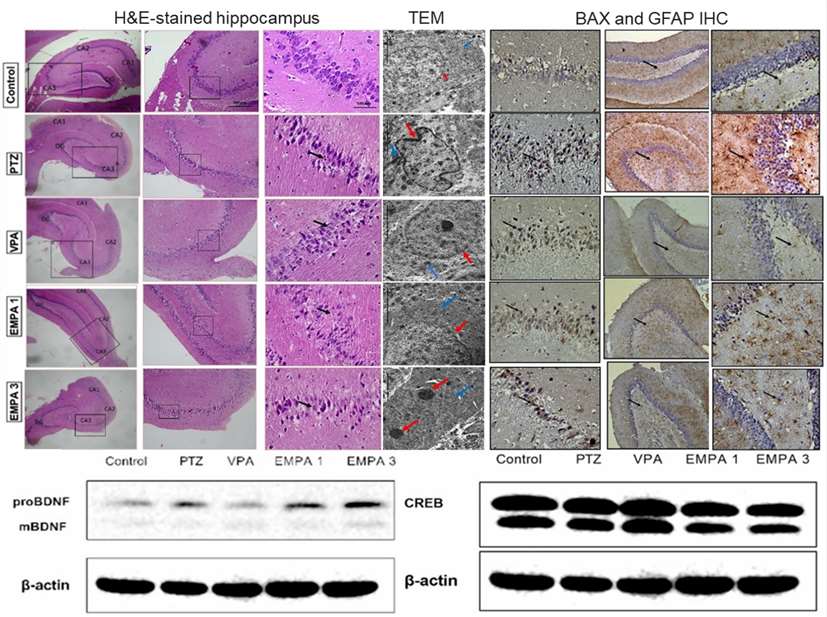 Fig. 2 EMPA dose-dependently ameliorates PTZ induced hippocampal neuronal damage in rats by modulating the Npas4-CREB-BDNF core signaling pathway.2
References
- Mito, Remika et al. "Towards precision MRI biomarkers in epilepsy with normative modelling." Brain: a journal of neurology vol. 148,7 (2025): 2247-2261. Distributed under Open Access license CC BY 4.0, without modification. https://doi.org/10.1093/brain/awaf090
- Abdelaziz, Heba A et al. "Empagliflozin Mitigates PTZ induced Seizures in Rats: Modulating Npas4 and CREB-BDNF Signaling Pathway." Journal of Neuroimmune Pharmacology: the Official Journal of the Society on NeuroImmune Pharmacology vol. 20,1 5. Distributed under Open Access license CC BY 4.0, with modification. https://doi.org/10.1007/s11481-024-10162-6
For Research Use Only.