
Long Bone Defect Modeling & Pharmacodynamics Service
Are you currently facing long drug development cycles, difficulty in achieving consistent bone bridging, or challenges in evaluating the efficacy of regenerative biologics in chronic nonunion environments? Our Long Bone Defect Modeling & Pharmacodynamics Service helps you accelerate drug discovery and obtain high-quality, reproducible efficacy data through innovative surgical techniques and high-end biomimetic evaluation platforms. Creative Biolabs empowers your R&D with precision-engineered models designed for the most demanding biopharmaceutical standards.
Overview of Long Bone Defect Modeling & Pharmacodynamics Service
Long bone defects represent a significant clinical challenge in orthopedics, occurring when bone loss exceeds the body's natural regenerative capacity. This physiological system relies on a delicate orchestration of Mesenchymal Stem Cell (MSC) recruitment, vascularization, and mineralized matrix deposition. When this process is interrupted, due to high-energy trauma, tumor resection, or systemic conditions like osteoporosis, the result is often a "Critical Size Defect" (CSD) or a chronic nonunion. These conditions lead to persistent pain, loss of mobility, and a profound burden on healthcare systems. Creative Biolabs provides specialized modeling services to evaluate therapeutic interventions that can re-ignite this stalled biological machinery.
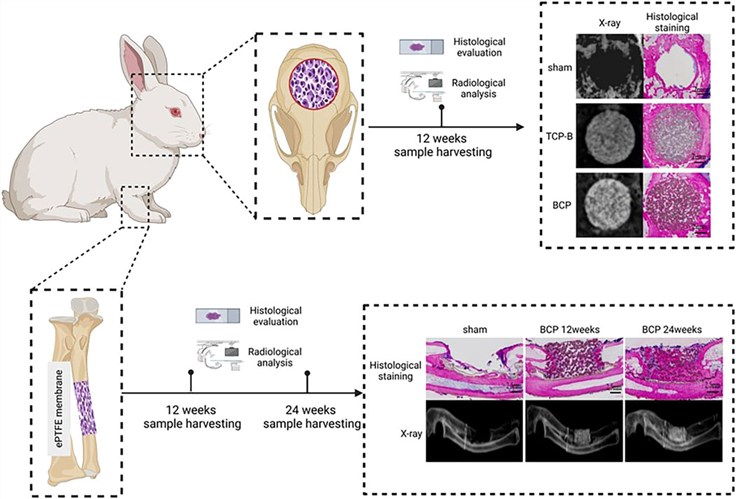 Fig.1 Schematic diagram of rabbit critical-size bone models.1,3
Long Bone Defect Models
Creative Biolabs specializes in the Long Bone Defect Model, utilizing the femur or tibia to provide a high-fidelity environment for weight-bearing and biomechanical analysis. This model is critical for evaluating how systemic and local therapies navigate the complex biological barriers of endochondral ossification to achieve successful bridging. While we provide a comprehensive suite of rodent models, our long bone platforms are uniquely engineered to simulate the rigorous clinical demands of trauma and chronic nonunion. These standardized models are essential for confirming therapeutic efficacy in restoring structural integrity and functional mobility.
Evaluation Platform of Our Service
Creative Biolabs provides a high-end evaluation platform to quantify every stage of the bone healing process. Our technical parameters include:
-
Biochemical & Molecular Analysis:
- Quantification of osteogenic markers (Runx2, Osteocalcin, ALP).
- Cytokine profiling (TNF-α, IL-6, BMP-2/7) via multiplex assays.
- Western Blot and qPCR for signaling pathway verification (Wnt/β-catenin).
-
Histopathological Examination:
- Standardized staining (H&E, Masson's Trichrome, Goldner's Trichrome).
- Immunohistochemistry (IHC) for vascular markers (CD31, VEGF).
- Validated scoring systems for callous maturity and bridging.
-
Behavioral & Functional Testing:
- Grip strength testing to assess mechanical stability recovery.
- Automated gait analysis for functional limb utilization.
- Motor coordination assessments in post-surgical recovery.
-
Advanced Imaging & Instrumentation:
- High-resolution Micro-CT (Bone Volume/Tissue Volume, Trabecular thickness).
- Dual-energy X-ray Absorptiometry (DEXA) for Bone Mineral Density (BMD).
- Torsional and 3-point bending tests for biomechanical strength.
Key Applications
Our models are designed to simulate a wide range of clinical indications, including:
- Critical Size Defects (CSD): Defects that will not heal without exogenous intervention.
- Chronic Nonunion: Modeling the failure of primary fracture healing over extended durations.
- Osteoporotic Bone Healing: Assessing efficacy in metabolically compromised environments.
Therapeutic Agents Evaluated:
- Small Molecules: Systemic or local delivery of osteogenic agonists.
- Biologics: Recombinant growth factors and monoclonal antibodies.
- Cell-Based Therapies: MSC-seeded scaffolds and fractionated adipose tissue grafts.
- Gene Therapies: Viral and non-viral vector delivery for localized factor expression.
Why Choose Us?
We provide highly validated strains of Rat and Rabbit, ensuring the right physiological scale for your specific therapeutic agent and surgical instrumentation requirements.
Creative Biolabs offers a seamless transition from initial in vitro screening to complex in vivo PD/PK studies, reducing the need for multiple vendors and streamlining your data package.
Our team is led by PhD-level specialists with decades of experience in orthopedic surgery and bone biology, supported by rigorous quality management systems that ensure every data point is audit-ready.
Work with Us
- Summarize the project requirements and fill in the information collection form.
- Sign a CDA from both parties to further communicate information, such as targets.
- Select an animal model, discuss experimental design, and determine assay parameters.
- Project costing and project schedule forecasting.
- We provide a detailed project plan, including the required sample quantities, methods, and protocols.
- Both parties confirm the project details and start the project.
- Confirm the timeline of the project.
- We provide periodic results and information on the animal's condition.
- We will work together to make project adjustments as necessary.
- We provide a comprehensive project report promptly.
- We arrange transportation for the produced samples.
- We provide a discussion of the project results and help to arrange the next steps.
- Data storage and archiving.
Frequently Asked Questions
-
Q: What is the typical duration of a Long Bone Defect study at Creative Biolabs?
A: Most studies run for 8 to 12 weeks to allow for full mineralized callus formation, though we can customize time points based on your drug's mechanism of action.
-
Q: Can you accommodate the evaluation of custom-designed 3D-printed scaffolds?
A: Absolutely. Our surgical team is experienced in the precise placement of various biomaterials within the defect site, and we can provide specialized Micro-CT analysis to distinguish between the scaffold and new bone.
-
Q: How do you ensure the reproducibility of the "Critical Size" in your models?
A: We utilize standardized surgical jigs and Gigli wire saws to ensure every defect is identical in length and volume, minimizing intra-group variability.
-
Q: Do you offer pharmacokinetic (PK) analysis alongside efficacy studies?
A: Yes, we provide integrated PD/PK services, including local tissue concentration analysis and systemic blood draws, to correlate drug exposure with bone healing outcomes.
Published Data
Objective: To evaluate the efficacy of a selective agonist in a chronic nonunion environment where traditional autologous grafting fails.
Model Used: A two-stage rat femoral nonunion model simulating a persistent, non-healing state.
Results: This model provides a stringent testing ground with a 0% spontaneous union rate in controls, ensuring high sensitivity for therapeutic evaluation. Treatment with the selective agonist achieved robust radiological bridging and significant gains in mineralized bone volume (BV/TV) and mechanical stiffness. By successfully rescuing a "non-healing" phenotype, this platform demonstrates superior utility for benchmarking novel osteoinductive agents and localized delivery systems against the most challenging bone repair benchmarks.
Creative Biolabs is your premier partner for Long Bone Defect Modeling & Pharmacodynamics Service. By combining surgical precision with multi-dimensional analytical depth, we provide the robust data needed to move your orthopedic candidates through the development pipeline with confidence. From initial material screening in rabbits to complex chronic nonunion studies in rats, our platform is built for your success. For detailed information on our orthopedic models or to discuss the specific requirements of your upcoming project, please contact our technical team.
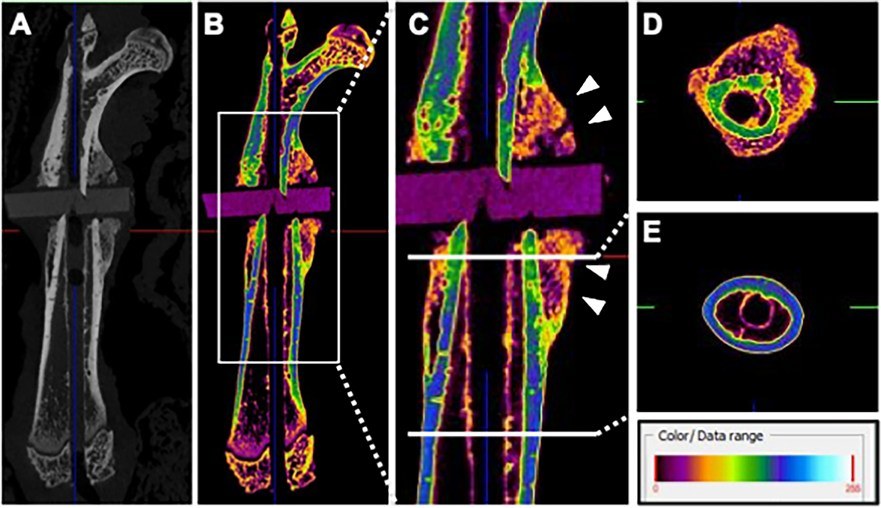 Fig.2 Micro-CT (μCT) visualizations of the femur three weeks post-initial surgery.2,3
References
- Lei, Wei, et al. "Establishing rabbit critical-size bone defects to evaluate the bone-regeneration potential of porous calcium phosphate ceramics." Frontiers in Bioengineering and Biotechnology 12 (2025): 1524133. DOI: https://doi.org/10.3389/fbioe.2024.1524133.
- Tateiwa, Daisuke, et al. "Development of a novel rat long-bone nonunion model and efficacy evaluation of a prostaglandin EP4 selective agonist (AKDS001) combined with iliac bone grafting." Bone & Joint Research 14.3 (2025): 166-175. DOI: https://doi.org/10.1302/2046-3758.143.BJR-2024-0220.R1.
- Distributed under Open Access license CC BY 4.0. The image has been modified; only part of the original image.
For Research Use Only.