
Neurological Disorder Modeling & Pharmacodynamics Services
Introduction
Neurological disorders have emerged as the foremost contributor to the global disease burden, generating the highest number of Disability-Adjusted Life Years (DALYs) since 1990 and impacting over three billion individuals with conditions like stroke, Alzheimer's disease, and migraine. This crisis, driven by population aging and exacerbated by profound resource inequality that concentrates mortality in low- and middle-income nations, mandates immediate coordinated international strategies to prioritize brain health and ensure universal access to specialized care. Creative Biolabs offers specialized integrated services for neurological disorder modeling and pharmacodynamics (PD) assessment, specifically designed to surmount the fundamental challenges of Blood-Brain Barrier (BBB) constraints and complex CNS pathophysiology. Our methodology unites advanced in vivo and in vitro models to deliver a comprehensive one-stop preclinical package, supporting diverse therapeutic modalities, including small molecules, biologics, and cell therapies. This integrated approach accurately delineates the drug's Mechanism of Action (MoA) and optimizes therapeutic regimens, thereby accelerating CNS drug development.
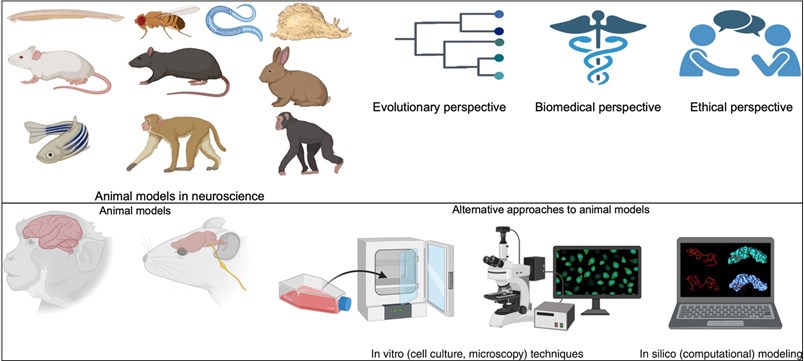 Fig.1 The convergence of evolutionary, biomedical, and ethical considerations defines the critical function of in vivo models in neuroscientific inquiry, concurrently stimulating the development of advanced, non-animal-based methodologies.1
Available Neurological Disorder Models
Neurological animal models offered by Creative Biolabs (e.g., rodents, rabbits, dogs, pigs, NHPs) are crucial tools connecting basic research to clinical translation. We offer a multi-dimensional portfolio of CNS disease models, covering the major areas of neurological disorders to meet needs from target validation to preclinical efficacy testing.
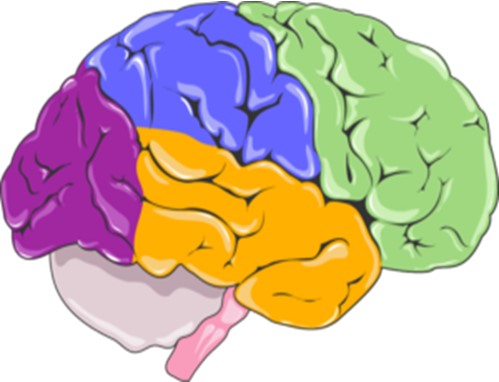
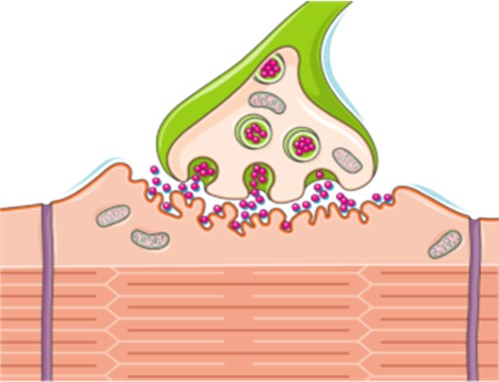
 Distributed under Open Access license CC BY-SA 4.0, from Wiki, without modification.
- Scopolamine-Induced Amnesia Model
- Aβ-Induced AD Model
- STZ-Induced AD Model
- 5xFAD Transgenic Mouse Model
- APP/PS1 Transgenic Mouse Model
- APPSWE Transgenic Mouse Model
- 3xTg-AD Mouse Model
- Goto-Kakizaki (GK) Rat Type II Diabetes AD Model
- AAV9-hTau-Induced AD Model
- High-fat Diet & CHOL-Induced AD Model
- Neurotoxin (phencyclidine-PCP or cisplatin)-Induced AD Model
- Aluminum Chloride & D-galactosamine-Induced AD Model
- MPTP-Induced PD Model
- 6-OHDA Unilateral Lesion PD Model
- AAV-Mediated Alpha-Synuclein Overexpression PD Model
- SOD1-G93A Transgenic Mouse ALS Model
- MOG35-55-Induced EAE Mice Model
- PLP-Induced EAE Mice Model
- MBP-Induced EAE Rat Model
- Cuprizone-Induced Demyelination Model
- Quinolinate-Induced HD Model
- 3-NY-Induced HD Model
- R6/2 Mouse HD Model
- Q175 Mouse HD Model
- Contusion SCI Model
- Compression SCI Models
- Transection SCI Model
- Formalin-Induced Inflammatory Pain Model
- Complete Freund’s adjuvant (CFA)-Induced Inflammatory Pain Model
- Carrageenan-Induced Inflammatory Pain Model
- Ang II-Induced Inflammatory Pain Model
- Acetic Acid-Induced Writhing Model
- Capsaicin-Induced Inflammatory Pain Model
- Cyclophosphamide-Induced Bladder Pain Syndrome (ICBPS) Model
- Osteoarthritis (OA) Pain Model
- Chemotherapy-Induced Neuropathic Pain Model
- Streptozotocin (STZ)-Induced Diabetic Neuropathy Model
- Spared Nerve Injury (SNI) Induced Neuropathic Pain Model
- Spinal Nerve Ligation (SNL) Induced Neuropathic Pain Model
- Partial Sciatic Nerve Ligation (PSL) Induced Neuropathic Pain Model
- Chronic Constriction Injury (CCI) Model Induced Neuropathic Pain Model
- Vincristine-Induced Neuropathy Model
- Cancer Pain Model
- Varicella-zoster virus (VZV)-Induced Pain Model
- Surgical Incision Pain Model
- Nitroglycerin (NTG)-Induced Model of Migraine
- Cortical Spreading Depression (CSD) Model of Migraine Aura
- Electrical Stimulation of Trigeminal Ganglion Model
- Amphetamine-Induced Schizophrenia Model
- Phencyclidine (PCP)-Induced Schizophrenia Model
- MK-801-Induced Schizophrenia Model
- Pentylenetetrazole (PTZ)-Kindling Acute Seizure Model
- Kainic Acid (KA)-Kindling Temporal Lobe Epileptic Model
- LiCl-Pilocarpine-Kindling Temporal Lobe Epileptic Model
- 6-Hz Corneal Kindling Model
- 6-Hz Corneal Seizure Test
- Pilocarpine-Induced Status Epilepticus Model
- Maximal Electroshock Seizure (MES) Model
- Chronic Unpredictable Mild Stress (CUMS) Model
- Chronic Social Defeat Stress (CSDS) Model
- Learned Helplessness (LH) Model
- Corticosterone (CORT)-Induced Depression Model
- Day-Night Reversal Model
- Para-chlorophenylalanine (PCPA)-Induced Sleep Deprivation Model
- Caffeine-Induced Sleep Disorder Model
- Morphine-Induced Addiction Model
- Cocaine-Induced Addiction Model
Evaluation Platform
We ensure the depth, breadth, and repeatability of all neurological model evaluations by integrating advanced technologies and specialized platforms, thus facilitating a multi-layered assessment of therapeutic efficacy and safety profiles through incorporation of a spectrum of analytical methodologies, spanning cognitive-behavioral evaluations to cutting-edge techniques in molecular biology and histopathology.
-
Behavioral Analysis:
- Motor Function: Utilizes rotarod testing, gait analysis, and the beam walk test to evaluate coordination and motor control.
- Cognitive Function: Assesses complex learning and memory via Morris Water Maze (MWM), novel object recognition (NOR), and fear conditioning paradigms.
- Social Behavior & Psychiatric Assessment: Measures social interaction and related behaviors using the three-chamber social test, alongside sensorimotor gating assessment via prepulse inhibition (PPI).
-
Pharmacodynamic (PD) and Biomarker Analysis:
- Microdialysis Analysis: Enables real-time monitoring of unbound drug concentration and neurotransmitter levels in specific, anatomically defined brain regions of awake, freely moving animals.
- Molecular & Biochemical Analysis: Utilizing standardized methods such as RT-qPCR, Western blot, and ELISA (for pathological biomarkers like Aβ, Tau, and α-Synuclein), alongside large-scale 'omics' approaches, this analysis focuses on quantifying molecular changes, validating pathway modulation, and measuring disease-specific biomarker levels following drug intervention.
- Electrophysiology Analysis: Utilizing field potential recordings (fEPSP) or EEG monitoring to assess neural circuit activity, synaptic plasticity, and seizure thresholds.
- Histopathology & Imaging Analysis: Encompass tissue-level analysis through immunohistochemistry (IHC), fluorescent microscopy, confocal microscopy, stereology, and advanced in vivo imaging (e.g., PET, MRI) to assess critical pathological endpoints such as plaque burden, neuroinflammation (microglial/astrocyte activation), neuronal survival, and gliosis within specific CNS regions.
Applications
- Target Validation: These models are utilized for confirming the role of novel targets in disease pathology.
- Lead Optimization: These models enable rapid screening and comparatively assessing the in vivo efficacy, safety profile, and pharmacokinetics of multiple compounds to select molecules with superior properties for CNS penetration and target engagement.
- MoA Studies: These models facilitate gaining granular MoA insight through advanced analytical techniques, notably microdialysis (for real-time, localized concentration measurement) and comprehensive molecular analysis.
- Preclinical Candidate Selection (PCC): These models are essential for compiling the essential, regulatory-compliant efficacy, safety, and integrated PK/PD data packages required for the submission of an investigational new drug (IND) application.
- New drug R&D: These models are indispensable across the R&D pipeline for a diverse spectrum of therapeutic modalities, such as small molecules, biologics (e.g., antibodies and proteins), advanced cell and gene therapies (e.g., AAVs, stem cells), and oligonucleotides (e.g., ASOs, siRNAs).
Our Advantages
- Deep Expertise: Investigations are conducted exclusively by a dedicated team of seasoned neuropharmacology experts, which guarantees robust scientific rigor throughout the entirety of experimental methodology and subsequent data interpretation.
- Mechanism-Driven PD Modeling: Moving beyond simple endpoint measurements, we employ Mechanism-based PD Models that integrate complex disease biology and the drug's mechanism of action into the framework. This facilitates a deeper understanding of the time course and molecular pathways of drug effects, enabling more scientifically grounded decisions.
- Customized Solutions: Ability to rapidly develop and validate novel models based on client-specific needs (e.g., rare disease models, specific routes of administration, tailored endpoints).
- One-Stop Service: Seamlessly combining model generation, PK, PD, and biomarker analysis.
Work with Us
- Summarize the project requirements and fill in the information collection form.
- Sign a CDA from both parties to further communicate information, such as targets.
- Select an animal model, discuss experimental design, and determine assay parameters.
- Project costing and project schedule forecasting.
- We provide a detailed project plan, including the required sample quantities, methods, and protocols.
- Both parties confirm the project details and start the project.
- Confirm the timeline of the project.
- We provide periodic results and information on the animal's condition.
- We will work together to make project adjustments as necessary.
- We provide a comprehensive project report promptly.
- We arrange transportation for the produced samples.
- We provide a discussion of the project results and help to arrange the next steps.
- Data storage and archiving.
FAQs
-
Q: How do you ensure that your animal models possess a high degree of clinical translatability?
A: To ensure elevated clinical translatability, we prioritize the external validity of neurological models, confirming their accurate simulation of human disease features spanning pathological, physiological, and genetic parameters. This rigorous approach frequently employs specialized platforms, such as transgenic or humanized mouse models that express human genes or NHP models. This strategic model selection effectively mitigates confounding species-specific divergences, particularly during the assessment of humanized therapeutic antibodies.
-
Q: How do you select the appropriate disease model?
A: Model selection depends on your research phase (mechanism exploration vs. efficacy validation) and the subtype of the target disease. We recommend models with the highest construct validity and face validity aligned with your drug's MoA and project goals.
-
Q: Can you handle biologics?
A: Yes, our infrastructure incorporates specialized technical capabilities for handling biologics (e.g., antibodies, gene therapies) and advanced therapeutics, specifically featuring dedicated delivery techniques and bespoke bioanalytical methodologies designed for these complex modalities.
-
Q: How do you address the two core challenges in CNS drug development: the BBB and complex disease pathophysiology?
A: To overcome the BBB challenge in CNS drug development, we employ a dual-pronged strategy: first, establishing precise PK and bioanalytical platforms to quantitatively confirm successful drug penetration across the BBB by measuring therapeutic concentrations in the CSF or brain tissue; second, utilizing various administration routes (e.g., Intracerebroventricular (ICV), Intrathecal (IT), and Intranasal delivery) coupled with microdialysis to directly measure the unbound drug concentration in the brain tissue, ensuring precise efficacy assessment post-delivery. Concurrently, we employ Mechanism-based PD Models that fully incorporate disease biology and the drug's mechanism of action, thereby deepening the understanding of molecular pathways and the time course of drug effects.
Published Data
The anti-PrP monoclonal antibody demonstrated a comprehensive therapeutic effect in AD transgenic mice by inhibiting the pathological overexpression of PrP and reducing Aβ deposition, successfully reversing associated cognitive deficits.
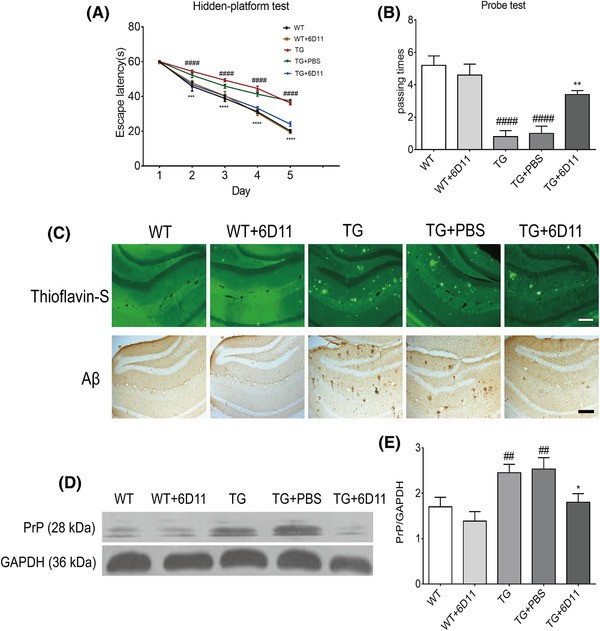 Fig.2 Antibody treatment reverses cognitive deficits and restores the amyloid pathology and prion protein expression in transgenic (TG) mice.3
References
- Neziri, Sabina et al. "Animal models in neuroscience with alternative approaches: Evolutionary, biomedical, and ethical perspectives." Animal Models and Experimental Medicine vol. 7,6 (2024): 868-880. Distributed under Open Access license CC BY 4.0, with modification. https://doi.org/10.1002/ame2.12487
- Neurodegenerative Disease Models, Motor Neuron & Muscular Disease Models, Psychiatric & Neurodevelopmental Disorder Models, and Acute Injury & Episodic Disorder Models are illustrated with images sourced from Servier Medical Art. Distributed under Open Access license CC BY 4.0, without modification.
- Li, Ruolin et al. "Anti-PrP monoclonal antibody as a novel treatment for neurogenesis in mouse model of Alzheimer's disease." Brain and Behavior vol. 11,11 (2021): e2365. Distributed under Open Access license CC BY 4.0, without modification. https://doi.org/10.1002/brb3.2365
For Research Use Only.