
Dystonia (DT) Modeling & Pharmacodynamics Services
Are you currently facing long drug development cycles, difficulty in identifying precise molecular targets, or challenges in replicating the complex motor "co-contractions" seen in clinical patients? Our Dystonia Modeling & Pharmacodynamics Services help you accelerate drug discovery and obtain high-quality efficacy data through advanced 3-NP chemical induction, genetic mutant rat models, and high-resolution neurochemical analysis.
Overview of Dystonia (DT) Modeling
Dystonia is a complex neurological syndrome characterized by sustained or intermittent muscle contractions causing abnormal, often repetitive, movements or postures. Physiologically, it is recognized as a network disorder involving the cortico-basal ganglia-thalamo-cortical loop and the cerebellum. Related diseases include idiopathic torsion dystonia (ITD), focal dystonias like torticollis, and secondary hemidystonia resulting from metabolic insults or brain injury. Effective modeling requires replicating the "disinhibition" of motor pathways, where the brain fails to suppress unwanted muscle activity, providing a platform to test therapeutics that restore inhibitory tone or stabilize mitochondrial function.
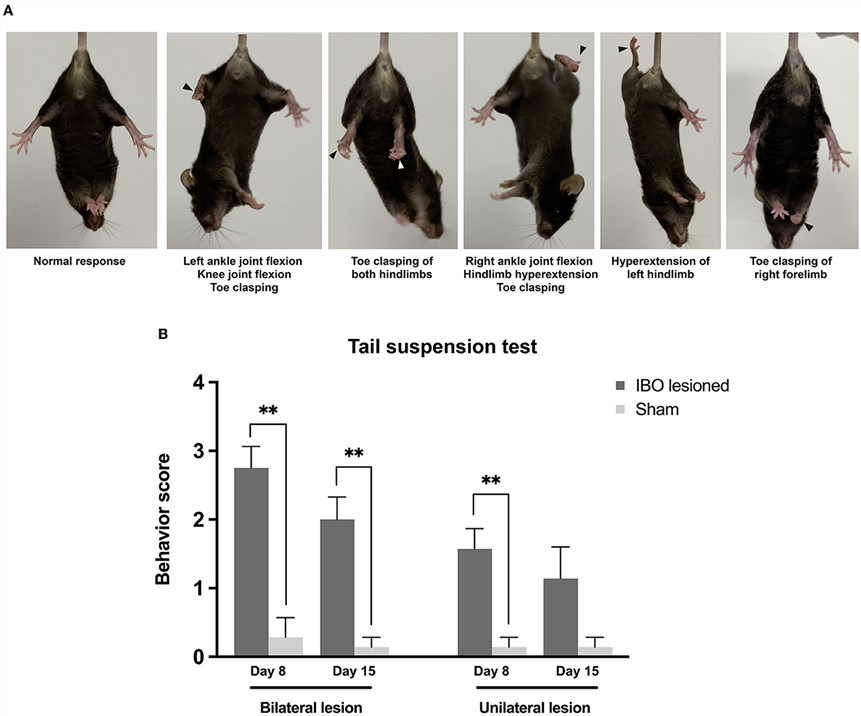 Fig.1 Development of an osteoporosis model induced by retinoic acid.1,3
Dystonia (DT) Models
Creative Biolabs provides a robust suite of validated rat models to simulate both primary and secondary dystonia. Our portfolio includes the 3-Nitropropionic Acid (3-NP) Induced Hemidystonia Model, which replicates striatal metabolic crisis and neurochemical imbalance, and the Genetic Mutant Dystonic (dt) Rat Model, which offers a "lesion-free" environment to study idiopathic biochemical fluctuations such as cerebellar norepinephrine surges. These models allow for the evaluation of both acute symptom relief and long-term neuroprotection.
| Models | Related Disease | Drug Evaluation | Animal Species |
| 3-Nitropropionic Acid Induced Dystonia (DT) Model | Secondary dystonia, Huntington's disease-like striatal lesions, mitochondrial metabolic encephalopathy, and symptomatic hemidystonia. | Antioxidants, mitochondrial protectors, GABAergic agonists, anti-inflammatory agents, and neurotrophic factors. | Rat, Rabbit |
Evaluation Platform of Our Service
Creative Biolabs utilizes a multi-dimensional analysis suite to provide deep insights into drug efficacy and mechanism of action:
-
Biochemical & Molecular Analysis:
- Neurotransmitter profiling (GABA, Glutamate, Aspartate, NE) via HPLC.
- Western Blot/qPCR for mitochondrial markers (SDH, ATP levels) and inflammatory cytokines.
-
Histopathological Examination:
- H&E and Nissl staining for striatal/cerebellar integrity.
- Immunohistochemistry (IHC) for reactive astrogliosis (GFAP) and microglial activation (Iba1).
- Transmission Electron Microscopy (TEM) for mitochondrial cristae evaluation.
-
Behavioral & Functional Testing:
- Automated gait analysis and rotarod for motor coordination.
- Dystonia scale scoring (postural twisting, limb clasping).
- EMG recording to measure agonist-antagonist muscle co-contraction.
-
Advanced Imaging & Instrumentation:
- 7.0-T High-field MRI for localized lesion monitoring.
- Micro-CT for structural assessments where applicable.
Key Applications
Our Dystonia models are designed to simulate a wide range of indications, including Generalized Torsion Dystonia, Focal Torticollis, and Symptomatic Hemidystonia. We provide a rigorous testing ground for diverse therapeutic modalities:
- Small Molecules: GABA-mimetics, glutamate antagonists, and antioxidants.
- Biologics: Targeted protein therapeutics and neurotrophic factors.
- Gene Therapies: Viral vector delivery for circuit-specific modulation.
- Cell-Based Therapies: Investigating striatal cell replacement and integration.
Why Choose Us?
We offer meticulously characterized Rat strains, including specialized mutant lines that mirror human inheritance patterns.
Our platform supports your project from initial in vitro screening through to complex in vivo PD/PK studies, ensuring data continuity.
Our team is led by PhD-level neuroscientists with over 20 years of experience in movement disorder research, supported by a rigorous quality management system that ensures reproducible, publication-ready data.
Work with Us
- Summarize the project requirements and fill in the information collection form.
- Sign a CDA from both parties to further communicate information, such as targets.
- Select an animal model, discuss experimental design, and determine assay parameters.
- Project costing and project schedule forecasting.
- We provide a detailed project plan, including the required sample quantities, methods, and protocols.
- Both parties confirm the project details and start the project.
- Confirm the timeline of the project.
- We provide periodic results and information on the animal's condition.
- We will work together to make project adjustments as necessary.
- We provide a comprehensive project report promptly.
- We arrange transportation for the produced samples.
- We provide a discussion of the project results and help to arrange the next steps.
- Data storage and archiving.
Frequently Asked Questions
-
Q: Which model is best for studying mitochondrial-linked dystonia?
A: The 3-NP induced rat model is ideal, as it specifically inhibits succinate dehydrogenase, mimicking the metabolic failure often seen in human mitochondrial dystonias.
-
Q: What is the typical turnaround time for a pharmacodynamics study?
A: Most studies, including model induction and behavioral readout, are completed within 4-6 weeks. Contact us for a detailed project timeline.
-
Q: Do you offer custom behavioral scoring?
A: Absolutely. We can adapt our scoring matrices to align with your specific therapeutic targets or clinical scoring criteria.
-
Q: How do you ensure the stability of the genetic mutant lines?
A: Creative Biolabs maintains strict breeding protocols with regular genotyping to ensure the phenotype remains consistent across all study cohorts.
Published Data
Objective: To evaluate the efficacy of circuit-based neuromodulation in restoring motor function in a network-disorder model.
Model Used: Sprague-Dawley Rats with Optogenetic modulation and chemical induction.
Results: This sophisticated model successfully recapitulated complex dystonic phenotypes, providing a robust platform for circuit-level interrogation. Optogenetic manipulation of the cerebello-thalamic pathway effectively rectified aberrant "network kernels," leading to a significant reduction in limb clasping and a marked restoration of gait fluidity. The model's high spatiotemporal precision and translational fidelity allow for the definitive validation of high-frequency stimulation efficacy, proving it an indispensable tool for screening next-generation neuromodulation therapies and mapping symptomatic neural circuits.
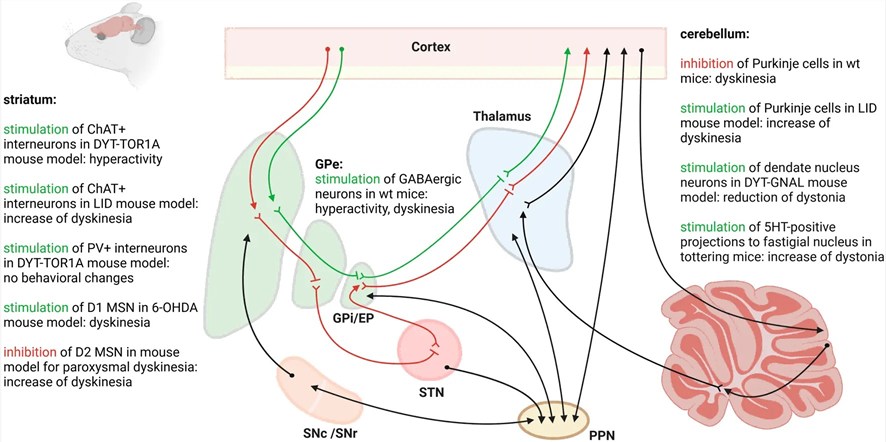 Fig.2 Targeting diverse cell populations and central motor circuit regions with optogenetics in rodent models of dystonia and levodopa-induced dyskinesias.2,3
Creative Biolabs is committed to providing the most sophisticated Dystonia (DT) modeling and pharmacodynamics services in the industry. Our integration of deep biological expertise with high-throughput evaluation platforms ensures that your therapeutic leads are validated with the highest degree of scientific rigor. Our team is standing by to provide the technical support and high-quality data you need for success.
References
- Su, Jun-Hui, et al. "Dystonia-like behaviors and impaired sensory-motor integration following neurotoxic lesion of the pedunculopontine tegmental nucleus in mice." Frontiers in Neurology 14 (2023): 1102837. DOI: https://doi.org/10.3389/fneur.2023.1102837.
- Rauschenberger, Lisa, and Chi Wang Ip. "Unraveling dystonia circuitry in rodent models using novel neuromodulation techniques." Dystonia 3 (2024): 11793. DOI: https://doi.org/10.3389/dyst.2024.11793.
- Distributed under Open Access license CC BY 4.0, without modification.
For Research Use Only.