
Osteoarthritis Modeling & Pharmacodynamics Services
Are you currently facing challenges such as poor clinical translatability, high variability in joint degradation, or inconsistent pain behavioral data? Our comprehensive service helps you validate therapeutic efficacy and de-risk your pipeline through high-fidelity animal models, utilizing advanced induction techniques and multi-dimensional evaluation platforms to ensure your lead candidates transition seamlessly from bench to bedside.
Overview of Osteoarthritis Modeling
Osteoarthritis (OA) is a chronic, degenerative musculoskeletal disorder characterized by the progressive breakdown of articular cartilage, subchondral bone remodeling, osteophyte formation, and synovial inflammation. As a whole-joint disease, it involves a complex interplay of mechanical, biochemical, and inflammatory pathways. Modeling these processes requires sophisticated in vivo systems that can simulate different etiologies, such as Post-Traumatic OA (PTOA) or age-related Primary OA (POA), allowing researchers to observe the therapeutic impact of novel compounds on joint structure and functional mobility.
Osteoarthritis Models
Creative Biolabs offers a robust portfolio of validated OA models designed to simulate various clinical subtypes. Our surgical models, such as ACLT and DMM, provide highly reproducible instability induced degradation, while chemical models like MIA are optimized for rapid analgesic screening. For researchers targeting age-related or metabolic OA, our spontaneous models offer the most natural progression of the disease. These models allow for the precise evaluation of chondroprotective agents, anti-inflammatories, and regenerative biologics across multiple species, including Mouse, Rat, Rabbit, Cat, and Dog.
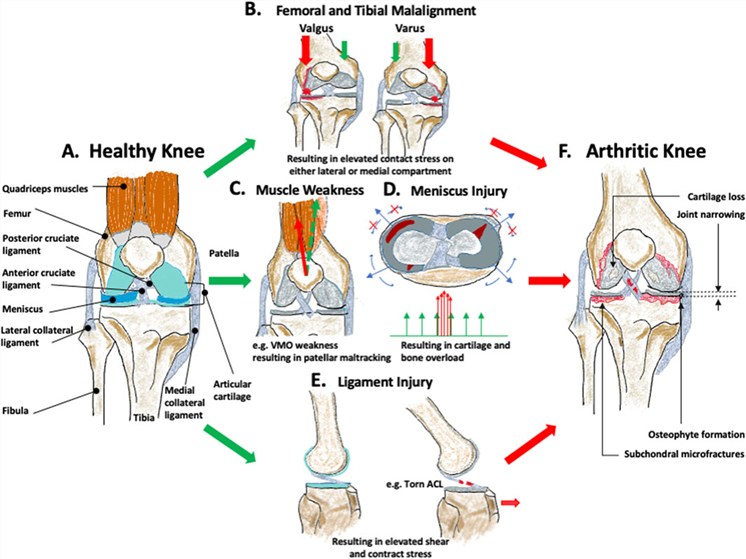 Fig.1 Biomechanical contributors to the development of OA.1,3
| Models | Related Disease | Drug Evaluation | Animal Species |
| MIA induced Osteoarthritis Model | Chronic arthritic pain; Inflammatory-driven joint degradation. | Rapid screening for analgesics, NSAIDs, and compounds targeting neuropathic or inflammatory pain pathways. | Mouse, Rat, Rabbit, Cat, Dog |
| Spontaneous Osteoarthritis Model | Age-related Primary OA (POA); Metabolic-associated OA. | Long-term evaluation of Disease-Modifying OA Drugs (DMOADs) and natural aging-related chondroprotective agents. | Guinea pig |
| Anterior Cruciate Ligament Transection (ACLT) induced Osteoarthritis Model | Post-Traumatic OA (PTOA); Ligamentous injury-related joint instability. | Evaluation of regenerative biologics, anti-catabolic agents, and treatments for secondary joint remodeling. | Rat, Rabbit |
| Medial Meniscal Tear (MMT) induced Osteoarthritis Model | PTOA following meniscal injury; Mechanical stress induced cartilage thinning. | Testing for chondroprotective therapeutics and inhibitors of subchondral bone remodeling. | Rat, Rabbit |
| Destabilization of the Medial Meniscus (DMM) induced Osteoarthritis Model | Slow-progressing PTOA; Mild-to-moderate clinical cartilage erosion. | Ideal for high-fidelity testing of DMOADs, gene therapies, and long-term structural repair interventions. | Rat, Rabbit |
| Destabilization of the Medial Meniscus (DMM) & Anterior Cruciate Ligament Transection (ACLT) induced Osteoarthritis Model | Complex joint instability; Severe secondary OA. | Potency testing for combined therapies and intensive regenerative treatments in multi-tissue degradation environments. | Rat, Rabbit, Cat, Dog |
| Meniscectomy (MNX) induced Osteoarthritis Model | Severe PTOA; Total cartilage loss following traumatic meniscal loss. | Assessment of scaffold-based implants, tissue engineering, and aggressive cartilage repair modalities. | Rat, Rabbit |
| Anterior Cruciate Ligament Transection (ACLT) & Medial Meniscal Tear (MMT) induced Osteoarthritis Model | High-instability PTOA; Rapidly progressing joint degeneration. | Evaluation of therapeutic window and structural preservation for advanced-stage drug candidates. | Rat, Rabbit |
| Collagenase induced Osteoarthritis Model | Enzyme-mediated joint laxity; Inflammatory-driven OA. | Evaluation of catabolic enzyme inhibitors and synovial anti-inflammatory therapies. | Rat, Rabbit |
| Papain induced Osteoarthritis Model | Proteoglycan depletion-related OA; Early-stage articular degradation. | Screening for chondrogenic factors and stimulants of extracellular matrix (ECM) synthesis. | Rat, Rabbit |
Evaluation Platform of Our Service
Our technical platform is engineered to provide deep insights into joint health and therapeutic impact through a sophisticated suite of parameters.
-
Biochemical & Molecular Analysis
- Cytokine/Chemokine Profiling via Multiplex ELISA.
- Gene Expression Analysis via qPCR.
- Protein Quantification of degradation markers via Western Blot.
-
Histopathological Examination
- Standard Staining (H&E, Safranin-O/Fast Green, Toluidine Blue).
- Validated Scoring Systems.
- Immunohistochemistry (IHC) for Type II Collagen and Aggrecan.
-
Behavioral & Functional Testing
- Incapacitance Testing (Dynamic weight-bearing/asymmetry).
- Gait Analysis (Stride length, swing time, pressure distribution).
- Grip Strength and Motor Coordination (Rotarod testing).
- Mechanical Allodynia (Electronic Von Frey/Paw withdrawal).
-
Advanced Imaging & Instrumentation
- High-Resolution Micro-CT (Subchondral bone micro-architecture, osteophyte volume).
- MRI for soft tissue and synovial inflammation assessment.
- Bone Mineral Density (BMD) and Content (BMC) measurements.
Key Applications
Creative Biolabs' models are utilized to simulate various clinical indications and evaluate a wide array of therapeutic modalities:
- Indications: Post-traumatic OA, age-related primary OA, metabolic-associated OA, and chronic arthritic pain.
- Small Molecules: Selective inhibitors of catabolic enzymes or inflammatory pathways.
- Biologics: Monoclonal antibodies targeting pro-inflammatory cytokines.
- Gene Therapies: Viral or non-viral delivery of chondrogenic factors.
- Cell-Based Therapies: MSC-based regenerative treatments and scaffold-based implants.
Why Choose Us?
We offer a versatile range of validated strains and species, including Mouse, Rat, Rabbit, Cat, and Dog, enabling researchers to choose the most relevant biomechanical and physiological environment.
Our workflow is designed for efficiency, moving seamlessly from early in vitro screening to comprehensive in vivo PD/PK studies, all within a single collaborative framework.
Your projects are managed by a PhD-level team with decades of experience in musculoskeletal research, supported by a rigorous quality management system that ensures data integrity and reproducibility.
Workf with Us
- Summarize the project requirements and fill in the information collection form.
- Sign a CDA from both parties to further communicate information, such as targets.
- Select an animal model, discuss experimental design, and determine assay parameters.
- Project costing and project schedule forecasting.
- We provide a detailed project plan, including the required sample quantities, methods, and protocols.
- Both parties confirm the project details and start the project.
- Confirm the timeline of the project.
- We provide periodic results and information on the animal's condition.
- We will work together to make project adjustments as necessary.
- We provide a comprehensive project report promptly.
- We arrange transportation for the produced samples.
- We provide a discussion of the project results and help to arrange the next steps.
- Data storage and archiving.
Frequently Asked Questions
-
Q: How do I choose between a surgical (DMM) and a chemical (MIA) model?
A: It depends on your objective. DMM is best for studying disease-modifying effects over a longer period, while MIA is ideal for rapid screening of analgesics due to its robust pain phenotype. Our team can help you select the best fit during your initial consultation.
-
Q: Can Creative Biolabs evaluate the impact of my drug on subchondral bone?
A: Yes. We use high-resolution Micro-CT to analyze bone volume fraction, trabecular thickness, and osteophyte formation, providing a complete picture of joint remodeling.
-
Q: What is the typical study duration for a rabbit ACLT model?
A: Standard studies usually range from 4 to 12 weeks, depending on whether you are focusing on early inflammatory changes or long-term regenerative repair.
-
Q: Are custom protocols available for novel cell therapies?
A: Sure. Creative Biolabs specializes in bespoke study designs, including surgical implantation of scaffolds and specialized injection techniques tailored to your specific therapy.
Published Data
Objective: To evaluate the chondroprotective and anti-inflammatory efficacy of a novel therapeutic agent in a post-traumatic OA environment.
Model Used: Rat Anterior Cruciate Ligament Transection (ACLT) & Medial Meniscal Tear (MMT) induced Osteoarthritis Model.
Results: The ACLT+MMT model demonstrates exceptional sensitivity and translational fidelity for pharmacological profiling. Implementation of this platform revealed a 45% reduction in OARSI scores, showcasing the model's precision in quantifying structural chondroprotection. High-resolution Micro-CT and automated gait analysis provided synchronized, high-fidelity readouts of subchondral bone integrity and weight-bearing symmetry, effectively bridging structural changes with functional outcomes. Furthermore, its capacity to capture molecular shifts, including MMP-13 and IL-1β modulation, validates it as a robust system for dissecting dual-action mechanisms. This model offers a high-performance, reproducible gateway for accelerated OA drug discovery.
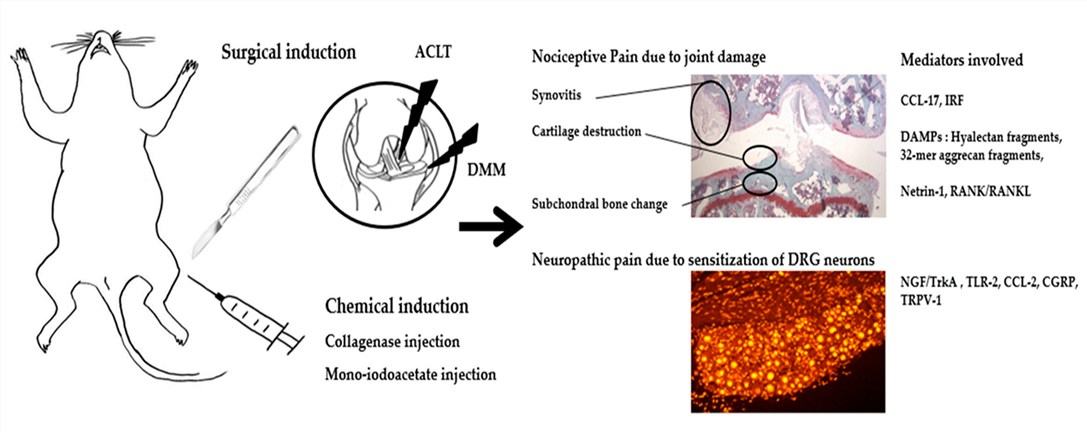 Fig.2 Overview of molecular pain mediators in an osteoarthritis animal model.2,3
Creative Biolabs is a premier provider of Osteoarthritis Modeling & Pharmacodynamics Services, offering a complete suite of validated models in Mouse, Rat, Rabbit, Cat, and Dog. From surgical induction to advanced behavioral and Micro-CT analysis, we provide the high-quality data necessary to advance your drug discovery programs. For detailed project discussions, pricing, or to request a technical consultation with our PhD-level experts, please reach out to our team.
References
- Xu, Luyang, et al. "A synoptic literature review of animal models for investigating the biomechanics of knee osteoarthritis." Frontiers in Bioengineering and Biotechnology 12 (2024): 1408015. DOI: https://doi.org/10.3389/fbioe.2024.1408015.
- Hong, Jeong-Im, In Young Park, and Hyun Ah Kim. "Understanding the molecular mechanisms underlying the pathogenesis of arthritis pain using animal models." International Journal of Molecular Sciences 21.2 (2020): 533. DOI: https://doi.org/10.3390/ijms21020533.
- Distributed under Open Access license CC BY 4.0, without modification.
For Research Use Only.