
Rotator Cuff Injury Modeling & Pharmacodynamics Service
Are you currently facing high clinical failure rates, inconsistent preclinical data, or difficulty in quantifying tendon-to-bone healing? Our Rotator Cuff Injury Modeling & Pharmacodynamics Service helps you validate therapeutic efficacy and accelerate regulatory submission through standardized, high-fidelity Rat and Rabbit models. Creative Biolabs addresses these challenges using innovative surgical techniques and multi-dimensional analysis platforms to ensure your biologics, small molecules, or scaffolds achieve measurable success.
Overview of Rotator Cuff Injury Modeling & Pharmacodynamics Service
The rotator cuff is a complex functional unit comprising the supraspinatus, infraspinatus, teres minor, and subscapularis tendons. These structures are critical for shoulder stability and range of motion. However, they are highly susceptible to both acute traumatic tears and chronic degenerative injuries. Related diseases, such as subacromial impingement syndrome and massive rotator cuff tears, affect millions globally, often leading to permanent disability if the tendon-to-bone interface (the enthesis) fails to regenerate. Creative Biolabs provides specialized modeling services that replicate the mechanical environment and pathophysiology of these conditions, allowing for the rigorous testing of regenerative therapies.
Rotator Cuff & Tendon Injury Models
Creative Biolabs offers highly reproducible surgical models designed to evaluate drug efficacy and scaffold integration. Our Rotator Cuff Injury Model (Rat and Rabbit) specifically targets the supraspinatus tendon. We specialize in creating "massive defects", complete segmental voids that simulate chronic retraction, to test the bridging capabilities of advanced biomaterials. These models are designed to minimize spontaneous healing, ensuring that all observed recovery is a direct result of your therapeutic intervention.
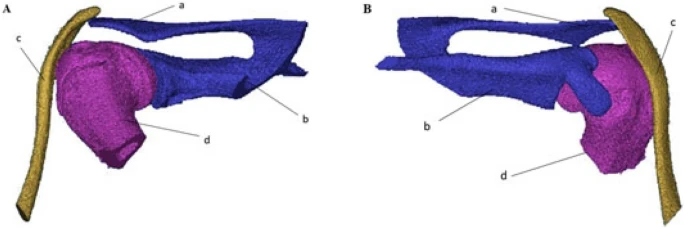 Fig.1 3D reconstruction model of rat shoulder from CT scan.1,3
Evaluation Platform of Our Service
Creative Biolabs provides a multi-dimensional analysis suite to quantify structural and functional recovery. Our technical parameters include:
-
Biochemical & Molecular Analysis:
- Quantification of pro-inflammatory cytokines (IL-1β, TNF-α, COX-2) via ELISA.
- Protein expression analysis (Western Blot) for Tenomodulin and Scleraxis.
- Gene expression profiling (qPCR) of Collagen Type I/III ratios.
-
Histopathological Examination:
- Standardized staining (H&E, Picrosirius Red, Masson's Trichrome).
- Semi-quantitative scoring systems for tendon organization and cellularity.
- Immunohistochemistry (IHC) for vascularization and macrophage polarization (M1/M2).
-
Behavioral & Functional Testing:
- Grip strength measurement to assess return of motor function.
- Gait analysis (treadmill testing) for limb symmetry and weight-bearing.
- Range of motion (ROM) and motor coordination assessments.
-
Advanced Imaging & Instrumentation:
- Micro-CT: High-resolution analysis of bone mineral density (BMD) at the enthesis.
- MRI: Non-invasive longitudinal tracking of tendon structural integrity.
- Biomechanical Testing: Load-to-failure, stiffness, and Young's modulus measurements.
Key Applications
Our models simulate a wide range of clinical indications, including:
- Acute Traumatic Tears: Evaluation of immediate surgical augmentation.
- Chronic Degenerative Tendinopathy: Assessing long-term healing in the presence of fatty infiltration.
- Subacromial Impingement: Testing anti-inflammatory and pain-relief agents.
Therapeutic Agents Evaluated:
- Small Molecules: Anti-inflammatories and collagen-promoting compounds.
- Biologics: Growth factors (BMPs, TGF-β), monoclonal antibodies, and PRP.
- Gene & Cell Therapies: Viral vector delivery and mesenchymal stem cell (MSC) applications.
- Biomaterials: Synthetic and ECM-based scaffolds for bridging massive defects.
Why Choose Us?
We offer validated, high-fidelity models in both Rat and Rabbit, tailored to the specific mechanical requirements of your project.
Creative Biolabs provides a seamless transition from in vitro biocompatibility screening to in vivo pharmacodynamics (PD) and pharmacokinetics (PK) studies.
Our PhD-level team ensures rigorous quality management, utilizing innovative suture techniques to prevent the mechanical failures common in standard animal models.
Work with Us
- Summarize the project requirements and fill in the information collection form.
- Sign a CDA from both parties to further communicate information, such as targets.
- Select an animal model, discuss experimental design, and determine assay parameters.
- Project costing and project schedule forecasting.
- We provide a detailed project plan, including the required sample quantities, methods, and protocols.
- Both parties confirm the project details and start the project.
- Confirm the timeline of the project.
- We provide periodic results and information on the animal's condition.
- We will work together to make project adjustments as necessary.
- We provide a comprehensive project report promptly.
- We arrange transportation for the produced samples.
- We provide a discussion of the project results and help to arrange the next steps.
- Data storage and archiving.
Frequently Asked Questions
-
Q: Why should I choose a rabbit model over a rat model for my scaffold testing?
A: While rats are excellent for molecular signaling, the larger size of the rabbit allows for the use of standard clinical surgical equipment and more accurate "massive defect" simulations. Creative Biolabs recommends the rabbit model for bridging scaffolds that require high mechanical load testing.
-
Q: How do you ensure the models are reproducible?
A: Creative Biolabs employs standardized surgical protocols, including specific defect lengths and hybrid suturing techniques. This minimizes variability and ensures your data is statistically significant.
-
Q: What is the typical turnaround time for a rotator cuff study?
A: Timelines vary based on the model (acute vs. chronic), but most efficacy studies provide initial histological and functional data within 4 to 12 weeks post-surgery.
-
Q: Are your models suitable for regulatory (IND) submissions?
A: Absolutely. Creative Biolabs' rigorous data collection and multi-dimensional evaluation platform are designed to meet the high standards required by regulatory bodies.
Published Data
Objective: To establish a reproducible massive supraspinatus defect model for evaluating scaffold-mediated regeneration.
Model Used: Rabbit Supraspinatus Tendon Defect (10mm segmental void).
Results: Using a hybrid Modified Mason-Allen and Lock-Loop suture technique, successfully bridged massive defects with zero scaffold dislocation. Histological analysis at 4 weeks showed that tendon-specific ECM scaffolds promoted highly organized collagen fiber alignment and superior mechanical integration at the bone-tendon interface compared to traditional acellular dermal matrices.
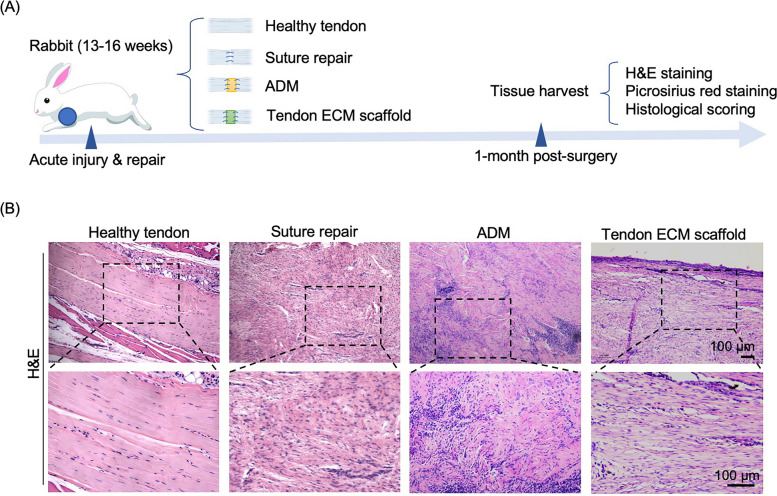 Fig.2 Histological evaluation with H&E staining to assess healing outcomes one month post-surgery.2,3
Creative Biolabs is your premier partner for Rotator Cuff Injury Modeling & Pharmacodynamics Service. Our commitment to scientific excellence, combined with our advanced Rat and Rabbit models, ensures that your regenerative therapies are validated with the highest degree of accuracy and clinical relevance. Our technical experts are standing by to help you design a study that meets your specific R&D goals.
References
- Yuan, Tao, et al. "The rat as a novel model for chronic rotator cuff injuries." Scientific Reports 14.1 (2024): 5344. Distributed under Open Access license CC BY 4.0, without modification. DOI: https://doi.org/10.1038/s41598-024-55281-5.
- Huang, Shuting, et al. "Establishing a rabbit model with massive supraspinatus tendon defect for investigating scaffold-assisted tendon repair." Biological Procedures Online 26.1 (2024): 31. DOI: https://doi.org/10.1186/s12575-024-00256-z.
- Distributed under Open Access license CC BY 4.0, without modification.
For Research Use Only.