
Musculoskeletal Disease Modeling & Pharmacodynamics Services
Are you currently facing long drug development cycles, high attrition rates in clinical trials, or difficulty in replicating human musculoskeletal pathology in preclinical settings? Our modeling services help you accelerate drug discovery and obtain high-fidelity pharmacodynamic data through advanced genetic models and multimodal evaluation platforms that bridge the gap between bench and bedside.
Overview of Musculoskeletal Disease Models
The musculoskeletal system is an intricate network of bones, muscles, tendons, ligaments, and cartilage that provides structure, support, and locomotion. Disorders within this system, ranging from osteoporosis and sarcopenia to osteoarthritis and rare genetic dystrophies, represent a massive global clinical burden, often leading to chronic pain and permanent disability. Musculoskeletal Disease Modeling involves the use of specialized rodent strains and induction techniques to replicate these human pathologies. These models are essential for understanding disease mechanisms and evaluating the efficacy of therapeutic interventions in a controlled, measurable environment.
Musculoskeletal Disease Models
Creative Biolabs offers a robust portfolio of validated models designed to simulate the full spectrum of musculoskeletal pathology. We utilize a combination of genetic engineering, surgical induction, and chemical interventions to create highly reproducible disease states. Our capabilities include various models, which are rigorously validated to ensure they meet the specific mechanistic requirements of your therapeutic candidate.
- MIA induced Osteoarthritis Model
- Spontaneous Osteoarthritis Model
- Anterior Cruciate Ligament Transection (ACLT) induced Osteoarthritis Model
- Medial Meniscal Tear (MMT) induced Osteoarthritis Model
- Destabilization of the Medial Meniscus (DMM) induced Osteoarthritis Model
- Destabilization of the Medial Meniscus (DMM) & Anterior Cruciate Ligament Transection (ACLT) induced Osteoarthritis Model
- Meniscectomy (MNX) induced Osteoarthritis Model
- Anterior Cruciate Ligament Transection (ACLT) & Medial Meniscal Tear (MMT) induced Osteoarthritis Model
- Collagenase induced Osteoarthritis Model
- Papain induced Osteoarthritis Model
- Surgically induced Osteoarthritis Model
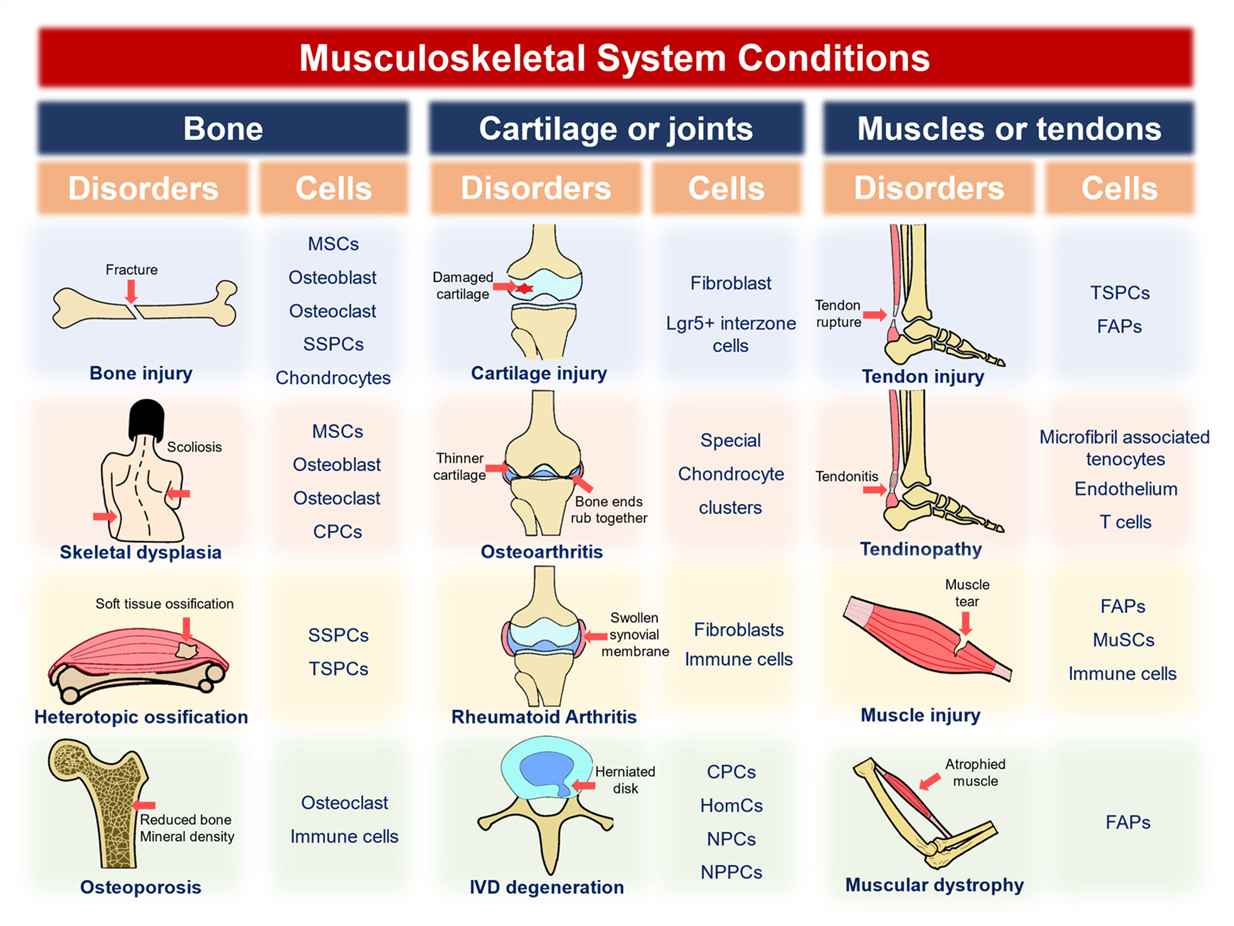 Fig.1 Illustrative diagram of musculoskeletal system disorders and associated cell populations.1,3
Evaluation Platform of Our Service
Our multidimensional analysis suite ensures no detail of the therapeutic response is overlooked. We provide a deep technical parameter list to demonstrate the depth of our platform:
-
Biochemical & Molecular Analysis
- Cytokine Profiling: Multiplex assays.
- Protein Expression: Western Blot and ELISA for collagen markers and muscle specific ligases.
- Genetic Signature: qPCR and RNA-seq for transcriptomic alignment.
-
Histopathological Examination
- Staining: H&E, Fast Green (cartilage), and Masson's Trichrome (fibrosis).
- IHC/IF: Localization of specific markers like Osteocalcin or MyoD.
-
Behavioral & Functional Testing
- Gait Analysis: Automated footprint and pressure sensing to detect subtle limping or imbalance.
- Strength Testing: Hindlimb and forelimb grip strength quantification.
- Motor Coordination: Rotarod and beam walking assessments.
-
Advanced Imaging & Instrumentation
- Micro-CT: High-resolution 3D analysis of bone volume (BV/TV), thickness, and porosity.
- DXA Scanning: Rapid measurement of Bone Mineral Density (BMD) and body composition.
- MRI: Soft tissue evaluation for tendon and ligament repair.
Key Applications
Clinical Indications: Age-related sarcopenia, postmenopausal osteoporosis, sports related tendon injuries, trauma induced fractures, and autoimmune driven arthritis.
Therapeutic Evaluations: Testing enzyme inhibitors and receptor antagonists.
Biologics: Evaluating monoclonal antibodies and growth factors.
Gene & Cell Therapies: Monitoring the long-term integration and efficacy of viral vectors or MSC based treatments.
Why Choose Us?
We maintain a diverse inventory of validated Mouse, Rat, Rabbit, Cat, and Dog strains, including various specialized transgenic lines, ensuring the background genetics suit your specific mechanism of action.
Creative Biolabs provides a seamless workflow from initial in vitro screening and target validation to complex in vivo PD/PK and safety studies. This one-stop approach reduces data fragmentation and accelerates your timeline.
Our musculoskeletal team is led by PhD-level scientists with decades of experience in bone and muscle biology. Every study is governed by a rigorous Quality Management System to ensure data integrity and regulatory readiness.
Workf with Us
- Summarize the project requirements and fill in the information collection form.
- Sign a CDA from both parties to further communicate information, such as targets.
- Select an animal model, discuss experimental design, and determine assay parameters.
- Project costing and project schedule forecasting.
- We provide a detailed project plan, including the required sample quantities, methods, and protocols.
- Both parties confirm the project details and start the project.
- Confirm the timeline of the project.
- We provide periodic results and information on the animal's condition.
- We will work together to make project adjustments as necessary.
- We provide a comprehensive project report promptly.
- We arrange transportation for the produced samples.
- We provide a discussion of the project results and help to arrange the next steps.
- Data storage and archiving.
Frequently Asked Questions
-
Q: How do you ensure the animal models accurately reflect human disease?
A: We are comparing the gene expression profiles of our models against known human disease signatures. This ensures that the biological pathways your drug targets are active and relevant in our models.
-
Q: Can you accommodate custom study designs for novel delivery methods?
A: Sure. We frequently handle specialized delivery routes, including intra-articular injections, local scaffold implantation, and osmotic pump installation for continuous infusion.
-
Q: Do you offer longitudinal data collection?
A: Yes. Through non-invasive imaging, we can track the same animal over multiple time points, providing powerful internal controls and reducing the total number of animals required.
-
Q: How do I get started with a pilot study?
A: Simply contact our team via the inquiry prompt below. We offer initial consultations to help define your study objectives and select the most cost-effective model for your project.
Published Data
Objective: To determine if molecular signatures of sarcopenia are conserved across species and can be used to validate rodent models for human translation.
Model Used: Multi rodent comparison (Mice and Rats) anchored by phenotypic measurements (Grip Strength and Fiber Type analysis).
Results: The study identified a core set of conserved genes across mice, rats, and humans related to mitochondrial function and proteostasis. Results demonstrated that chronological age is a secondary predictor of phenotypic loss; molecular changes correlate most strongly with actual muscle mass loss. This confirms that focus on phenotypic anchoring ensures superior translational predictive value for human clinical trials.
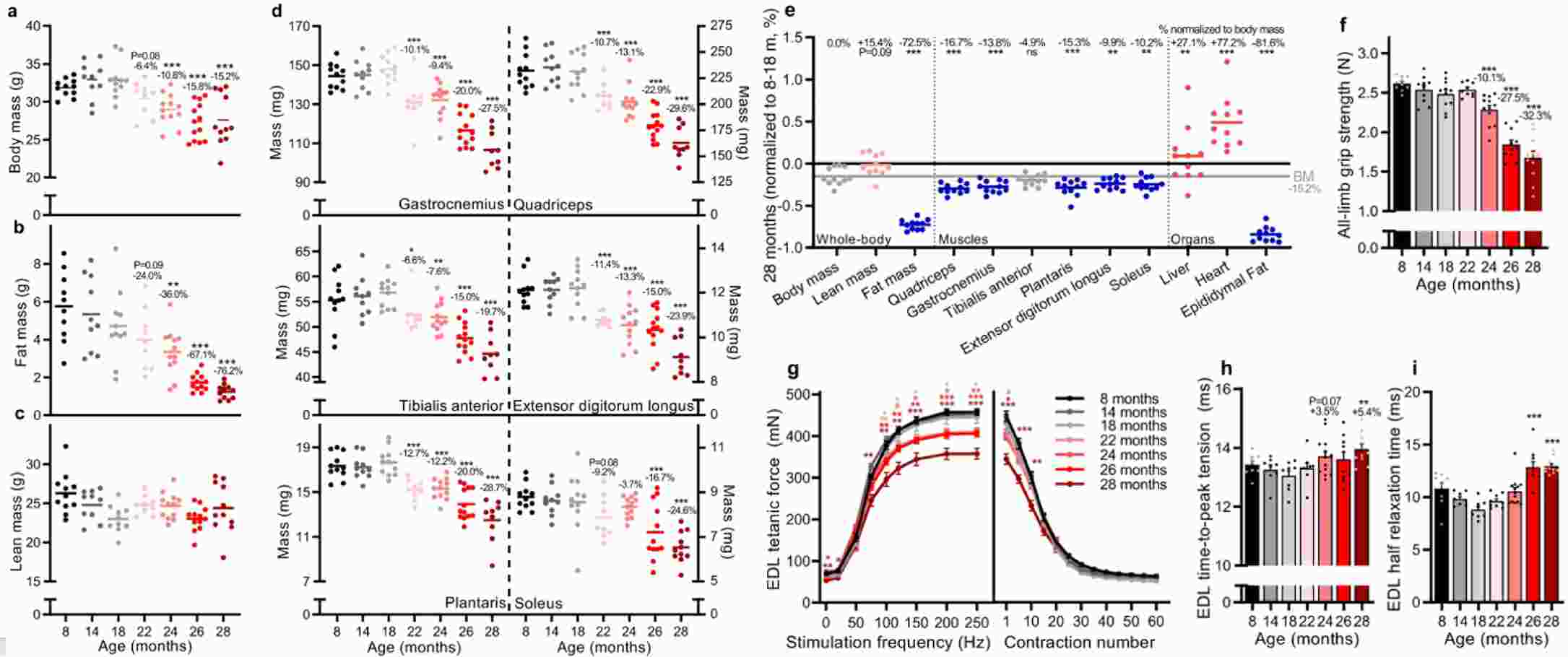 Fig.2 Progressive decline in muscle mass and function in an aging male mouse model.2,3
Creative Biolabs is your dedicated partner in Musculoskeletal Disease Modeling & Pharmacodynamics. By combining cutting-edge genetic models with a comprehensive multimodal evaluation platform, we provide the high-quality data necessary to de-risk your pipeline and move your therapies from the lab to the patient with confidence. For detailed project discussions, technical inquiries, or to request a quote, please reach out to our scientific team.
References
- Feng, Site, et al. "Application of single-cell and spatial omics in musculoskeletal disorder research." International Journal of Molecular Sciences 24.3 (2023): 2271. DOI: https://doi.org/10.3390/ijms24032271.
- Börsch, Anastasiya, et al. "Molecular and phenotypic analysis of rodent models reveals conserved and species-specific modulators of human sarcopenia." Communications Biology 4.1 (2021): 194. DOI: https://doi.org/10.1038/s42003-021-01723-z
- Distributed under Open Access license CC BY 4.0, without modification.
For Research Use Only.