
Pain Modeling & Pharmacodynamics Services
Introduction
Pain is a complex physiological and psychological experience, with chronic forms debilitating over 20% of the global population. This massive unmet medical need persists because pain is driven by intricate biological mechanisms, including ion channel signaling and central sensitization. Since existing treatments like opioids often suffer from poor efficacy and side effects, and human testing is ethically restricted, high-fidelity preclinical animal models are indispensable for developing safer, next-generation analgesics. Creative Biolabs delivers an industry-leading pain modeling and pharmacodynamics platform, distinguished by a wide-ranging portfolio of clinically relevant models, spanning neuropathic, inflammatory, and cancer induced pain, that ensure high-fidelity replication of human pathologies. By integrating precise surgical induction with advanced automated sensory testing, such as automated von Frey and Hargreaves tests, we provide objective, reproducible, and robust pharmacodynamics (PD) data that minimize experimental bias. Our deep scientific expertise in peripheral and central sensitization, coupled with a focus on ion channel modulation and non-opioid mechanisms, allows us to offer nuanced mechanistic insights into your drug candidates. From rapid-onset acute pain evaluations to long-term stability studies for chronic conditions, our platform is engineered to de-risk the development process and accelerate the clinical translation of your drug candidates (e.g., next-generation non-opioid analgesics, novel ion channel blockers).
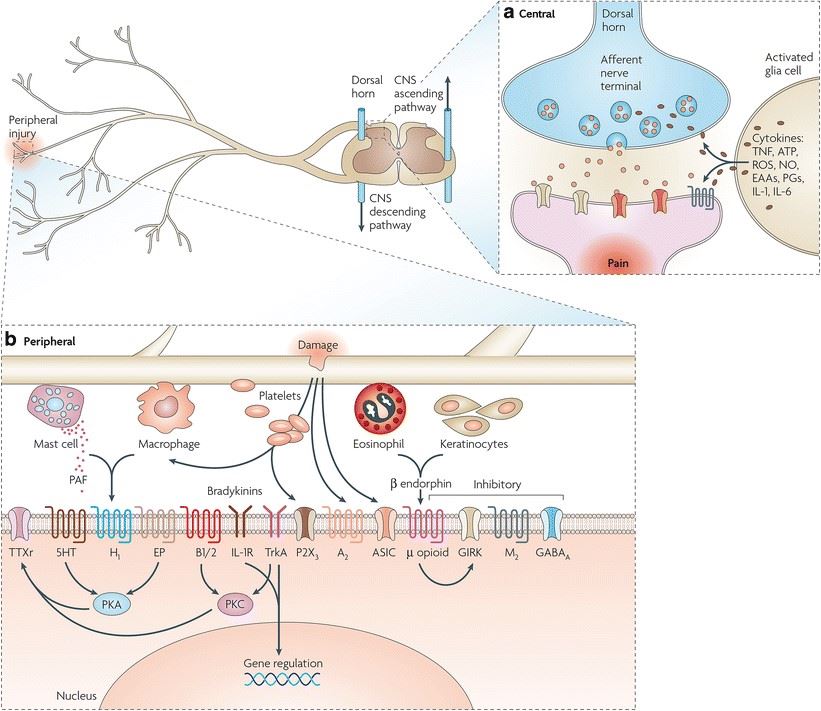 Fig.1 Central and peripheral mediators and neurochemicals associated with the pathophysiology of inflammatory, neuropathic, and chronic pain.1
Available Pain Models
We categorize our models by pathological mechanism to ensure the most relevant platform for your drug's mechanism of action (MoA). Our platform offers an extensive range of pain models categorized by their underlying mechanisms. These models provide high-fidelity environments for evaluating the efficacy of analgesics, anti-inflammatory agents, and nerve repair therapies.
| Pain Models | Modeling & Application Values | Animal Species |
| Formalin induced Inflammatory Pain Model | Intraplantar injection of formalin. Mimics acute and persistent pain, biphasic Pain Response: Intraplantar injection to distinguish acute (Phase I) vs. persistent inflammatory (Phase II) pain. Standard for differentiating central (Morphine) vs. peripheral (NSAIDs) analgesics. | Mouse, Rat |
| Complete Freund's adjuvant (CFA) induced Inflammatory Pain Model | Intraplantar injection of Complete Freund's Adjuvant. Chronic Inflammation: Replicates rheumatoid arthritis-like symptoms via persistent localized inflammation. Ideal for long-term efficacy studies of Anti-TNFα or COX-2 inhibitors. | Mouse, Rat |
| Carrageenan induced Inflammatory Pain Model | Intraplantar injection of λ-carrageenan. Mimics Acute Edema & Hyperalgesia. The standard for screening fast-acting NSAIDs and studying acute inflammatory cascades. | Mouse, Rat |
| Ang II induced Inflammatory Pain Model | Injection of Angiotensin II. Mimics vascular & neurogenic pain. Evaluates ACE inhibitors/ARBs to explore the vascular-pain link and GPCR-mediated TRP channel modulation; the premier choice for studying the renin-angiotensin system in peripheral pain sensitization. | Mouse |
| Acetic Acid induced Writhing Model | Intraperitoneal injection of acetic acid. Visceral Pain Screening. A rapid, sensitive screening tool for general visceral pain and the efficacy of both peripheral and central analgesics. | Mouse, Rat |
| Capsaicin induced Inflammatory Pain Model | Intraplantar or topical application of capsaicin. Directly activates TRPV1 receptors; used to study neurogenic inflammation and peripheral sensitization. | Mouse, Rat |
| Cyclophosphamide induced Bladder Pain Syndrome (ICBPS) Model | Systemic injection of Cyclophosphamide. Mimics interstitial cystitis/bladder pain syndrome for testing visceral analgesic drug candidates. | Mouse, Rat |
| Osteoarthritis (OA) Pain Model | Chemical Induction (MIA Model), Surgical Induction (DMM Model), Transgenic mice (e.g., Col2a1 mutations) Models. Joint Degeneration: Replicates clinical OA pain and weight-bearing asymmetry. Essential for evaluating the efficacy of novel analgesics and disease-modifying osteoarthritis drugs (DMOADs). | Mouse, Rat |
| Chemotherapy induced Neuropathic Pain Model | Administration of Oxaliplatin, Paclitaxel, or Vincristine. Drug induced Toxicity. Mimics the "glove and stocking" pain seen in cancer patients. Focuses on mitochondrial protection and axonal repair. Models peripheral neuropathy (CIPN) to study nerve damage caused by agents like oxaliplatin or paclitaxel. | Mouse, Rat |
| Streptozotocin (STZ) induced Diabetic Neuropathy Model | Systemic injection of Streptozotocin. Diabetic Neuropathy. Studies metabolic nerve damage and glucose-regulated pain thresholds. Essential for studying painful diabetic neuropathy (PDN) resulting from prolonged hyperglycemia. | Rat |
| Spared Nerve Injury (SNI) Induced Neuropathic Pain Model | Tight ligation of the L5 and/or L6 spinal nerves distal to the dorsal root ganglia. Gold standard for Mechanistic Study: Severely separates injured and uninjured fibers. It creates a very clean, reproducible model of central sensitization and is the premier choice for studying ion channel blockers (e.g., NaV 1.7/1.8). | Rat |
| Spinal Nerve Ligation (SNL) Induced Neuropathic Pain Model | Ligation and transection of the tibial and common peroneal branches of the sciatic nerve, leaving the sural nerve intact. The uninjured sural nerve becomes hypersensitive. This model provides the most persistent and stable mechanical allodynia (up to 6 months), making it ideal for studying chronic neuroinflammation and long-term drug efficacy. | Rat |
| Partial Sciatic Nerve Ligation (PSL) Induced Neuropathic Pain Model | A tight ligation of approximately 1/3 to 1/2 of the diameter of the common sciatic nerve at the high-thigh level. Replicates clinical "partial nerve injury" where injured and healthy fibers are intermingled. It is particularly useful for studying sympathetically maintained pain and testing topical or local analgesic agents. | Rat |
| Chronic Constriction Injury (CCI) Model Induced Neuropathic Pain Model | Produces robust and long-lasting pain symptoms (3–7 weeks). Mimics the "entrapment" neuropathies seen in humans. Induces mechanical/thermal allodynia and intraneural edema, replicates chronic compression and nerve inflammation. Validated for testing analgesics like gabapentin, morphine, and antidepressants. | Rat |
| Vincristine induced Neuropathy Model | Systemic administration (i.p. or i.v.) of Vincristine to induce microtubule disruption, leading to axonal transport failure and mitochondrial dysfunction. It accurately replicates clinical burning pain and sensorimotor deficits without significant bone marrow suppression, providing a highly specific platform for studying chemotherapy induced peripheral neuropathy (CIPN). | Rat |
| Cancer Pain Model | Intrafemoral inoculation of tumor cells (e.g., B16 melanoma). Models bone cancer pain (CIBP) or tumor-associated pain to assess breakthroughs in oncology supportive care. Used for testing bisphosphonates or bone-specific analgesics. | Mouse |
| Varicella-zoster virus (VZV) induced Pain Model | Inoculation of Varicella-zoster virus into the footpad. Mimics post-herpetic neuralgia (PHN) to study virus-associated persistent pain. Highly effective for testing Gabapentinoids (e.g., Gabapentin, Pregabalin), Gene Therapies, and Tricyclic Antidepressants. | Mouse, Rat |
| Surgical Incision Pain Model | Longitudinal incision of the skin and plantaris muscle. Replicates clinical post-operative pain. Evaluates the efficacy of local anesthetics or post-surgical pain management protocols, available to support translational PK/PD. | Mouse, Rat, Dog, Pig |
Evaluation Platform
Our platform features an integrated pain assessment system bridging behavioral reflexes with molecular mechanisms. By combining precise sensory quantification, affective evaluation, and rigorous motor controls with high-resolution pathology, we ensure unmatched data reliability and translational relevance. This multidimensional approach recapitulates clinical pain more accurately, providing gold-standard validation for analgesic drug discovery and mechanism elucidation.
- Evoked Sensory Testing: Determines pain thresholds through mechanical allodynia (PWT) via Von Frey filaments, thermal hyperalgesia (PWL) via the Hargreaves Test, and cold allodynia via cold plate or acetone tests.
- Functional & Affective Assessment: Captures postural asymmetry via the Incapacitance Test and emotional relief via Conditioned Place Preference (CPP). Includes Open Field and Grip Strength as rigorous controls to rule out sedation or motor impairment.
- Fine Motor & Gait Analysis: Detects subtle locomotor compensations using automated CatWalk XT systems to record footprint pressure and inter-limb coordination with high precision.
- Spontaneous Pain & Grimace Scales: Quantifies subjective distress via the Mouse/Rat Grimace Scale (MGS/RGS), scoring facial muscle changes (orbital tightening, whisker position). Monitors innate behaviors like burrowing and nesting to evaluate overall well-being.
- Automated Nociceptive Behavior: Utilizes AI-driven computer vision for 24/7 monitoring of flinching, licking, and scratching behaviors, eliminating observer bias and ensuring superior reproducibility.
- Molecular & Histopathology: Analyzes DRG injury markers (ATF3/CGRP) and spinal neuroinflammation (Iba1/GFAP). This enables precise investigation of ion channel modulation (NaV family) and signaling pathways for definitive target validation.
- In Vivo Neurophysiology & Imaging: Employs in vivo electrophysiology to record spinal firing rates and calcium imaging (miniscopes) to visualize real-time neuronal activity in the DRG or cortex.
Applications
- Novel Analgesics: Screening small molecules (e.g., NaV 1.7/1.8 blockers) and biologics (e.g., Anti-NGF).
- Tolerance & Dependence Studies: Evaluating the risk of opioid-like tolerance or withdrawal.
- Peripheral vs. Central Mechanisms: Distinguishing between site-of-action for topical versus systemic treatments.
- Drug Repurposing: Testing established compounds in new pain indications (e.g., CIPN).
Our Advantages
- Full-scale Portfolio of Clinically Relevant Models: To provide a high-fidelity replication of human pathologies, we offer an extensive portfolio of pain models, ranging from neuropathic pain (e.g., CCI, SNI, and spinal nerve ligation) and inflammatory pain (e.g., CFA, formalin, and carrageenan induced) to disease-specific conditions such as cancer pain models, diabetic neuropathy, and post-operative pain.
- Advanced Automated Sensory Testing: To ensure objective data and minimize human bias, we utilize state-of-the-art automated systems for sensory assessment, including automated von Frey filaments for mechanical allodynia and Hargreaves' tests or hot/cold plate assays for thermal hyperalgesia. In addition, our platform integrates In-depth locomotor and behavioral analysis, such as open field tests and gait analysis, to evaluate the impact of pain and analgesia on overall animal welfare and functional recovery.
- Deep Expertise in Peripheral and Central Sensitization: Our scientific team possesses profound expertise in the molecular mechanisms of pain, particularly the roles of ion channels (e.g., NaV 1.7, TRP channels) and neuro-inflammation. This allows us to provide specialized PD data for the development of next-generation non-opioid analgesics.
- Accelerated Clinical Translation: By bridging the gap between bench research and clinical reality, our platform is designed to de-risk your drug development pipeline. We provide the mechanistic insights necessary to transform your candidates into effective therapies with higher success rates in human trials.
Work with Us
- Summarize the project requirements and fill in the information collection form.
- Sign a CDA from both parties to further communicate information, such as targets.
- Select an animal model, discuss experimental design, and determine assay parameters.
- Project costing and project schedule forecasting.
- We provide a detailed project plan, including the required sample quantities, methods, and protocols.
- Both parties confirm the project details and start the project.
- Confirm the timeline of the project.
- We provide periodic results and information on the animal's condition.
- We will work together to make project adjustments as necessary.
- We provide a comprehensive project report promptly.
- We arrange transportation for the produced samples.
- We provide a discussion of the project results and help to arrange the next steps.
- Data storage and archiving.
FAQs
-
Q: Which animal species are available for your pain models?
A: We primarily utilize highly standardized rodent models (mice and rats) due to their well-characterized neurobiology. However, we also offer specialized large animal models upon request to better mimic human physiology for specific clinical translation requirements.
-
Q: Do you offer PK/PD correlation analysis?
A: Yes. We can integrate our pain modeling with pharmacokinetic (PK) services. By collecting blood or tissue samples at specific time points during behavioral testing, we can correlate drug plasma concentration with analgesic efficacy, helping you define the optimal therapeutic window.
-
Q: Can you accommodate the testing of non-traditional analgesics, such as biologics or cell therapies?
A: Yes. Our platform is optimized for a wide range of modalities, including small molecules (e.g., ion channel blockers), biologics (e.g., monoclonal antibodies), and gene therapies. We can customize the delivery routes, such as intrathecal, systemic, or local injections, to suit your candidate's specific mechanism of action.
-
Q: How do you prevent "observer bias" in behavioral pain testing?
A: All behavioral assessments are performed by technicians who are blinded to the treatment groups. We also utilize automated systems (Electronic Von Frey/Incapacitance meters) to minimize human error.
-
Q: Can you model Chemotherapy induced CIPN?
A: Yes, we provide models using Oxaliplatin, Paclitaxel, or Vincristine, focusing on the mechanical and cold allodynia that limits clinical dosing of these anticancer agents.
-
Q: What is the most sensitive test for osteoarthritis pain?
A: While Von Frey is useful, the Incapacitance Test (Static Weight Bearing) is more clinically relevant for OA, as it directly measures the animal's tendency to shift weight away from the painful limb.
Published Data
Aconitine exerts dual effects of direct analgesia and anti-inflammatory-mediated pain relief across acute, persistent, and chronic phases of inflammatory pain; characterized by a rapid onset, sustained potency throughout the metabolic stages, and stable efficacy during long-term administration, it represents a promising therapeutic candidate for inflammatory pain management.
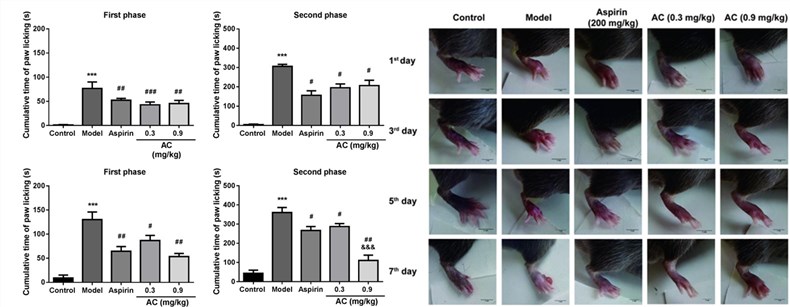 Fig. 2 Aconitine exhibits potent anti-nociceptive and anti-inflammatory activities by inhibiting formalin induced biphasic pain responses and alleviating CFA induced paw edema in mice.2
References
- Taneja, A et al. "Challenges in translational drug research in neuropathic and inflammatory pain: the prerequisites for a new paradigm." European journal of clinical pharmacology vol. 73,10 (2017): 1219-1236. Distributed under Open Access license CC BY 4.0, without modification. https://doi.org/10.1007/s00228-017-2301-8
- Deng, Jianhua et al. "Comparison of analgesic activities of aconitine in different mice pain models." PloS one vol. 16,4 e0249276. Distributed under Open Access license CC BY 4.0, with modification. https://doi.org/10.1371/journal.pone.0249276
For Research Use Only.