
Tendon Injury Modeling & Pharmacodynamics Services
Are you currently facing high clinical attrition rates, inconsistent injury localization in preclinical models, or difficulty in translating molecular efficacy to biomechanical recovery? Our Tendon Injury Modeling & Pharmacodynamics Services help you obtain reliable, human-relevant data and accelerate the development of regenerative therapies through advanced delivery techniques and high-resolution longitudinal monitoring. Creative Biolabs provides the precision required to bridge the gap between benchtop discovery and clinical success.
Overview of Tendon Injury Modeling & Pharmacodynamics Services
The human musculoskeletal system relies on the intricate architecture of tendons and ligaments to transmit forces from muscle to bone. Tendon injuries, ranging from acute traumatic ruptures to chronic tendinopathy (such as "Jumper's Knee" or Rotator Cuff syndrome), represent a significant global health burden due to the tissue's inherently low vascularity and slow regenerative capacity. Preclinical modeling is essential to understand the transition from the inflammatory phase to the remodeling phase. These models must replicate the histological hallmarks of human disease: collagen disorganization, hypercellularity, neovascularization, and mechanical weakening. Creative Biolabs provides sophisticated modeling that captures these nuances to evaluate drug efficacy accurately.
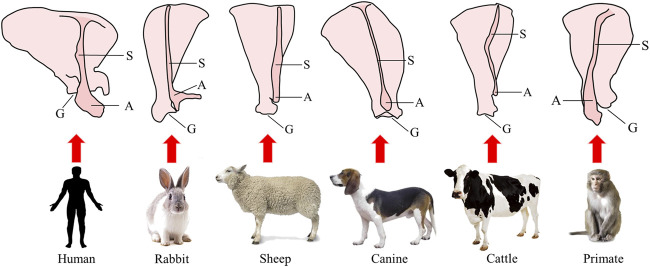 Fig.1 Illustrative diagram of scapular structure across humans and various animals.1,3
Tendon Injury Models
Creative Biolabs offers a suite of validated rodent and lagomorph models designed for high-fidelity recapitulation of human pathology. We provide the Achilles Tendon Injury Model, ideal for studying mechanical loading and systemic inflammation, and the Rotator Cuff Injury Model, which serves as the gold standard for shoulder-specific regenerative studies. Our platform specializes in collagenase-induced models stabilized by thermo-responsive hydrogels to prevent peritendinous leakage, ensuring that the injury remains localized to the target fibers. We offer these services in both Rat and Rabbit species to accommodate varying surgical and mechanical requirements.
| Models | Related Disease | Drug Evaluation | Animal Species |
| Achilles Tendon Injury Model | Acute Achilles tendon rupture, Mid-substance tendinopathy, Paratenonitis, and Haglund's deformity. | Evaluation of pro-regenerative biologics (PRP, BM-MSCs), anti-inflammatory small molecules, collagen-crosslinking agents, and systemic metabolic modulators. | Rat, Rabbit |
| Rotator Cuff Injury Model | Supraspinatus tendon tears, Subacromial impingement syndrome, Enthesopathy (bone-tendon junction degeneration), and age-related degenerative cuff disease. | Assessment of enthesis repair enhancers, matrix metalloproteinase (MMP) inhibitors, localized gene therapy vectors, and bio-scaffolds designed for mechanical reinforcement at the insertion site. | Rat, Rabbit |
Evaluation Platform of Our Service
Creative Biolabs provides a multi-dimensional analysis platform to ensure every aspect of tendon recovery is quantified.
-
Biochemical & Molecular Analysis
- Cytokine Assays: Multiplex ELISA for IL-1β, IL-6, and TNF-α.
- Molecular Expression: qPCR and Western Blot for Collagen Type I/III ratios, MMP-1, MMP-3, and TIMP expression.
- Oxidative Stress: SOD, MDA, and GPx activity assays.
-
Histopathological Examination
- Staining Suite: H&E.
- Scoring Systems: Validated Movin and Bonar scores for tissue quality.
- IHC: Localization of CD68+ macrophages, VEGF for neovascularization, and α-SMA.
-
Behavioral & Functional Testing
- Gait Analysis: Automated footprint tracking for functional recovery.
- Motor Coordination: Rotarod and treadmill endurance testing.
-
Advanced Imaging & Instrumentation
- High-Resolution Ultrasound (USG): Non-invasive longitudinal monitoring of tendon thickness and echogenicity.
- Biomechanical Testing: Ultimate tensile strength, Young's modulus, and stiffness measurements using precision materials testing systems.
Key Applications
Our models are specifically designed to simulate a variety of human clinical indications, including:
- Acute Tendon Rupture: Evaluating surgical adjuncts and suture-strengthening agents.
- Chronic Tendinopathy: Assessing anti-fibrotic and pro-regenerative compounds.
- Enthesopathy: Modeling injuries at the bone-tendon junction.
Therapeutic Agents Evaluated: Creative Biolabs' platform is compatible with a wide array of modalities, including small molecules (phenolic compounds like cinnamic acid), biologics (growth factors, PRP), gene therapies (viral vector delivery), and cell-based therapies (MSCs and tenocyte-seeded scaffolds).
Why Choose Us?
We offer meticulously validated Rat and Rabbit models, allowing for a choice between high-throughput rodent studies and larger-scale biomechanical assessments.
Creative Biolabs provides a seamless workflow from initial pilot studies and in vitro screening to comprehensive in vivo PD/PK characterization.
Our team of PhD-level scientists brings over 20 years of experience in orthopaedic research, backed by a rigorous Quality Management System (QMS) to ensure data integrity and reproducibility.
Work with Us
- Summarize the project requirements and fill in the information collection form.
- Sign a CDA from both parties to further communicate information, such as targets.
- Select an animal model, discuss experimental design, and determine assay parameters.
- Project costing and project schedule forecasting.
- We provide a detailed project plan, including the required sample quantities, methods, and protocols.
- Both parties confirm the project details and start the project.
- Confirm the timeline of the project.
- We provide periodic results and information on the animal's condition.
- We will work together to make project adjustments as necessary.
- We provide a comprehensive project report promptly.
- We arrange transportation for the produced samples.
- We provide a discussion of the project results and help to arrange the next steps.
- Data storage and archiving.
Frequently Asked Questions
-
Q: Can you perform longitudinal studies without sacrificing the animals?
A: Yes. Our high-resolution ultrasound platform allows us to track neovascularization and structural changes in the same animal over time, which significantly enhances the statistical power of your study.
-
Q: Which species is better for my study, Rat or Rabbit?
A: Rats are excellent for molecular and high-throughput drug screening. Rabbits are preferred when your study requires larger surgical implants or more complex biomechanical testing. Our team can help you select the most appropriate host.
-
Q: Do you offer customized injury protocols?
A: Absolutely. We can adjust the concentration of collagenase or the mechanical loading protocol to simulate different stages of disease severity, from mild irritation to full rupture.
-
Q: How soon can we start a project?
A: We maintain ready cohorts of validated Rat and Rabbit strains. Once the study design is finalized, we can typically initiate the in-life phase within 2-4 weeks.
Published Data
Objective: To develop a stable, localized model of patellar tendinopathy that prevents collagenase leakage and mimics chronic human degeneration.
Model Used: Rat model utilizing a combination of collagenase and a thermo-responsive Pluronic hydrogel carrier.
Results: The hydrogel effectively localized the injury, resulting in a 45% increase in tendon cross-sectional area (CSA) and a significant reduction in biomechanical stiffness compared to healthy controls. High-resolution ultrasound successfully monitored these changes over a 60-day period, confirming a stable, reproducible pathological state.
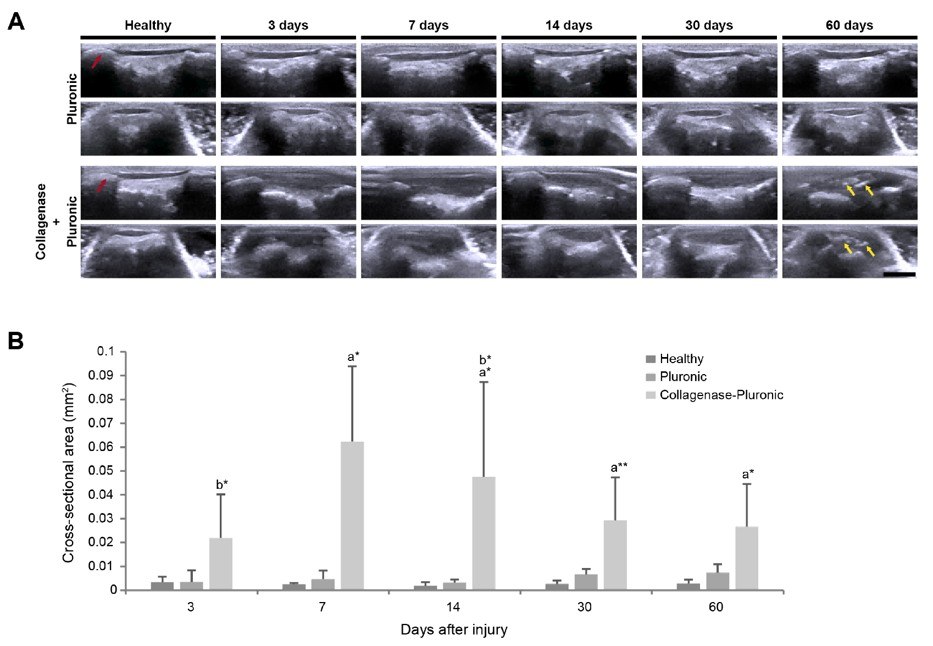 Fig.2 Longitudinal assessment of rat patellar tendons using clinical ultrasound imaging.2,3
Creative Biolabs offers the most technically advanced Tendon Injury Modeling & Pharmacodynamics Services in the industry. By combining 20 years of expertise with innovative stabilization technologies and comprehensive evaluation tools, we provide the reliable data required to advance your orthopaedic pipeline. Our team is standing by to provide a detailed project proposal tailored to your therapeutic goals.
References
- Zhang, Guorong, et al. "Large animal models for the study of tendinopathy." Frontiers in Cell and Developmental Biology 10 (2022): 1031638. DOI: https://doi.org/10.3389/fcell.2022.1031638.
- Vidal, Laura, et al. "A novel tendon injury model, induced by collagenase administration combined with a thermo-responsive hydrogel in rats, reproduces the pathogenesis of human degenerative tendinopathy." International journal of molecular sciences 25.3 (2024): 1868. DOI: https://doi.org/10.3390/ijms25031868.
- Distributed under Open Access license CC BY 4.0, without modification.
For Research Use Only.