
Papain induced Osteoarthritis Modeling & Pharmacodynamics Service
Are you currently facing challenges such as inconsistent disease induction, difficulty in quantifying cartilage degradation, or complex signaling pathway analysis in your OA research? Our Papain-Induced Osteoarthritis Modeling & Pharmacodynamics Service helps you accelerate drug discovery and obtain high-quality preclinical data through advanced "double-hit" mechanical stress models and high-resolution molecular profiling. Creative Biolabs provides the expertise to move your candidates from crude extracts to validated clinical leads.
Overview of Papain-Induced Osteoarthritis Modeling
Osteoarthritis (OA) is a chronic, degenerative joint disease characterized by the progressive loss of articular cartilage, subchondral bone remodeling, and synovial inflammation. The physiological system of the joint relies on a delicate balance between chondrocyte health and extracellular matrix (ECM) integrity, specifically the maintenance of sulfated glycosaminoglycans (sGAGs). When this balance is disrupted, the resulting inflammatory cascade leads to pain, stiffness, and loss of mobility. The Papain-Induced OA Model is a gold-standard approach for simulating human OA. By injecting the proteolytic enzyme papain into the joint space, we induce rapid proteoglycan depletion and chondrocyte damage. This model is uniquely valuable for evaluating drugs intended to protect cartilage structure or interrupt inflammatory signaling pathways, providing a reliable foundation for pharmacodynamic assessment.
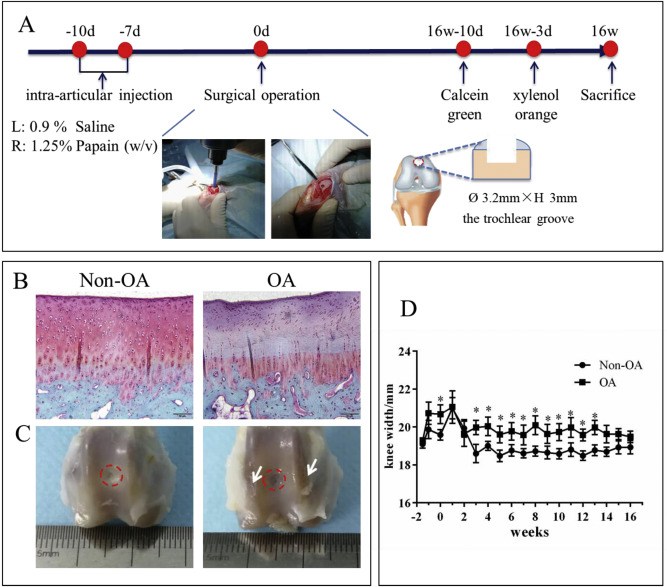 Fig.1 Cartilage degradation and persistent knee swelling in osteoarthritis rabbits.1,3
Papain-Induced Osteoarthritis Models
Creative Biolabs offers highly standardized OA models using the Rat and Rabbit species. Our protocols involve precise intra-articular injections of papain combined with cysteine to ensure reproducible cartilage degradation. We provide both sedentary models for baseline efficacy and incorporating physical activity or mechanical loading to simulate disease acceleration in active populations. These models are ideal for evaluating functional recovery, pain modulation, and structural preservation.
Evaluation Platform of Our Service
To demonstrate the full therapeutic potential of your compound, Creative Biolabs utilizes a high-depth evaluation platform across four technical dimensions:
-
Biochemical & Molecular Analysis
- Cytokine Profiling: ELISA-based quantification.
- Signaling Pathway Mapping: Western Blot and qPCR analysis.
- Oxidative Stress Markers: Measurement of SOD, MDA, and lipid peroxidation levels.
- Matrix Assessment: Quantification of sGAG content in synovial fluid.
-
Histopathological Examination
- Standardized Staining: H&E, Safranin-O/Fast Green, and Toluidine Blue staining.
- Scoring Systems: Comprehensive Mankin Scoring and OARSI grading systems.
- Immunohistochemistry (IHC): Localization of biomarkers.
-
Behavioral & Functional Testing
- Gait Analysis: Automated tracking of stride length, pressure, and limb swing time.
- Grip Strength: Quantification of neuromuscular coordination and pain-related weakness.
- Pain Thresholds: Von Frey filament testing and weight-bearing distribution (Incapacitance Test).
-
Advanced Imaging & Instrumentation
- Micro-CT Analysis: 3D mapping of subchondral bone density and joint space narrowing.
- EPIC-µCT: Contrast-enhanced imaging for quantitative sGAG distribution.
- Bone Mineral Density (BMD): Precise tracking of osteophytic changes and bone remodeling.
Key Applications
Our models are designed to simulate a wide range of clinical indications, including:
- Post-Traumatic Osteoarthritis (PTOA)
- Age-Related Degenerative Joint Disease
- Inflammatory Synovitis
Creative Biolabs supports the evaluation of diverse therapeutic modalities:
- Small Molecules: NSAIDs, kinase inhibitors, and TLR4 antagonists.
- Biologics: Monoclonal antibodies, growth factors, and cytokine traps.
- Botanicals & Nutraceuticals: Standardized extracts and purified phytochemicals.
- Cell & Gene Therapies: MSC-based interventions and viral vector-mediated chondroprotection.
Why Choose Us?
We provide high-fidelity models in Rat and Rabbit, ensuring the most appropriate physiological match for your study goals.
Creative Biolabs manages the entire workflow, from initial in vitro screening and biochemical fractionation to complex in vivo PD/PK studies.
Your project is managed by a team of veteran biologists with over 20 years of experience, supported by a rigorous quality management system that ensures data accuracy and reproducibility.
We offer unique mechanical loading protocols to validate drug efficacy under active-use conditions, providing superior clinical predictability.
Work with Us
- Summarize the project requirements and fill in the information collection form.
- Sign a CDA from both parties to further communicate information, such as targets.
- Select an animal model, discuss experimental design, and determine assay parameters.
- Project costing and project schedule forecasting.
- We provide a detailed project plan, including the required sample quantities, methods, and protocols.
- Both parties confirm the project details and start the project.
- Confirm the timeline of the project.
- We provide periodic results and information on the animal's condition.
- We will work together to make project adjustments as necessary.
- We provide a comprehensive project report promptly.
- We arrange transportation for the produced samples.
- We provide a discussion of the project results and help to arrange the next steps.
- Data storage and archiving.
Frequently Asked Questions
-
Q: How reproducible is the papain-induced model in Rats compared to surgical models?
A: The papain model offers excellent reproducibility for biochemical-driven OA. It is less invasive than surgical models, allowing for higher throughput and more consistent results when testing anti-inflammatory or chondroprotective agents.
-
Q: Can we evaluate both acute pain and chronic structural changes in the same study?
A: Yes. Our multi-dimensional platform combines functional gait analysis (pain) with long-term histopathology and Micro-CT (structure), providing a holistic view of your compound's performance.
-
Q: What is the typical duration of a Papain-Induced OA study at Creative Biolabs?
A: Depending on the endpoints, studies typically range from 4 to 12 weeks. We can customize the timeline to capture either early-stage inflammatory response or late-stage cartilage denudation.
-
Q: How do you ensure the ethics and quality of animal handling?
A: Creative Biolabs adheres to the highest international standards of animal welfare and rigorous quality control. All procedures for our Rat and Rabbit models are designed to minimize distress while maximizing scientific output.
Published Data
Objective: To evaluate the effect of mechanical loading on the TLR4/MyD88/NF-κB signaling pathway in a papain-induced OA model.
Model Used: Papain-induced knee OA in Rats, comparing Weight-Bearing (WB) stress vs. Non-Weight-Bearing (NWB) interventions.
Results: The study demonstrated that while WB exercise accelerated cartilage damage, NWB exercise significantly attenuated OA progression. Molecular analysis showed a marked reduction in TLR4 and MyD88 expression, leading to a downregulation of NF-κB and a decrease in serum cytokines (IL-1β, TNF-α). Histological Mankin scores were significantly improved in the NWB group, validating the TLR4 pathway as a key therapeutic target.
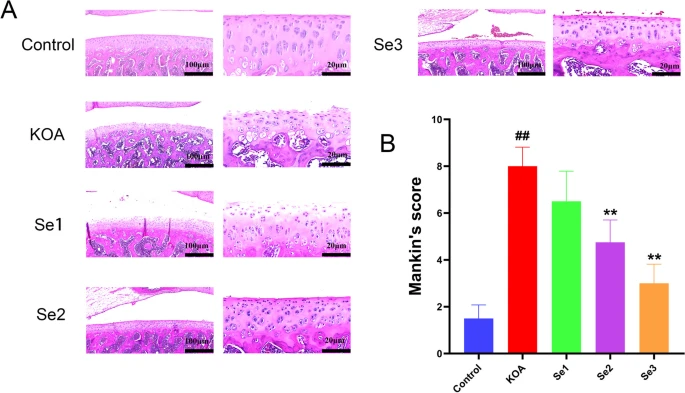 Fig.2 Impact of non-weight-bearing exercise on knee joint pathology in papain-induced rats with knee osteoarthritis.2,3
Creative Biolabs is your premier partner for Papain-Induced Osteoarthritis Modeling & Pharmacodynamics. By combining traditional biological expertise with cutting-edge molecular analysis and advanced mechanical stress models in rats and rabbits, we provide the definitive data you need for your drug discovery program. Our senior scientists are available to discuss your specific project requirements and design a customized validation study.
References
- Weber, Patrick, et al. "The collagenase-induced osteoarthritis (CIOA) model: Where mechanical damage meets inflammation." Osteoarthritis and Cartilage Open 6.4 (2024): 100539. DOI: https://doi.org/10.1016/j.ocarto.2024.100539.
- Wang, Kewen, et al. "Non-weight-bearing exercise attenuates papain-induced knee osteoarthritis in rats via the TLR4/MyD88/NF-κB signaling pathway." Journal of Orthopaedic Surgery and Research 18.1 (2023): 695. DOI: https://doi.org/10.1186/s13018-023-04201-w.
- Distributed under Open Access license CC BY 4.0, without modification.
For Research Use Only.