
3-Nitropropionic Acid induced Dystonia (DT) Modeling & Pharmacodynamics Service
Are you currently facing challenges such as inconsistent symptomatic onset, high mortality in systemic induction, or difficulty in quantifying circuit-specific neuroinflammation? Our 3-Nitropropionic Acid Induced Dystonia (DT) Modeling & Pharmacodynamics Service helps you obtain high-quality pharmacological data and validate neuroprotective efficacy through targeted stereotactic induction, real-time neurotransmitter monitoring, and high-resolution neuro-vascular unit analysis.
Overview of 3-Nitropropionic Acid Induced Dystonia (DT)
Dystonia is a complex, hyperkinetic movement disorder characterized by sustained or repetitive involuntary muscle contractions, often resulting in twisting movements and abnormal postures. It is classified into primary (genetic) and secondary (acquired) forms. The 3-Nitropropionic Acid (3-NP) model is a premier tool for simulating secondary dystonia and Huntington's-like neurodegeneration. 3-NP is a potent mitochondrial toxin that irreversibly inhibits succinate dehydrogenase (SDH), leading to metabolic failure specifically within the striatum. This mirroring of human striatal lesions allows researchers to study the breakdown of the cortico-striato-pallidal circuits, providing a window into the pathophysiology of movement disorders and the testing of novel neuro-restorative agents.
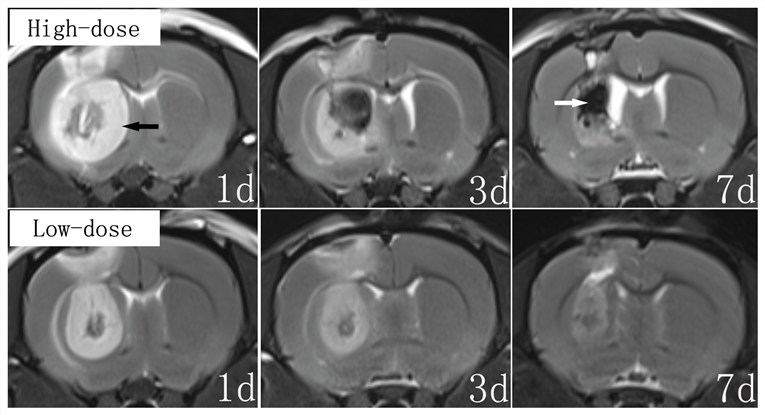 Fig.1 MRI scans at 7.0 Tesla following 3-NP administration.1,3
3-Nitropropionic Acid Induced Dystonia (DT) Model
Creative Biolabs provides highly validated 3-NP induced models in rats. We offer both systemic administration for generalized metabolic studies and precision stereotactic induction. Our stereotactic Rat model involves the unilateral micro-injection of 3-NP directly into the caudate putamen (CPu), producing a localized hemidystonia phenotype. This focal approach minimizes non-specific systemic toxicity, ensures high survival rates, and creates a clear contralateral motor deficit that is ideal for testing unilateral interventions such as deep brain stimulation (DBS) or targeted gene therapies.
Evaluation Platform of Our Service
Creative Biolabs provides a deep dive into the neurovascular and neuromuscular changes following 3-NP insult. We offer the following technical parameters for comprehensive PD/PK evaluation:
-
Biochemical & Molecular Analysis:
- Neurotransmitter Profiling: HPLC/Microdialysis for Glutamate, GABA, and Dopamine flux.
- Cytokine Assays: Multiplex ELISA to quantify neuroinflammation.
- Molecular Markers: Western Blot and qPCR.
- Oxidative Stress: Quantification of ROS and SOD activity in striatal homogenates.
-
Histopathological Examination:
- Neuronal Survival: NeuN staining and Nissl staining for striatal cell count and volumetric analysis.
- Neuro-Immune Response: IHC for Iba-1 (microglia) and GFAP (astrocytes).
- Ultrastructural Analysis: Transmission Electron Microscopy (TEM) to assess mitochondrial cristae and myelin integrity.
- Scoring Systems: Semi-quantitative pathological grading of striatal lesions and edema severity.
-
Behavioral & Functional Testing:
- Motor Coordination: Rotarod performance, Pole-climbing test, and Elevated Board Cross.
- Limb Function: Grip strength measurement and gait analysis for step length quantification.
- Dystonia Phenotyping: Video-monitored scoring of trunk twisting and limb posturing.
- Cognitive Assessment: Novel Object Recognition (NOR) for evaluating striatal-dependent declarative memory.
-
Advanced Imaging & Instrumentation:
- 7.0-T MRI: High-resolution monitoring of edema progression and necrotic volume.
- Electromyography (EMG): Real-time telemetry recording of agonist/antagonist muscle co-contractions.
Key Applications
The 3-NP Rat models at Creative Biolabs are versatile tools designed to simulate various clinical indications and evaluate a broad spectrum of therapeutic modalities:
- Indications Simulated: Secondary Hemidystonia, Striatal Neurotoxicity, Metabolic Encephalopathy, and Early-stage Huntington's Disease.
- Therapeutic Evaluation: Our models are optimized for testing Small Molecules, Biologics (e.g., neurotrophic factors, monoclonal antibodies), Gene Therapies (e.g., viral-vector mediated pathway silencing), and Neuromodulation Protocols (e.g., DBS targeting).
Why Choose Us?
Creative Biolabs maintains high-health, validated Rat strains specifically screened for consistent response to mitochondrial toxins, ensuring high reproducibility across cohorts.
We offer a seamless transition from initial in vitro mitochondrial screening to sophisticated in vivo PD/PK studies, including stereotaxic surgery and long-term behavioral monitoring.
Our PhD-led team brings over 20 years of experience in movement disorder research. We perform modeling under a rigorous quality management system to ensure that every data point, from EMG waves to TEM micrographs, ensuring accurate, high-resolution, and audit-ready.
Work with Us
- Summarize the project requirements and fill in the information collection form.
- Sign a CDA from both parties to further communicate information, such as targets.
- Select an animal model, discuss experimental design, and determine assay parameters.
- Project costing and project schedule forecasting.
- We provide a detailed project plan, including the required sample quantities, methods, and protocols.
- Both parties confirm the project details and start the project.
- Confirm the timeline of the project.
- We provide periodic results and information on the animal's condition.
- We will work together to make project adjustments as necessary.
- We provide a comprehensive project report promptly.
- We arrange transportation for the produced samples.
- We provide a discussion of the project results and help to arrange the next steps.
- Data storage and archiving.
Frequently Asked Questions
-
Q: How do you ensure the stability of the dystonic phenotype in the Rat model?
A: We utilize precision-controlled stereotaxic injection and standardized 3-NP batches. By localizing the lesion to the CPu, we achieve a consistent 7-day symptomatic window, which is ideal for acute efficacy testing.
-
Q: How do you distinguish between generalized weakness and true dystonia?
A: We use synchronous EMG recordings. True dystonia is characterized by the co-contraction of agonist and antagonist muscles, which we quantify via high-resolution telemetry, distinguishing it from simple hypokinesia.
-
Q: Is it possible to measure neurotransmitter changes during the study?
A: Yes, we utilize in vivo microdialysis in the awake Rat. This allows us to track the spike in excitatory amino acids and the depletion of GABA following induction, providing a biochemical confirmation of your drug's mechanism.
-
Q: What precautions are taken regarding 3-NP systemic toxicity?
A: By using targeted stereotaxic delivery, we significantly reduce the systemic burden of the toxin. This results in much higher animal welfare standards and cleaner data sets compared to traditional systemic injection. Reach out to learn more about our surgical protocols.
Published Data
Objective: To evaluate the neuroprotective and anti-inflammatory efficacy of a combined C16 peptide and Angiopoietin-1 (Ang-1) treatment in a 3-NP induced model.
Model Used: 3-NP induced striatal toxicity model in the Rat, characterized by blood-brain barrier (BBB) leakage and neuroinflammation.
Results: The combined treatment successfully stabilized the BBB, as evidenced by reduced perivascular edema and improved vascular permeability. ELISA results showed a significant reduction in IL-6 and ROS levels, while EMG data confirmed a marked decrease in synchronous agonist/antagonist muscle contractions. Furthermore, the treated Rat group exhibited restored GABA levels and a balance between striatopallidal and striatonigral pathways, highlighting the model's sensitivity to neurovascular protective agents.
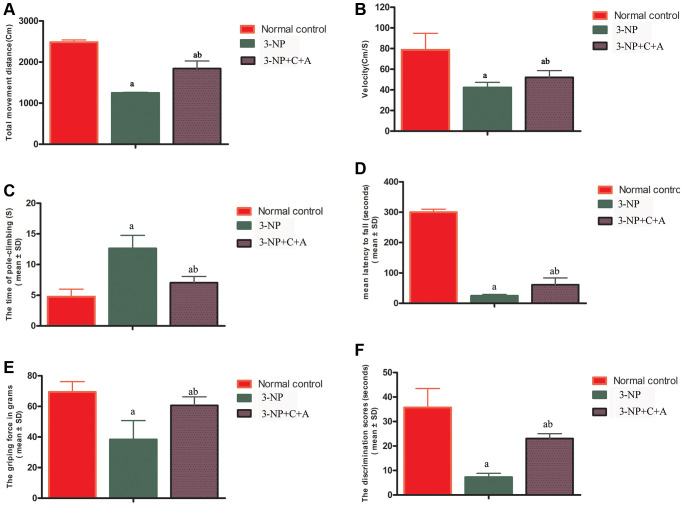 Fig.2 As demonstrated, C16 combined with Ang-1 therapy mitigates motor dysfunction caused by 3-NP.2,3
Creative Biolabs offers the most sophisticated 3-Nitropropionic Acid Induced Dystonia (DT) Modeling & Pharmacodynamics Service available today. From precision stereotaxic surgery to multi-modal EMG and 7.0-T MRI analysis, we provide the robust data packages required to move your neurological pipeline forward. Our scientific consultants are standing by to provide detailed information and tailored quotes.
References
- Liu, Huan-Guang, et al. "A rat model of hemidystonia induced by 3-nitropropionic acid." PLOS ONE 8.10 (2013): e79199. DOI: https://doi.org/10.1371/journal.pone.0079199.
- Fu, Xiao-Xiao, et al. "Combined treatment with C16 peptide and angiopoietin-1 confers neuroprotection and reduces inflammation in 3-nitropropionic acid-induced dystonia mice."Aging (Albany NY)13.14 (2021): 19048. DDOI: https://doi.org/10.18632/aging.203354.
- Distributed under Open Access license CC BY 4.0, without modification.
For Research Use Only.