
Autism Spectrum Disorder Modeling & Pharmacodynamics Service
Introduction
Autism Spectrum Disorder (ASD) is a highly heterogeneous neurodevelopmental condition characterized by impaired social communication and repetitive behaviors, affecting approximately 1% of children globally. While its heritability is estimated at 40–80%, the phenotypic penetrance of risk genes is complexly modulated by genetic factors (such as CNVs and epigenetic modifications) and non-genetic modifiers (including environmental exposures and sex-linked traits). Despite its prevalence, pharmacological treatments for core ASD symptoms remain unavailable due to an incomplete understanding of its molecular pathology. Creative Biolabs' platform bridges the gap between genetic discovery and clinical intervention by providing high-fidelity rodent models that replicate both core symptoms and common comorbidities, such as epilepsy and anxiety. These models serve as essential tools for the rigorous evaluation of small molecules, gene therapies, and neuromodulatory candidates.
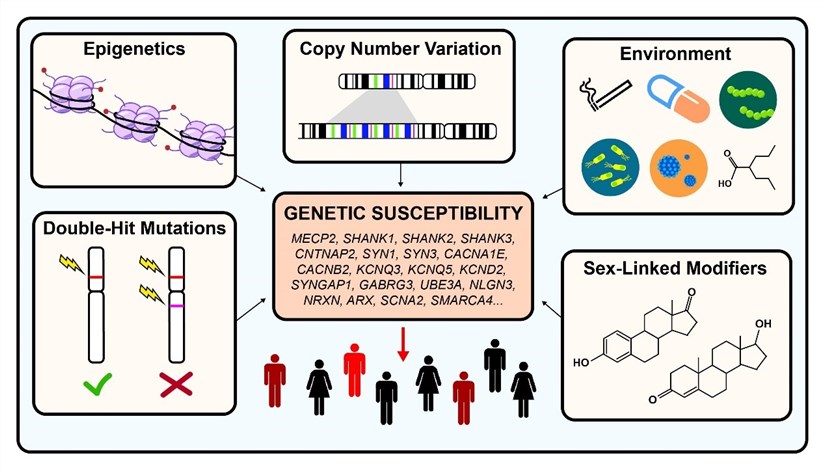 Fig.1 Genetic modifiers in autism spectrum disorder.1
Available Autism Spectrum Disorder Model
Our platform provides a suite of high-fidelity mouse and rat models specifically engineered for ASD research. By leveraging advanced gene editing technologies, we offer researchers critical insights into the molecular mechanisms of neurodevelopmental disorders and complex genetic diseases. They serve as essential tools for evaluating target-specific therapeutic rescue and validating advanced gene therapy candidates. In addition, environmental models targeting idiopathic environmental triggers, such as VPA-induced and Maternal Immune Activation (MIA) models, are currently under development.
| ASD Model | Modeling Methods | Application Values | Animal Species |
| Genetic Models | Our portfolio features a comprehensive range of Global Knockout (KO), Conditional Knockout (Flox/CKO), and Humanized Gene Replacement models targeting over 70 core high-risk genes (e.g., Shank3, Fmr1, Sez6l2, Cntnap2, Prex1, Mecp2, Pcdh9, Neuroligin-3 (Nlgn3), Neurexin-1 (Nrxn1), Tsc1, Tsc2, Gap43, POGZ, BTBR). | High-fidelity replication of monogenic ASD forms (e.g., Phelan-McDermid, Fragile X, Rett Syndrome) to evaluate target-specific therapeutic rescue. | Mouse, Rat |
Evaluation Platform
To provide a multi-layered assessment of therapeutic efficacy, we have established a multidimensional ASD evaluation platform that bridges the gap between behavioral symptoms and their underlying biological drivers. This platform integrates high-throughput behavioral screening with precise neurophysiological and molecular profiling to deliver a holistic view of drug action.
- Core Behavioral Phenotyping: This platform evaluates core ASD domains by assessing social interaction (Three-Chamber Social Test), communication (Ultrasonic Vocalizations/USV recording), repetitive behaviors (Self-grooming or Marble Burying assays), and cognitive/sensory functions (Morris Water Maze for flexibility; Pre-pulse Inhibition/PPI hardware for sensory gating).
- Neurological & Electrophysiological Platform: Characterizing ASD as a synaptopathy marked by Excitatory/Inhibitory (E/I) imbalance, this platform utilizes in vivo EEG/LFP to monitor abnormal oscillations, High-frequency stimulation (HFS) to induce LTP/LTD for assessing restored synaptic plasticity, and whole-cell patch-clamp recording in brain slices to analyze the excitatory-to-inhibitory (GABA/Glutamate) current ratio.
- Molecular & Biochemical Readouts: This level confirms drug impact on biological pathways by quantifying synaptic proteins (NLGN, Shank3, PSD-95) and the mTOR pathway (p-S6/p-mTOR) via Western Blot or ELISA, measuring the ERK/CREB/BDNF axis using Immunohistochemistry (IHC) or qPCR, and monitoring neuroinflammation through Iba1 staining and Multiplex cytokine assays.
Applications
- PD Evaluation & Lead Optimization: High-throughput behavioral screening to identify CNS-active molecules. We quantify the efficacy of candidates in rescuing social deficits, cognitive impairments, and repetitive behaviors to accelerate lead optimization.
- Mechanism of Action (MoA) Dissection: In-depth analysis of therapeutic pathways, focusing on the modulation of GABAergic/Glutamatergic (E/I) balance, synaptic pruning dynamics, and the resolution of neuro-inflammation.
- Gene Therapy Validation: Comprehensive support for viral vectors (AAV/Lenti), evaluating biodistribution, transgene expression, and the functional restoration of synaptic markers and phenotypes in monogenic models (e.g., Shank3, Fmr1).
- Comorbidity and Secondary Symptom Screening: Assessment of therapeutic impact on non-core symptoms, including seizure thresholds (epilepsy), hyperactivity, and sensory gating (PPI) deficits.
Our Advantages
- Cross-Species Versatility: Available in both C57BL/6 mouse and SD rat backgrounds to suit diverse behavioral and physiological study requirements.
- Translational Accuracy: Rigorously validated to ensure phenotypic consistency with clinical observations.
- Precision Deep Phenotyping: We utilize AI-driven behavioral tracking (e.g., DeepLabCut) to achieve high-resolution, objective analysis of nuanced social interactions. This eliminates observer bias and captures subtle behavioral phenotypes that traditional scoring might miss.
- Developmental Sensitivity (PND 2-21): Our platform features specialized expertise in neonatal testing. By capturing early-onset markers of neurodevelopmental divergence during critical growth windows, we provide a clearer picture of disease progression and therapeutic window.
- E/I Balance & Synaptic Expertise: We offer a unique integration of in vivo electrophysiology and ultra-sensitive biochemistry (MSD/SIMOA) to quantify the GABA/Glutamate ratio. This allows us to correlate behavioral recovery with synaptic protein dynamics (e.g., PSD-95, Synaptophysin).
- Standardized Environmental Control: To ensure high reproducibility and stable baselines, all studies are conducted in sound-attenuated, light-controlled suites. This rigorous environment eliminates confounding factors and minimizes stress-induced variability in sensitive ASD models.
Work with Us
- Summarize the project requirements and fill in the information collection form.
- Sign a CDA from both parties to further communicate information, such as targets.
- Select an animal model, discuss experimental design, and determine assay parameters.
- Project costing and project schedule forecasting.
- We provide a detailed project plan, including the required sample quantities, methods, and protocols.
- Both parties confirm the project details and start the project.
- Confirm the timeline of the project.
- We provide periodic results and information on the animal's condition.
- We will work together to make project adjustments as necessary.
- We provide a comprehensive project report promptly.
- We arrange transportation for the produced samples.
- We provide a discussion of the project results and help to arrange the next steps.
- Data storage and archiving.
FAQs
-
Q: How do you differentiate between specific social deficits and general anxiety or motor impairment?
A: We conduct a comprehensive behavioral battery. If an animal shows normal exploration in the Open Field Test (OFT) or Elevated Plus Maze (EPM) but fails the Three-Chamber Social Test, the phenotype is confirmed as a "social-specific" deficit rather than a byproduct of anxiety or lethargy.
-
Q: What is the significance of the Shank3 model in your portfolio?
A: Shank3 is a critical scaffold protein at the postsynaptic density. Our Shank3 models (Global and Conditional KO) provide high-fidelity replication of Phelan-McDermid Syndrome, making them ideal for testing drugs that target synaptic plasticity and network-level E/I balance.
-
Q: Can you quantify communication impairments in these models?
A: Yes, we utilize USV analysis. We record and analyze the frequency, duration, and syllable complexity of calls in both neonates (distress calls) and adults (social signaling) to detect communication deficits.
-
Q: Are your models capable of reflecting the clinical features of ASD?
A: Yes. These models achieve high-fidelity replication of key clinical ASD features, including social communication challenges, repetitive behaviors, and sensory sensitivities.
-
Q: Do you offer models for idiopathic or environmental ASD triggers?
A: Currently, our portfolio features a range of genetic models. However, environmental models targeting idiopathic triggers, such as VPA-induced and MIA models, are currently under development to broaden our research capabilities.
-
Q: How do you measure "Cognitive Rigidity" or executive dysfunction?
A: We employ Reversal Learning protocols in the Morris Water Maze or Barnes Maze. By measuring the animal's ability to inhibit a previously learned rule and adapt to a new platform location, we quantify cognitive flexibility.
-
Q: What advanced neurophysiological readouts do you provide?
A: We offer in vivo EEG to assess seizure susceptibility (a common ASD comorbidity) and Multi-Electrode Array (MEA) recordings to monitor network-level Excitatory/Inhibitory (E/I) imbalance and synaptic firing patterns.
Published Data
The ASD-linked POGZ (Q1038R) mutation disrupts POGZ binding to the Oxytocin Receptor (OXTR) promoter, causing a localized receptor deficiency rather than a ligand synthesis defect. This downregulation triggers social deficits that can be functionally rescued through intranasal oxytocin administration, which compensates for low receptor levels with exogenous ligand.
 Fig. 2 Oxytocin ameliorates impaired social interaction in POGZWT/Q1038R mice.2
References
- Rylaarsdam, Lauren, and Alicia Guemez-Gamboa. "Genetic Causes and Modifiers of Autism Spectrum Disorder." Frontiers in Cellular Neuroscience vol. 13 385. Distributed under Open Access license CC BY 4.0, without modification. https://doi.org/10.3389/fncel.2019.00385
- Kitagawa, Kohei et al. "Intranasal oxytocin administration ameliorates social behavioral deficits in a POGZWT/Q1038R mouse model of autism spectrum disorder." Molecular Brain vol. 14,1 56. Distributed under Open Access license CC BY 4.0, with modification. https://doi.org/10.1186/s13041-021-00769-8
For Research Use Only.